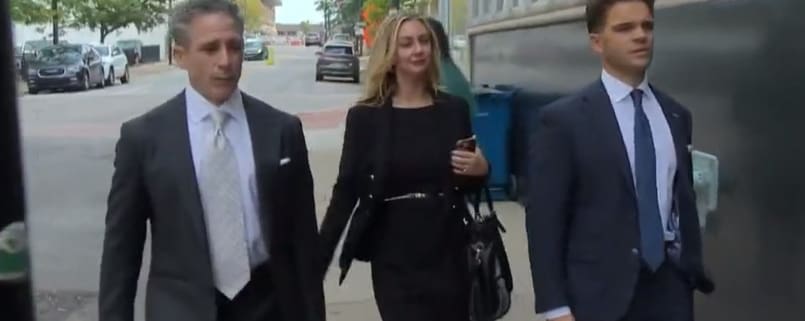
MCBOE Chair David Betras commends Ohio Secretary of State Frank Larose for taking affirmative steps to protect and promote democracy, slams Commissioners for their ongoing and utter failure to ensure the integrity of elections in Mahoning County

Today I issued a formal response to Secretary of State Frank LaRose regarding the condition of the Mahoning County Board of Elections facility and our ongoing efforts to comply with all state-mandated security and operational requirements.
First, I want to thank Secretary LaRose for his personal engagement and concern for Mahoning County. His attention to our situation and his willingness to collaborate with us to ensure safe, secure, and accessible elections is sincerely appreciated.
For several years, I have repeatedly warned the Mahoning County Commissioners that the Board of Elections building was deteriorating and that a serious infrastructure failure was likely. Nearly one year before the September 29 pipe leak, I specifically raised the possibility of exactly this kind of incident. Unfortunately, those warnings proved accurate. We were fortunate the leak occurred during business hours; had it happened overnight, we could have lost millions of dollars in voting equipment.
I have documented the deplorable conditions inside the facility with photographs, and I have made numerous presentations before the commissioners outlining the risks. During one of those presentations, I provided them with the very directives and requirements referenced by the Secretary of State, including Chapter 3 of the Election Official Manual and Directive 2025-29. Suggestions that these directives were unknown to the commissioners are simply not true.
Regarding compliance, the Board recently completed a cybersecurity audit and is finalizing all required documentation. I would like to publicly commend Chris Rakocy for his exceptional work in helping us meet these obligations.
Our most serious challenges, however, remain tied to the condition of the building itself. Progress on necessary upgrades only began after I publicly stated at a commissioners meeting that we were out of compliance. The fire suppression system was brought into compliance only recently and only after significant delay at the county level. We are still awaiting completion of the required alarm system upgrade but have been told it will be finished shortly.
The water line that caused September’s leak has been reactivated, and our voting machines remain positioned beneath those pipes. The current facility does not allow for any safe alternative storage. While state best practices call for election offices and voting equipment to be housed together in a secure and suitable location, the Board has not been provided with another site. Despite repeated assurances that a new home is forthcoming, no concrete plan or timeline has been presented to us.
It is important for the public to understand that this is not a theoretical concern. Earlier this summer, we were forced to close the office due to an air-conditioning system failure and persistent odors within the building. We have prepared contingency plans for catastrophic facility failures because, in our current building, such failures remain a very real possibility.
Mahoning County’s voters deserve the same level of electoral security and stability enjoyed in every other county in Ohio. The Board of Elections is doing everything within its authority to meet the state’s requirements, but without a new facility, the risk to our election infrastructure cannot be fully mitigated.
We appreciate the Secretary of State’s partnership in addressing these challenges, and we remain ready to work with all county officials to ensure that Mahoning County’s elections continue to meet the highest standards of security and reliability.
Read SOS LaRose’s letter to the MCBOE here: Letter from Secretary of State Frank LaRose

Attorney Frank Cassese, BetrasKopp legal team secure not guilty verdict for Marquaysha Driver in heart-wrenching case

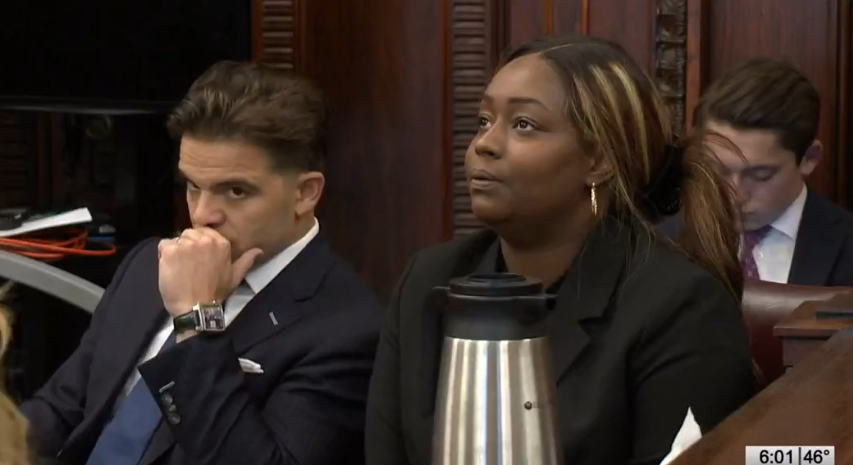
Lead Defense Attorney Frank Cassese and Marquaysha Driver await the verdict in her trial on involuntary manslaughter and child endangerment charges related to the death of the sevey-year-old son De’Vonte Housley Jr. A Mahoning County Common Pleas jury acquitted Ms. Driver on October 23, 2025.

In one of the most emotionally charged and heart-wrenching cases to be tried in the area in decades, a Mahoning County Common Pleas Court jury found Marquaysha Driver not guilty of involuntary manslaughter and child endangerment charges that were filed against her in the wake of the Oct. 22, 2023, shooting death of her 7-year-old son, De’Vonte Housley Jr.

Attorney Frank Cassese who led Ms. Driver’s defense team, said the outcome clearly demonstrates the jury system’s capacity to render justice in extremely complicated and nuanced cases. “We were able to convince the jury to look beyond the letter of the law and grasp the fact that DeVonte’s death was not a crime, but a tragic accident that will haunt his mother, his siblings, and his entire family for the rest of their lives,” Attorney Cassese said.

“I think Marquaysha’s testimony was the ultimate factor,” he continued. “I think she was very raw, very honest, very truthful. In my opinion that was something that really tipped the scales.” This was a tough case for the state of Ohio, a tough case for the defense, there’s a lot of emotion that goes into this, so it’s never easy,”

According to Attorney Cassese, Attorney Tallie Orengia, Paralegal Gena Safarek, Daniel Leslie, and Connor Hilton, played integral roles in preparing Ms.Driver’s defense and presenting it to the jury. “This was an extremely challenging case from both a legal and purely human standpoint because we were dealing with the death of a seven-year boy, it’s impact on his family, and the possibility that his mother could be incarcerated for ten years or more,” he said. “Their hard work, expertise, and commitment to the cause of justice along with the unmatched experience and knowledge the entire BetrasKopp legal team brings to every case is directly responsible for this verdict.”

Given its unique and compelling nature, Attorney Cassese and the BetrasKopp team will prepare and share an in-depth analysis of the case, including the evolution of the defense strategy and a behind-the-scenes look at the work involved in trying a serious felony case.

Local media coverage of the case may be accessed at these links:

https://www.vindy.com/news/local-news/2025/10/mother-found-not-guilty/

https://www.wfmj.com/clip/15519496/woman-found-not-guilty-of-7-year-olds-death

https://www.wkbn.com/news/local-news/youngstown-news/tried-to-do-the-right-thing-mother-charged-after-childs-shooting-death-testifies-in-her-own-defense/

We’re also pleased to reprint WKBN TV 27’s excellent report on the case:

A jury Thursday in Mahoning County Common Pleas Court found a woman whose 7-year-old son was shot and killed with a gun in her home not guilty of all charges.

After about two hours of deliberations, jurors found Marquaysha Driver, 31, not guilty of involuntary manslaughter and four counts of child endangering for the October 22, 2023, death of her son De’Vonte Housley, Jr., 7, in her East Marmion Avenue home.

De’Vonte was killed after he and his brother found a loaded gun on a mantle above a fireplace in her home.

Driver testified on her own behalf earlier Thursday about how she woke up to every parent’s worst nightmare

“I woke up to a pop,” she said as she was sobbing. “My son came running in the room. I asked, ‘What was that?’ and he was like, ‘I shot my brother.’”

Testimony began in her case Wednesday before Judge Anthony D’Apolito after a jury was seated Tuesday.

The state rested its case Wednesday, and the defense rested its case Thursday after Driver’s testimony. She was the only witness called by the defense.

Prosecutors say Driver was reckless because she knew a loaded handgun was in her home, yet did not take steps to keep it away from her children, one of whom ended up shooting another.

The gun belonged to her brother, who she accompanied two days before De’Vonte’s death to a Boardman sporting goods store, where he bought a shotgun and a 9mm pistol. Somehow, the pistol was left at her house.

Dressed in all black and talking in a slow, at times somber voice, Driver recounted the days leading up to De’Vonte’s death under direct examination from her attorney, Frank Cassese. The gallery was full of friends and relatives, who at times provided a steady backdrop of sniffles.

Driver said she is a hairdresser and she spent all of Saturday — the day before De’Vonte’s death — from 1 p.m. to 3 a.m. Sunday, doing hair in her home. She testified that the weekend was a big one, as Chaney and East high schools both had homecoming, and Sweetest Day fell on the same weekend.

She had late clients because some women were getting their hair done to go to a “bar party.” Her last client was a friend who was celebrating her birthday that Sunday.

When she was done about 3 a.m. Sunday, she began cleaning up, and as she did, she noticed the gun her brother bought on the mantle above the fireplace. She said she decided to push the gun further back on the mantle behind a 75-inch television. Demonstrating for the jury, she stood on the points of her toes and reached out an arm, saying she stuffed it so far back she could barely reach it when she was finished.

“When I couldn’t see it anymore, I thought it was OK,” she testified.

She also said she called her brother and told him to get the gun as soon as possible.

She then took a shower and fell into bed exhausted, still wrapped in a towel. She was that way when she was awakened by the gunshot that took De’Vonte’s life.

Prosecutors said in opening statements Wednesday that De’Vonte and his brother were watching television when they couldn’t change the channel, so they looked for batteries for the remote control, which were also on the mantle.

When the boys found the batteries, they also found the gun, prosecutors said, and began playing with it until it went off and De’Vonte was killed. Driver testified she put the batteries up because her youngest child liked to chew on them, so she tried to keep them out of the child’s reach.

She went downstairs, found De’Vonte and called 911.

“I just asked them how to resuscitate my son,” she said through tears.

Jurors also saw body camera video from Youngstown police Patrolman Anthony Congemi, who was called to the scene and testified Wednesday.

As members of the gallery began choking back sobs and silently crying, jurors watched through Congemi’s camera as he ran into the house, then ran back to his cruiser, grabbed a pair of gloves and went back inside.

Officer Kenneth Garling was trying to put a chest seal on the wound, and Driver, still wrapped in a towel, was in tears and screaming.

“Keep pressure on both sides,” someone can be heard saying.

“Is he breathing?” Congemi asks.

“I don’t know,” Driver answers through tears.

Congemi asks her where the gun is, and she tells him it is back on the mantle. De’Vonte is sprawled on the floor on his back, blood visible on his chest, wearing a pair of dark shorts with a white stripe down the side.

Some jurors seemed visibly shaken after the video was played. A pair of women in the jury box sat stone-faced for several minutes while an older man in the first row took off his glasses, held them and stared straight ahead.

Driver then began crying on the witness stand.

“I’m sorry,” she said. “It just hurts.”

Cassese coaxed her back to her testimony, getting her to tell of her visit the day after De’Vonte’s death to talk to detectives without a lawyer present, a visit she made on her own, she said.

Under cross-examination from Assistant Prosecutor Jennifer Paris, Driver said she did not recall telling detectives she knew the gun was loaded. She then watched video in the judge’s chambers of her interview with police, then said when testimony resumed, she did tell them she knew the gun was loaded.

When asked by Paris if she thought anyone could get the gun, Driver said no.

But, Paris said, they did.

“I don’t know how they did,” she said.

“But you agree they could have got it?” Paris asked.

“No.”

“But they did.”

“Yes,” Driver said. “But I don’t know how.”

She denied having the gun in her purse or that the gun had been in the house for a week.

“Do you acknowledge you left a loaded handgun in your house, unattended, with several small children in your house?” Paris asked.

“I tried my best to hide it,” she answered.

Paris asked her why she didn’t unload the gun, and Driver said she did not know how. Paris asked her why she didn’t call her brother. Paris also asked her why she didn’t put the gun outside or lock it in a car or in another room in the house.

“There’s nowhere to lock the gun in my house,” she said. “I just tried to do the right thing.”

After Driver’s testimony, jurors were given a break while the attorneys went over exhibits and the judge’s instructions to the jury.

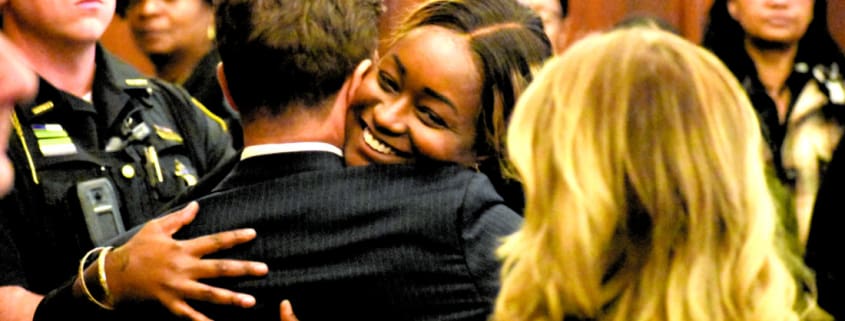
Ruling by Judge Rice is major victory for former Ursuline student athletes, BetrasKopp vows to continue fighting for any player wrongfully denied the right to compete in football and other interscholastic sports

Trumbull County Common Pleas Court Judge Ronald Rice has issued a temporary restraining order (TRO) that bars the Ohio High School Athletic Association (OHSAA) from enforcing a September 15 ruling that prohibits former Ursuline High School student athletes who were not involved in the alleged sexual abuse and hazing incidents that led to the cancellation of the school’s 2025 football season from transferring to and playing for other Ohio high schools.



Judge Rice granted the TRO in response to a lawsuit filed by Attorneys Brian Kopp and Frank Cassese of BetrasKopp Attorneys at Law on behalf of two former Ursuline players who transferred to Girard High School and sought to join that school’s football team immediately after Ursuline cancelled its season on September 12. The OHSAA’s September 15 ruling would prevent them from doing so.

In their motion for the TRO and during oral arguments, Attorneys Kopp and Cassese asserted that their clients would suffer irreparable harm if they are prohibited from playing football during the 2025 season. Judge Rice agreed:

Upon review of the Plaintiffs’ Verified Complaint and after hearing the oral arguments from Counsel, the Court finds that the process set forth by Defendant bylaws does not account for or contemplate Plaintiffs’ situation. To rigidly require Plaintiffs to attempt to seek relief through the currently stated bylaws, which do not account for the situation at hand, would be futile and would deprive Plaintiffs of any relief given the very short timeframe at issue. Plaintiffs most certainly will be irreparably harmed if they, as innocent parties, are prohibited from playing during the 2025 season as that is time that cannot be replaced or compensated. Any injury to third parties would be minimal compared to the irreparable injury that would be suffered by Plaintiffs. This is not typical situation of a student transferring schools midseason as contemplated by the OHSAA bylaws. This is an extremely unfortunate situation that was outside of Plaintiffs’ control. Lastly, the Court finds that public interest will be served in allowing these Plaintiffs to enjoy playing in the remainder of the 2025 football season at Girard High Scho I. These students should not have this time and opportunity taken away from them because of misconduct caused by third parties.

The TRO enjoins the OHSAA and its Executive Director David Ute from prohibiting the plaintiffs “…from participation in the remainder of the 2025 interscholastic athletic season and postseason tournaments at Girard High School or until further order of this Court.”

“Judge Rice understands that the OHSAA Bylaws completely failed to address the situation confronting innocent Ursuline High School football players,” Attorney Kopp said after the TRO was issued. “The court also recognized that the Ursuline players were subject to a flawed and futile process which unjustly denied them of their eligibility.  We are extremely pleased with the ruling, but we are not done.  We will continue to fight for any player who has been wrongfully denied his right to compete in football, a game which is part of the basic fabric of our town.” (May want to add region and state of Ohio here.)

In addition to the TRO, the plaintiffs are also seeking a preliminary injunction. A hearing on that matter will be held on October 15, 2025.

Click here to view/download BK’s verified complaint. Click here to view/download Judge Rice’s ruling.

BetrasKopp files lawsuit seeking injunction that will enable student athletes trapped in scandal-plagued Ursuline High School football program to transfer to other schools

After Ursuline High School cancelled the 2025 football season in the midst of allegations that some players had engaged in hazing, sexual misconduct, physical abuse, and harassment during an out of state team trip, a number of student athletes who were not involved in the incidents explored the possibility of transferring to and playing for other schools this year. On September 16, 2025, the Ohio High School Athletic Association (OHSAA), the body that governs interscholastic athletics in the state, ruled they could not.

In a lawsuit filed on behalf of six of the players on September 22, 2025, Attorneys Brian Kopp and Frank Cassese of BetrasKopp LLC asked the Mahoning County Common Pleas Court to issue a Temporary Restraining Order as well as temporary and permanent injunctions that will prevent the OHSAA, its Executive Director DougUte, and/or his agents from enforcing that ruling.

“These student athletes have done nothing wrong,” Attorney Kopp said. “Through no fault of their own they’ve been robbed of the opportunity to play for Ursuline, and, in the case of seniors, to ever play high school football again. If a parent believes it is best to transfer their child out of Ursuline High School so they can continue their athletic careers they should have the right to do so. This lawsuit was filed to guarantee that right will not be restricted by the OHSAA’s arbitrary and unjust decisions.”

“The OHSAA is sending a troubling message to high school student-athletes and parents across Ohio: ‘Blow the whistle and get benched,’” Attorney Cassese commented. “Student athletes who observe the type of behavior that allegedly occurred at Ursuline are going to think twice about reporting it if the OHSAA insists on punishing the innocent right along with the guilty. Mr. Ute and his staff should have done their due diligence and allowed those who were not involved in the incident to transfer to another school and move on with their lives. Instead, the clear directive moving forward is remain silent or risk losing everything.”

In the lawsuit the plaintiffs assert that the rules and by-laws the OHSAA cited in denying students the right to transfer are neither pertinent nor applicable to Ursuline’s situation.  because they are intended to “prevent student athletes from ‘shopping around’ for a school to attend based solely on which school will best showcase the student’s athletic talents, which, in turn, would promote an atmosphere of athletic recruiting at the high school level.”

“Our clients aren’t ‘shopping around’ for a better school because they want to, they’re seeking permission to transfer because the Diocese of Youngstown and Ursuline’s administration failed to deal with allegations of misconduct in early June,” Attorney Kopp said. “Now, as a result of the OHSAA’s ruling, these students are trapped in an institution plagued by civil and criminal action and a football program shrouded in uncertainty. Fortunately, the Court has the power to set them free by issuing the TRO and injunctions we are seeking.”

In the suit the plaintiffs note they will suffer irreparable harm if injunctive relief is not granted:

Plaintiffs do not have monetary damages. They are being prevented from participating in interscholastic athletics because of the actions of other individuals. The fleeting nature of high school sports means that Plaintiffs can never recoup the missed contests that are played while this unjustified penalty from the OHSAA remains enforced. Plaintiffs have and will continue to suffer irreparable harm through the OHSAA’s decisions, for which there is no adequate remedy at law. A temporary restraining order and preliminary and permanent injunction enjoying Defendants from enforcing the OHSAA’s decision is the only available remedy.

For more information please contact Frank Cassese at 330-746-8484.  The Verified Complaint may be viewed and downloaded here.  The Motion for TRO  may be viewed and downloaded here.


Tallie Orengia dominates Heart of a Champion pigskin prognosticator contest in Week 1…

What can we say?
The results are in for Week One and Tallie Orengia, the newest member of the BK squad breaks out  on top followed by Mark the Shark DeVicchio.
Meanwhile, the Commodore’s ship has run aground, anchored in the muck by a sea of bad picks.
Check out tne next HOC broadcast on Friday, September 12…

HOC Week One Show
t’s the program you’ve all been waiting for…

BK’s pigskin prognosticators are back on the air for the second exciting and entertaining season of the Coach John Kopp Heart of a Champion Show.
This year we’ve added a new expert to the lineup: Attorney Tallie Orengia who, along with defending ’24–’25 champion Jim Melfi opened the season 2-0 while the Commodore, Daniel “Kid” Leslie, and Frank Cassese went 0-2 and Mark the Shark DeVicchio posted a 1-1 mark.
Just as an FYI, the Commodore in a move that was based more on strategy than football knowledge, picked the same teams as Jimmy Melfi.
This week the crew picks six games, Mooney v. Canfield and five NFL contests. Check our Facebook page on Monday for the results.
As always, if you enjoy our content, mash the Subscribe, Like, and Share buttons with as much ferocity as the Buckeyes mashed the Longhorns last week in the Shoe…
Attorney David Betras

Attorney David Betras receives Martindale-Hubbell 40-year Practice Recognition Award in honor of his four decades serving clients in Ohio, Pennsylvania, and Florida

In 2025 Attorney Betras received the Martindale-Hubbell 40-year Practice Recognition Award which honors his four decades of service to clients in Ohio, Pennsylvania, and Florida.

 

What you need to know about Ohio’s new consumer fireworks law–aside from the fact that it actually makes sense…

If there is one thing I’ve learned during my three decades as an attorney, it’s that laws don’t always make sense. As an example, I offer into evidence, the Ohio statute that governed the purchase and use of consumer-grade fireworks by private citizens from 2008 until 2022. During that time, you or I could walk into a licensed fireworks dealer on July 4, buy a carload of what are known as 1.4G fireworks, and then swear we were going to transport our arsenal out of state within 48 hours because it was illegal to discharge them within the state.

Attorney David Betras
BKM Managing Partner David Betras

This law was ridiculous for two reasons: first, it forced Ohioans who wanted to celebrate Independence Day by firing off some fireworks in their backyard to lie and commit a crime which was more than a little ironic and absolutely un-American, and, second, it was, for all intents and purposes, unenforceable, a fact underscored by the billions of dollars in consumer pyrotechnics that lit up Ohio’s night skies and scared Ohio’s dogs each and every Fourth—prohibition or no prohibition.

After numerous attempts to erase the law and government-mandated ruse from the books, the fine folks who inhabit the Ohio House and Senate passed HB 172 by overwhelming margins on November 4, 2021. One provision of the bill which became effective on July 1, 2022 eliminated the requirement that Ohioans hightail it out of the state to demonstrate their patriotism. As a result, we are now free to shoot off roman candles, skyrockets, sparking wheels, seven-shot Beastlys, and 10-ten shot Cherry Bombers from the comfort of our homes.

In addition to permitting the use of consumer fireworks within Ohio’s borders, HB 172 also established regulations for doing so—you know rules we didn’t need when we were buying 36-shot China Dragons here and shooting them off in, I guess Pennsylvania or West Virginia. Because the law is relatively new, and the Fourth of July is rapidly approaching I thought it would be beneficial to review the rules:

Let’s start with when we can fire away:

From 4 PM to 11 PM on:

  • From 4 PM to 11 PM on July 3, 4, and 5, and the Friday, Saturday and Sunday immediately before and after the 4th.
  • From 4 PM to 11 PM on Memorial and Labor Day weekends
  • From 4 PM to 11:59 PM on New Year’s Eve and 12 AM to 1:00 AM and 4 PM to 11 PM New Year’s Day
  • From 4 PM to 11 PM on Chinese New Year
  • From 4 PM to 11 PM on Cinco de Mayo
  • From 4 PM to 11 PM on Diwali, the Hindu Festival of Lights which falls on November 12 this year.
  • From 4 PM to 11 PM on Juneteenth.

Next let’s talk about where.  You can light up the night from your own property or another person’s if the owner has given you express permission. Oh, and you can’t fire them off indoors, so no shooting Roman Candles at your siblings or friends if you’re in the kitchen or living room. You also may not discharge fireworks within 150 feet of property housing livestock unless the owner of the property is given five days’ notice. I guess that will give the livestock owner time to sedate the animals. 

Who is important. No one under the age of 18 and no person under the influence of any intoxicating liquor, beer, or controlled substance may discharge fireworks.

Finally, let’s not forget that fireworks can be dangerous if they are mishandled or used carelessly. According to a report issued by the Consumer Product Safety Commission 11,500 fireworks-related injuries were treated in U.S. hospitals in 2021. Not surprisingly, the vast majority of the injuries occurred between June 18 and July 18. To make sure your holiday isn’t marred by an accident, please follow these safety tips as you celebrate America’s 257th birthday:

  • Never allow young children to handle fireworks.
  • Anyone using fireworks or standing nearby should wear protective eyewear.
  • Never hold lit fireworks in your hands.
  • Only use fireworks away from people, houses, and flammable material.
  • Do not try to re-light or handle malfunctioning fireworks.
  • Soak both spent and unused fireworks in water for a few hours before discarding.
  • Keep water or a fire extinguisher nearby to fully douse fireworks that don’t discharge or in case of fire.

Thanks for taking the time to check out this week’s blog and Happy Fourth to you all.

Betras Kopp offers life-saving tips that will help keep kids safe around pools and spas

For most kids, summer is the best season of the year—especially if they have access to a swimming pool. But along with swimming, diving, splashing, and fun comes danger: drowning is the leading cause of accidental death among children aged one to four and claimed nearly 400 young lives last year and sent another 6,500 kids to the emergency room.
Because the Betras Kopp team is dedicated to helping keep you, your kids and other family members safe, we’re providing these tips from Poolsafely.gov  that will go a long way toward ensuring your child doesn’t become a tragic statistic:

1. Never leave a child unattended in or near water.

Always watch children when they’re in or near water, and never leave them unattended. Designate an official Water Watcher, an adult tasked with supervising children in the water. That should be their only task – they shouldn’t be reading, texting or playing games on their phone. Have a phone close by at all times in case you need to call for help, and if a child is missing, check the pool first.
Even if a lifeguard is present, parents and caregivers should still take the responsibility of being a designated Water Watcher. When any lifeguard chair is empty, the remaining lifeguards may not be able to see the entire pool and when lifeguards are seated in low chairs, their view can be blocked by patrons in the pool.

2. Teach children how to swim.

Swimming is not only fun, it’s a lifesaving skill. Enroll children in swimming lessons; there are many free or reduced-cost options available from your local YMCA, USA Swimming chapter or Parks and Recreation Department.

3. Teach children to stay away from drains.

Do not play or swim near drains or suction outlets, especially in spas and shallow pools, and never enter a pool or spa that has a loose, broken or missing drain cover. Children’s hair, limbs, jewelry or bathing suits can get stuck in a drain or suction opening. When using a spa, be sure to locate the emergency vacuum shutoff before getting in the water.

4. Ensure all pools and spas – both in your backyard and any public pool you may visit – have compliant drain covers.

Virginia Graeme Baker, after whom the Pool and Spa Safety Act is named, died from drowning due to a suction entrapment from a faulty drain cover. All public pools and spas must have drain grates or covers that meet safety standards to avoid incidents like the one that took Graeme’s life. Powerful suction from a pool or spa drain can even trap an adult.

5. Install proper barriers, covers and alarms on and around your pool and spa.

Proper fences, barriers, alarms and covers can be lifesaving devices. A fence of at least four feet in height should surround the pool or spa on all sides and should not be climbable for children. The water should only be accessible through a self-closing, self-latching gate. Teach children to never try to climb over the gate or fence. Install a door alarm from the house to the pool area, and keep pool and spa covers in working order.

6. Know how to perform CPR on children and adults.

Often, bystanders are the first to aid a drowning victim, so learning CPR can help save a life. And once you’re CPR certified, make sure to keep your certification current. CPR classes are available through many hospitals, community centers, or by contacting the American Red Cross.

7. Take the Pledge!

Before heading to the pool or spa with your family, remember to take the Pool Safely Pledge. This online call to action is a reminder to stay safer around the water.

Thanks for taking a few minutes to learn more about pool safety and please share it with your family members and friends. We also invite you to check our website and social media platforms for additional information that will keep you and your family safe this summer.

Police accident report clearly illustrates cause of most common motorcycle/car crashes

Unless you’ve been in an accident you’ve probably never seen an official Ohio Highway Patrol Accident Report. The members of the Betras Kopp legal team study hundreds of them every year.

We’re sharing this OHP report about a wreck involving a motorcycle and two cars that occurred on May 10, 2025 in North Lima because it clearly illustrates what causes one of the most common types of motorcycle wrecks. The report’s narrative and drawing tells the story:

NARRATIVE

Unit 1 was traveling northbound on SR 7 in the left turn lane. Unit 2 was southbound on SR 7 in the left lane. Unit 3 was northbound on SR 7 in the left lane. Unit 1 turned west into the path of Unit 2 and was struck by Unit 2. The operator of Unit 2 was ejected onto the road into the path of Unit 3 and was struck by Unit 3

Unit 2 was a Honda motorcycle ridden by 24-year-old Josh Jetomo of Boardman. He sustained serious injuries in the crash. He was life-flighted to St. Elizabeth Hospital in Youngstown and was in critical condition.

Unit 1 was a Silverado pickup truck driven by Ralph Ridgeway. Unit 3 was a Subaru Forester operated by Sarah Guthrie.

We’ve posted safety tips for car and truck drivers on our website and social media channels in conjunction with our observance of  Motorcycle Safety Awareness Month. Today, we’re linking to a fascinating video produced by a motorcyclist who shares advice bikers can use to avoid or prevent the most common accidents in real-time as he rides. The video opens with his take on how to avoid the danger caused by drivers who make left turns in front of riders.

You can watch here: https://youtu.be/qRsCbWI5SAo?si=emOEMLcBAKHIwc6J   We urge you to take a look at the video and we’ll focus on other parts of this fascinating and important presentation as Motorcycle Safety Month rolls on.

Ohio General Assembly considers new legislation dealing with dangerous dogs irresponsible owners

Avery Russell, 11, of Columbus is rebuilding her life after a traumatic attack by two pit bulls on June 11, 2024. Surgeons at Nationwide Children’s Hospital performed a nine hour emergency surgery just after the attack. Photo by Barbara J. Perenis of the Columbus Dispatch.

As we noted when we reprinted the USA Today Ohio News Network series “VICIOUS: An investigation into how Ohio laws fail thousands of dog attack victims,” the laws related to dog bites and attacks and are woefully inadequate and put us all at risk of suffering the types of debilitating, disfiguring injuries sustained by 11-year-old Avery Russel who was attacked by two pit bulls.  During the attack the dogs chewed off most of Avery’s ears, ripped into her nose, left a huge gouge above her left eye and punctured her forehead and shoulder. Her face, one doctor said, looked like ground hamburger.

Despite all the damage, the dogs’ owners face only misdemeanor charges.

Fortunately, some member of the Ohio General Assembly are taking action. According to the following report from the Gongwer Statehouse News Service, three bills designed to strengthen Ohio’s dog attack laws have just been introduced in the Ohio House. One, HB 240 which is sponsored by Rep. Meredith Lawson-Rowe (D-Reynoldsburg), is named “Avery’s Law.”  In addition to the three bills already in the hopper, State Rep. Phil Plummer of Dayton plans to introduce a fourth in the near future.

We’ll provide updates as the legislation makes its way through the Gneral Assembly and, when the time comes, we’ll ask our readers to contact our state reps and senators and urge them to support the bills. We want to commend the sponsors of the legislation for taking positive steps to protect our families–especially our children–and hold irresponsible owners accountable for their actions. Here’s the Gongwer report:

Dangerous dogs were a topic of discussion for a House panel Tuesday.

The House Public Safety Committee  fielded testimony on three bills addressing the issue.

One measure redefines what constitutes a nuisance, dangerous and vicious dog (HB 247 ).

Sponsoring Rep. Kevin Miller (R-Newark) said the need for the bill was brought to his attention by the dog warden of Licking County.

He explained that the changes in law in his bill pertain only to unprovoked attacks.

“Dogs that act in defense of themselves, their owners, or their property are explicitly protected under this bill. The intent is not to punish responsible owners or protective dogs,” he said. “Conversely this legislation aims to address cases of negligence where irresponsible owners of dangerous and vicious dogs fail to keep their animals from harming the public.”

Miller told the panel the bill provides the local dog warden the power to seize a dog immediately following an attack in which a victim is killed or seriously injured.

He said it will also hold irresponsible dog owners accountable when they fail to control dogs already designated as dangerous or vicious.

“Penalties for these individuals have been increased to better reflect the seriousness of their negligence,” he said. “Basically, these individuals have previously been put on notice they possess an extremely malicious animal but continue to fail to ensure the safety of the public. This is simply not acceptable. In the most severe cases of a serious injury or death, the penalty will raise from a felony of the fourth to a third-degree felony.”

After Rep. Haraz Ghanbari (R-Perrysburg) revealed that he was attacked by two German Shepherds last year while campaigning, Rep. Juantia Brent (D-Cleveland) questioned whether the bill would cover his situation since he was on someone else’s property.

Miller said it would require a probable cause hearing to determine whether the attack was unprovoked.

The other bills are sponsored by Rep. Cecil Thomas (D-Cincinnati) and Rep. Meredith Lawson-Rowe (D-Reynoldsburg).

One (HB 240 ) was inspired by a 2024 dog attack in Reynoldsburg that left a 12-year-old severely injured.

Lawson-Rowe told the panel the two pit bulls had attacked before, but their owner failed to report the previous incident.

Among the changes in the bill, it would require an owner to report an attack within 24 hours.

“Cities across the state have created ordinances regulating dogs and increasing penalties for owners of dogs who attack or even kill humans and other animals. It’s time that we as a state do the same,” she said. “Again, it is our hope that we can use House Bill 240, Avery’s Law, to strengthen our dog laws statewide and to give families who go through these tragic incidents, adequate legal recourse.”

Thomas said the bill will help to ensure that repeat-offender dogs and negligent owners can no longer slip through the legal cracks.

“Importantly, this legislation does not target any one breed. It targets behavior – and the responsibility of those who own dogs,” he said. “Responsible dog owners who properly train, contain, and care for their pets will have nothing to fear under this bill. But those who neglect or conceal their dog’s violent history must be held to account – because the cost of doing nothing is simply too high.”

Their other piece of legislation requires a dog to be held for a 10-day quarantine period following an attack in which the dog injures, seriously injures or kills a person and mandates a court hearing to determine the animal’s disposition (HB 241 ).

Thomas said that after a recent dog attack in his district, the animal was allowed to remain in its home under current state law.

“Ten days later, nothing had changed,” he said. “The owners were under no legal obligation to surrender the dogs. The victims, meanwhile, were left to live in fear.”

Lawson-Rowe echoed that sentiment.

“Victims and families of victims should not have to worry about a dog who has attacked already being left at home to possibly attack again,” she said. “This bill would close this loophole and would create due process for all parties involved.”

Rep. Thomas Hall (R-Middletown) asked why there are three separate bills addressing the same issue.

“We are all attempting to accomplish the same effort here,” Thomas responded.

Rep. Phil Plummer (R-Dayton) noted he is working on a fourth, more expansive bill that would touch on other areas of animal care.