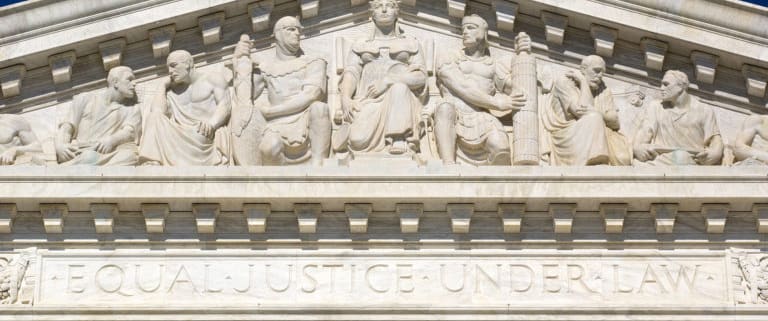
Outcome of jury trials dependent on defense attorney’s experience, talent, skill

Attorney David Betras
BKM Managing Partner David Betras

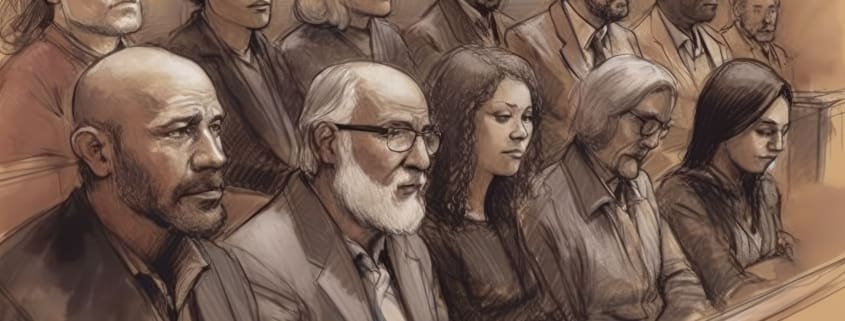
As I write this week’s column, I am busily preparing for a jury trial in Hancock County Common Pleas Court which is located in beautiful, downtown Findlay, Ohio. I’ve lost track of exactly how many jury trials I’ve participated in during my more than three decades as a practicing attorney, but I can say the outcomes have provided most of the highlights and lowlights of my career—and truth be told–I remember a lot more about my losses than my wins.

Why does the angst associated with guilty verdicts last longer than the euphoria that accompanies acquittals? Because the outcome of each trial is in many ways dependent on the defense attorney’s experience, talent, intelligence, rhetorical skill, knowledge, and yes—acting ability. We select the jury, we carefully study and prepare to nullify the evidence and undermine—if not destroy—the credibility of the witnesses presented by the prosecution, we build our defense and craft a compelling narrative that will convince the jurors that our client is not guilty beyond a reasonable doubt, and then we write and deliver a captivating closing argument that will enthrall the jury and win the case.

What could possibly go wrong?

Obviously, lots, which is I and many of my colleagues sit straight up in bed at 3:00 AM and reexamine every facet of a case that ended in a guilty verdict. Did I miss something in jury selectin? Was I slow to respond to an unexpected piece of evidence or testimony. Did my exhibits fall flat. Did I fail to connect with jurors?  I’ll often replay every minute of a trial in my head to identify what I did right and what I could have done better.

While the process is agonizing it is also extremely valuable because practical experience is an indispensable asset to a trial lawyer. That is because although they teach basic trial tactics and the rules of civil and criminal procedure in law school, there is no substitute for preparing and trying cases on behalf of clients who place their freedom, their future, and in some instances their very lives in your hands. Take it from me, courtrooms, not classrooms, are the only places attorneys like me learn to ply our trade.

Yet, despite all the preparation and trepidation involved, I love jury trials and the jury system. And I’m not alone. Throughout history the jury system has been a foundational pillar of civilized societies. Nearly 3,000 years ago bodies known as dikastai composed of as many 1,501 citizens rendered verdicts by majority rule in cases ranging from mundane matters to those involving death, exile, and seizure of property.

The Roman Empire also featured a precursor of modern juries in which capital trials were conducted before thousands of citizens. Interestingly, high government officials and their relatives, people who had been convicted of felonies, gladiators for hire, and men younger than 30 or older than 60 were barred from jury service.  

The system continued to evolve though the centuries and began to resemble the process and configuration that exists today in the late 900s when King Etheired the Unready of England instituted the Wantage Code which required the 12 leading minor nobles in small districts to investigate crimes. These juries differed from modern ones because there were no trials—the jurors were responsible for investigating cases and rendering verdicts on their own.

Juries took a major leap forward during the Reign of King Henry II in the mid 1100s. He established both a process in which a jury of 12 free men arbitrated property disputes and formed grand juries whose members were to report any crimes they knew of to a judge who would then conduct a trial by ordeal. As you might imagine, the guilt or innocence of the defendant was determined by subjecting them to one or more painful experiences. This system was based on the premise that God would help the innocent by performing a miracle on their behalf. Trial by ordeal fell out of favor when Pope Innocent III prohibited priests from participating in trials by fire and water. I can say this, if they were still around, I would have found a different occupation.

The right to trial by jury, along with the entirety of British Common Law, continued to advance and served as both one of reasons for the American Revolution and the basis for the judicial system America’s Founding Fathers enshrined in the Fifth, Sixth, and Seventh Amendments to our Constitution. Thomas Jefferson specifically cited King George’s decision to deprive colonists of trial by jury as a grievance in the Declaration of Independence and John Adams wrote that “…representative government and trial by jury are the heart and lungs of liberty.  Without them we have no fortification against being ridden like horses, fleeced like sheep, worked like cattle, and fed and clothed like swine and hogs.”

I am 100 percent in agreement with Adams, which explains why I believe we all have a civic duty to vote and serve as jurors—and why I refuse to help anyone skirt jury duty. Under Ohio there are very few reasons people may be exempt from service and even those who qualify must be excused by a judge. In the interest of full disclosure, I’ve received a jury summons and duly reported for duty. Unfortunately, I was excused and denied the opportunity to get a very close look at the dynamic that takes place during deliberations. That is an experience I would have relished and used for the remainder of my career.

Students’ right to privacy is limited in public schools, random searches of lockers/contents permissible under the 14th Amendment…

Attorney David Betras
BKM Managing Partner David Betras

To the relief of parents and the chagrin of students, summer is over and a new school year has begun. That makes this an opportune time to convene another session of Professor Dave’s Shade Tree Legal Academy. During today’s lecture I will discuss whether the law allows public school teachers and administrators to search students and their property. It’s a fascinating topic that involves the Fourth Amendment, a landmark Supreme Court decision, and state statutes.

Class is about to begin so please no gum chewing, turn off your cell phones and handheld devices, and, as usual, there will not be quiz or test on this material because Professor Dave doesn’t have time to grade them.

Let’s begin our exploration of the topic with a look at the Fourth Amendment which states in part: “The right of the people to be secure in their persons, houses, papers, and effects, against unreasonable searches and seizures, shall not be violated…” For years various state and federal courts reached various conclusions regarding the applicability of the Amendment to public schools. The issue finally was resolved in 1985 when the U.S. Supreme Court handed down its landmark ruling in New Jersey v. T. L. O.

The case revolved around TLO, a 14-year-old New Jersey high school student who was caught smoking in a school bathroom by a teacher. The teacher escorted TLO to the school office where she was questioned by assistant vice principal Theodore Choplick. During the questioning, the student denied that she had been smoking and said she “did not smoke at  all.” At that point, Mr. Choplick demanded to see her purse, opened it and found a pack of cigarettes and rolling papers. He continued to search the purse and found a small amount of marijuana and a list of students to whom she had sold pot. The police were called and TLO was eventually found to be delinquent by a juvenile court judge and placed on probation for one year.

During the juvenile court proceeding TLO filed a motion to suppress the evidence found in her purse because the search had violated the Fourth Amendment. The juvenile court judge denied the motion because Choplick “had reasonable cause to believe that smoking, a violation of school policy, had occurred” TLO’s appeal of the juvenile judge’s ruling was rejected by the New Jersey Superior Court. The New Jersey Supreme Court then ruled that Choplick’s search of TLO’s purse had violated the prohibition against unreasonable search and seizure and reversed the decision. The state then appealed the case to the U.S. Supreme Court.

In a 6-3 decision authored by Justice Byron “Whizzer” White, the Court ruled that students were protected by the Fourth Amendment. Unfortunately for TLO, the justices also held that in the interest of maintaining order and discipline, officials could search students in a public school environment without a warrant or meeting the probable cause standard that applies to adults as long as they had a “reasonable suspicion” to believe a rule or law had been violated. Because she had been caught smoking in the bathroom and taken directly to the office, the justices found it was reasonable to assume she had cigarettes in her purse which, in turn, gave the vice-principal reasonable cause to search the purse.

Voila, a new precedent—and the basis for laws and regulations that govern searches in public schools was born.

What does that mean for Ohio students? It means that under ORC 3313.20  a principal may search any pupil’s locker and its contents if they reasonably suspect that “…the locker or its contents contains evidence of a pupil’s violation of a criminal statute or of a school rule;”

In addition, the statute permits the random search of all lockers and contents at any time provided the school has posted signs in conspicuous places that notify students that all lockers are the property of the board of education. In this situation neither the Fourth Amendment nor the “reasonable suspicion” standard apply. Bottom line: if that notice is posted in your school don’t put anything in your locker you don’t want a teacher or principal to find.

The reasonable suspicion standard also applies to searches of desks, backpacks, and cars parked on school property. One exception: the Ohio Supreme Court has ruled that the standard does not apply to searches of unattended backpacks.

The standard does not apply when students do not have a reasonable expectation of privacy, i.e. items that are in plain view, school property such as computers, including laptops owned by the school that students are permitted to take home. Student activity on school internet networks and the browsing/download histories are also subject to search and review.

While the rules that apply to public schools may seem to invite invasion of students’ privacy, the rules that apply to private schools are even more draconian because, for all intents and purposes, privacy protections exist do not exist.

So there you have it class—understanding your rights, or lack thereof, will help you avoid trouble. And, oh, by the way, you don’t have to worry about Professor Dave searching your locker or electronic devices, I respect the Fourth Amendment and anyway, I just don’t have the time.

A look back at SCOTUS’ 22-23 term, predictably conservative with a dash of surprise

Attorney David Betras
BKM Managing Partner David Betras

On Friday, June 30, the nine learned women and men who preside over the Supreme Court of the United States (SCOTUS) issued their final decisions for the 2022-2023 term, sent their black robes to the dry cleaners, and high-tailed it out of the nation’s capital—some, perhaps on private jets, a topic I’ll address in a future column.

That means it is time for me to hand down my annual review of the justices’ work over the past 12 months, beginning with just how much work they actually did. Each year 5,000 to 7,000 cases are filed with the Court, the vast majority arrive as appeals from the federal Appellate and District Courts and the highest court in each state. In an average year SCOTUS accepts 75 to 80 cases or approximately one percent. This year the justices took up 60 and decided 58. Given the Court’s conservative majority, people on the left of the political spectrum probably wish the number had been six, those on the right would be thrilled if 600 or more had made it onto the docket.

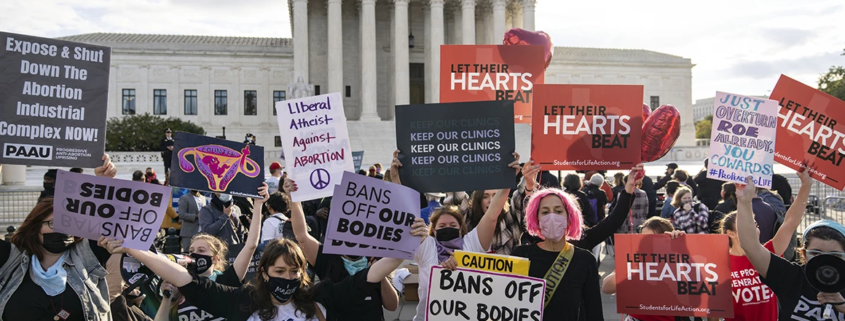
Although a number of the 58 decisions deal with significant issues that will effect millions of Americans for decades to come, none will have the seismic impact of Dobbs v. Jackson Women’s Health Organization which reversed Roe v. Wade and gave each state the authority to regulate abortion within its borders.  The aftershocks of that ruling are still being felt across the country, including here in Ohio, where a citizen initiated constitutional amendment guaranteeing reproductive freedom and abortion access may appear on the General Election ballot later this year.

With all that as preface, let’s take a look at some of the most important and closely watched cases decided during the term:

Biden v. Nebraska. Americans owe more than $1.78 trillion in student loan debt which is more than any type of debt other than mortgages. During the 2020 presidential election Joe Biden promised to cancel up to $10,000 of that debt per borrower. Wonder of wonders, after he won, he kept his promise and signed an executive order that wiped out $10,000 in student loans for borrowers with an annual income of less than $125,000. 

Officials in Nebraska, Missouri, and three other states were not amused. They sued, arguing that the Biden Administration did not have the statutory authority to implement the loan forgiveness program. A 6-3 majority of the Court, led by Chief Justice Roberts agreed and basically said everyone who owes has to pay up. As I write this the President, who noted that the government has forgiven $757 billion in loans to businesses made under the Paycheck Protection Program, is searching for a new way to deal with the problem.

Students for Fair Admissions v. President and Fellows of Harvard College and v. University of North Carolina. In these two separate cases, Students for Fair Admissions argued that Harvard’s affirmative action admissions program violated Title VI of the Civil Rights Act of 1964 by discriminating against Asian American applicants in favor of white applicants. The same plaintiffs argued that UNC’s program violates the Fourteenth Amendment by using race as a factor in admissions. The programs were upheld by the District and Appellate courts.

SCOTUS disagreed and in a 6-3 ruling overturned the lower courts and held that the use of race in college admissions is unconstitutional. In response, a number of colleges and universities are exploring utilizing class rather than race as a factor in making higher education more accessible to a wider segment of Americans.

Moore v. Harper and Allen v. Milligan These two cases which involve legislative redistricting and gerrymandering produced decisions that were surprising in light of the fact that the Court has in recent years handed down a number of decisions that eroded the landmark Voting Rights Act of 1965 and approved partisan gerrymandering.

In Moore the Court rejected North Carolina lawmakers’ claim that the “independent state legislature” theory gave them the sole authority to draw whatever districts they wanted in any way they pleased. In a 6-3 opinion written by the Chief, the Court held that districts drawn by state authorities were subject to review by the federal courts. The ruling has special significance for Ohio that I will address next week.

In Allen, a 5-4 majority, again led by CJ Roberts, found that Alabama officials had violated Section 2 of the Voting Rights Act by packing Black voters into a single district in a way that made it nearly impossible for Black voters to elect the candidates of their choice.

The two rulings provide a glimmer of hope that at some point before the end of the 21st Century our gerrymandering will be outlawed, and our electoral process will feature a modicum of fairness. OK, I’m not holding my breath, but I can dream can’t I?

Democracy word cloud

DAVID BETRAS: August’s ballot decision asking to create a 60% supermajority goes against majority rule

In the 220 years that elapsed since Ohio became a state, the General Assembly has never scheduled a special election for the sole purpose of considering a legislatively initiated constitutional amendment. That streak is about to come to an end. As I write this week’s column, the state’s 88 county boards of election, are preparing to do exactly that. This extraordinary situation provides context for a Civics lesson that I hope will provide voters with the information they need to make an informed decision when—and if-they cast a ballot on August 8.

Attorney David Betras
BKM Managing Partner David Betras

I say “if” because turnout for August specials is incredibly low. For example, only eight percent of the electorate participated in last year’s primaries for seats in the state house and senate. In fact, turnout has been so abysmal that the very same legislators who just scheduled the upcoming election actually voted to do away with them just a few months ago. I’ll have more to say about that in a bit.

For now, back to the Civics lesson. Let’s start with the basics: our form of government. While commonly referred to as democracies, the United States, Ohio, and the other 49 states are democratic republics in which the people vote for the representatives who do the actual governing. The Founding Fathers embraced this model because they believed it was the most effective and efficient way to manage the nation’s affairs.

The principle of majority rule is the engine that drives democratic republics. According to famed mathematician Kenneth May, majority rule is the only “fair” way to conduct elections because it does not allow some votes to count more than others and unlike super majority rules, it does not allow the status quo to prevail even though it received fewer votes.

Is the system perfect? Of course not. When our elected representatives abandon or ignore the will and wishes of their constituents due to corruption, gerrymandering, or the influence of big money, the public justifiably loses faith in government. That is exactly the situation that existed in Ohio at the beginning of the 20th Century. Outraged by a state government that was being sold to the highest bidders, a group of reformers and progressives convinced the voters to convene a Constitutional Convention in 1912.

During weeks of deliberations delegates wrote and voters later approved a proposal that serves as the antidote to unresponsive government: Article 2, Section 1 of the Ohio Constitution which enables citizens to place an amendment directly before voters on a statewide ballot who must approve it by a simple majority vote.

The citizen-initiated amendment process is, as it should be, complicated and laborious. Over the past 111 years, 71 proposals have been placed before the voters, 19 have been approved. Many have improved our quality of life including imposing a10-mill limit on unvoted property taxes, home rule authority for cities and counties, banning smoking in public places, and raising the state’s minimum wage and indexing it to inflation. By any measure, the process has benefited Ohioans.

Which brings us back to the impending unprecedented August election. For a reason I will not address here, the Republican majority in the General Assembly is placing an amendment that will fundamentally change the rules that govern the initiative process on the ballot in  August. Their proposal will raise the threshold for approving initiated amendments from the century-old 50% plus one standard to a 60% supermajority. If passed it will erase the principle that is at the very heart of our system of government and replace it with minority rule.

And, in a final bit of irony, they will only need to secure 50% plus one vote to do it in  election they hope most Ohioans won’t notice.

Constitutional scholar and former Ohio House members Mike Curtin believes trashing Ohio’s 220-year-old tradition of respecting voters is a historic and contemptuous act of bad faith. Fortunately, the voters, thanks to the 1912 Constitutional Convention, will have the final say.

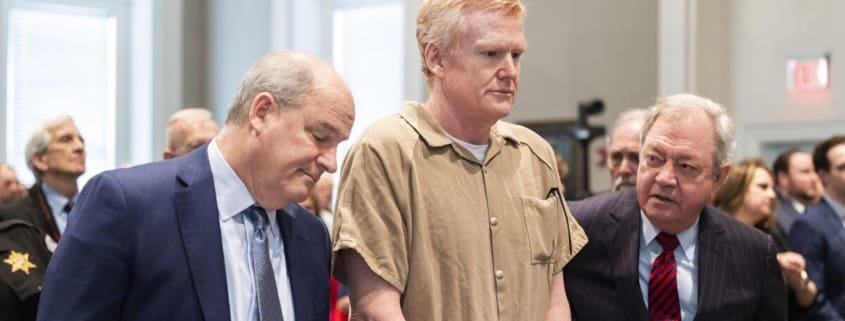
What were they thinking? Why did Alex Murdaugh’s lawyers allow the now convicted killer to testilie for hours on end?

Attorney David Betras
BKM Managing Partner David Betras

Judging by the number of people who have yelled, “Hey Betras, what the xxxx (readers are free to insert the word of their choice) is up with that Murdaugh trial?” I am not the only person who has been obsessed with the sordid saga of the once prominent South Carolina trail lawyer who was recently found guilty of murdering his wife and his son.

Okay, I wasn’t “obsessed” with it, I was consumed by it. I watched every moment of the trial, hours of analysis of each day’s proceedings offered by “expert” criminal lawyers, as well as all of the documentaries, docudramas, and special reports that streamed into my smart TV, smart phone, and laptop.

The discussion and speculation that raged during the trial continues today—much of it focused on Murdaugh’s decision to take the stand. In the immediate wake of his testimony, in which he basically admitted to being a pathological liar who couldn’t tell the truth if his life depended on it, which it did, a number of talking head criminal lawyers told the media the defense team had to allow the accused killer to look the jurors in their collective eyes and refute the charges. One of the pundits, criminal attorney and former prosecutor Mark Eiglarsh told CNN “If you’re going to have somebody testify, having a lawyer who’s smart, who’s been in the courtroom, who’s lied for 20 years … that’s the guy you want on the stand…all it takes is one juror to connect with him emotionally.” 

To be frank, Mr. Eiglarsh and anyone else who thought it was a good idea for Murdaugh to hitch up his pants, take the stand, and admit to being a drug-crazed criminal who did everything but murder his wife and son is just plain stupid—a fact underscored by the verdict.

During my career I have represented numerous clients charged with murder and I have never put one of them on the stand, including those who have literally begged me to allow them to proclaim their innocence in open court. I have adopted this strategy for a number of reasons beginning with the fact that it is not my job to prove my client is innocent, it is the prosecutor’s job to prove they are guilty, and I refuse to do anything that will make that job easier.

And permitting a client to give up their Fifth Amendment protections against self-incrimination by testifying does exactly that.

Think of it this way: the accused takes the stand, I ask them if they committed the crime, they emphatically say no. This has absolutely no impact on jurors who fully expect defendants to say they didn’t do it. I sit down, the prosecutor stands up and immediately begins tearing my client apart limb from limb. Check the video of the Murduagh cross and you’ll see how this works—or I should say how it doesn’t work for the defense.

Clients also ask to take the stand because they fear the jury will believe they are guilty if they just sit quietly as I defend them. I point out that this is, for the most part, not true and that judges are required to instruct jurors that they may not draw any inference from the fact that a defendant does or does not testify—the presumption of innocence that is the beating heart of our judicial system stands.

Whether Murdaugh would have benefited from keeping his mouth shut is a question that will be debated in legal circles for years. One thing is certain, however, testilying for hours on end didn’t help at all.

A message from David Betras to anyone who is being questioned by the police: Shut Up!

Attorney David Betras
BKM Managing Partner David Betras

On a number of occasions, I’ve addressed what people should do if they are stopped and questioned by the police. Here’s an excerpt from an August 2021 blog post on the topic:

“First, if you are stopped by law enforcement and questioned you are under no obligation to do anything other than provide your name and ID.
Second, remember, the police will delay placing you in custody so they can use what you say to establish probable cause for arrest.
Third, your pre-arrest statements are admissible in court.
Fourth: Shut up. What you do not say cannot be used against you.”

That’s right I said just shut up.

I raise the topic today because as New York Times columnist Faraj Manjoo points out in his most recent piece, prosecutors in New Mexico plan to charge actor Alec Baldwin with involuntary manslaughter in the death of cinematographer Halyna Hutchinson. Hutchinson was working on the set of the movie rust when Baldwin pulled the trigger of a gun that was not supposed to be loaded with live ammunition. She was struck by a bullet and died shortly thereafter.

After the shooting Baldwin agreed to be interviewed by police without his attorney present, waived his Miranda rights, and did anything but shut up: “Still, for about an hour, Baldwin not only answered detectives’ many questions about the shooting but also offered his own theories about the incident and suggested the next steps the police might pursue in their investigation.”

As Manjoo notes, “The Fifth Amendment of the Constitution allows Americans to refuse to answer questions from law enforcement. Yet despite the ritualistic incantation of the Miranda warning on every TV police procedural, silence is a right that people can find hard to accept. If you’re convinced of your innocence, aren’t you obligated to help the police solve the matter under investigation? Refusing to talk to the police seems like something people do only when they’ve got something to hide.”

I’ve lost count of how many clients I’ve defended in court because they decided to abandon their Fifth Amendment rights and “help” the police who in turned helped themselves to an arrest.

In the column Manjoo praises the work of law professor and former defense attorney James Duane, one of the nation’s leading proponents of just shutting up when questioned by law enforcement. The video of his lecture “Don’t Talk to the Police,” has been viewed millions of times on YouTube, you should make it millions plus one by watching: https://youtu.be/d-7o9xYp7eE

In his lecture Duane offers this quote from former US Attorney General Robert Jackson: “Any lawyer worth his salt will tell the suspect in no uncertain terms to make no statement to the police under any circumstances.” It’s good to know that AG Jackson, one of the most respected lawyers in the history of American jurisprudence would think I am worth my salt.

“The average American — even if they’re a highly sophisticated college graduate or a law school student — really doesn’t know an awful lot about the many different ways in which even innocent people can regret for the rest of their lives the biggest mistake of their lives, the decision to waive their Fifth Amendment right and agree to talk to the police,” Duane said.

Duane argues that a key danger is that in trying to defend yourself to the police, you may unwittingly admit some wrongdoing. Navigating around such dangers is made all the more difficult because courts have given the police wide leeway to lie to people being interrogated.

“They will lie to you about what crime they are actually investigating,” Duane writes in his book, “whether they regard you as a suspect, whether they plan to prosecute you, what evidence they have against you, whether your answers may help you, whether your statements are off the record, and whether the other witnesses have agreed to talk to them — even about what those witnesses have or have not said.”

Manjoo closes his column with this passage: “The Fifth Amendment is no mere formality. It is among the best defenses against government overreach that Americans enjoy. We should guard it vigorously. Anytime you’re asked to talk to the police about an incident you are involved in, there are just four words you need to say: “I want a lawyer.”

And then please for the love of God, shut up.

Time for a Supreme Court retrospective; ‘goodbye and good riddance’

Three days after assuming the presidency in 2009, Barrack Obama looked House and Senate Republican leaders in the eye and uttered the phrase, “Elections have consequences.” The just-concluded term of the U.S. Supreme Court proves the former president was exactly right — most likely much to his chagrin. I know I have written about the court often over the past few months. Thankfully, this will be the last time I address the topic for a while because the justices are headed off to do whatever they do when they remove their robes and go on vacation. Here is a retrospective on the 2021-2022 term, which, by any measure, was one of the most consequential in history.

I will begin with the biggie: Dobbs v. Jackson Women’s Health Organization, the 6-3 decision that overturned Roe v. Wade and tossed nearly a half-century of legal precedent on the trash heap of history. With hours of the decision, Ohio AG David Yost successfully petitioned a federal court to lift a stay on the state’s “heartbeat bill,” which bans abortions after six weeks and does not include an exception for rape or incest. A few days later a 10-year-old girl who was six weeks and three days pregnant as result of a sexual assault was forced to travel to Indiana to receive the medical care she needed.

The 6-3 ruling in New York State Rifle & Pistol Assoc. v. Bruen eviscerated a New York state law that required residents to obtain a permit to carry a weapon and will make it extremely difficult for other states to strengthen their gun safety regulations. Keep in mind, this is the same year in which there were mass shootings in Buffalo, New York; Uvalde, Texas; and the July 4th massacre in Highland Park, Ilinois, where seven people died including the parents of a 2-year-old toddler who was left to wander down the street as her mother and father laid dead.

A number of decisions eroded the constitutional wall the Founding Fathers erected between church and state. Most notable were Carson v. Makin, which will make it easier for state governments to divert tax dollars from public education to religious schools, and Kennedy v. Bremerton School District, which cleared the way for prayer at public school football games and other events.

The conservative 6-3 majority struck a blow in West Virginia v. Environmental Protection Agency by curtailing the EPA’s ability to order existing power plants to reduce their carbon emissions. Ironically, this means that if more kids are born as a result of Dobbs it will be more difficult for them to breathe. Just saying.

Because the federal government has not broken enough promises to or heaped enough indignity upon Native Americans, the Court ruled against the Cherokee Nation in Oklahoma v. Castro-Huerta. Conservative Neil Gorsuch joined the court’s three liberals in dissent arguing that the decision reneges on the federal government’s centuries-old promise that tribes would remain forever free from interference by state authorities.

Because even a stopped clock is right twice a day, I will acknowledge that the justices ruled correctly in a few cases, including Biden v. Texas, a 5-4 ruling that permitted the current administration to reverse a Trump-era policy that requires asylum seekers to remain in Mexico while their cases are reviewed in U.S. courts. And Biden v. Missouri approved a federal vaccine mandate for health care workers employed at facilities that receive Medicare and Medicaid funding.

So, with that, I will say goodbye and good riddance to SCOTUS’s 2021-2022 term and take a three-month break from writing about the Supreme Court.

Leak of Alito’s draft Roe v Wade opinion threatens American jurisprudence

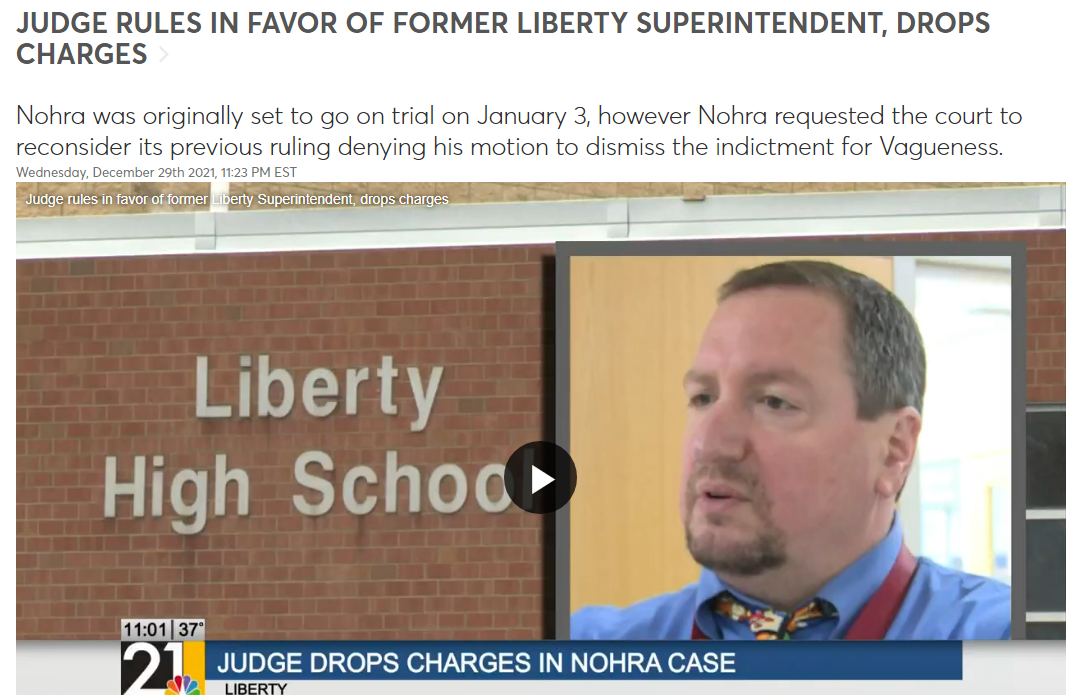
Judge dismisses felony charges against former Liberty Schools Superintendent Joe Nohra

In a ruling handed down on Wednesday, December 30, 2021, Trumbull County Common Pleas Court Judge Ronald Rice dismissed six felony counts that had been lodged against former Liberty Local Schools Superintendent Joe Nohra earlier this year. The ruling came in response to a motion filed by Atty. David Betras arguing that the statutes under which Mr. Nohra had been indicted were unconstitutionally vague. In a well reasoned six-page decision Judge Rice agreed:

“Therefore, upon reconsideration of Defendant’s Motion to Dismiss Counts 1-6 of the Indictment for Vagueness, the Court finds by clear and convincing evidence the Defendant has presented a presently existing set of facts that make the statutes unconstitutional and void when applied to those facts. The Defendant’s Motion is well taken and the same is hereby granted.” The decision may be viewed and downloaded here: Rice dismissal of Nohra felony charges

Atty. Betras hailed the decision as a victory for Mr. Nohra and the justice system. “As we have said previously, Mr. Nohra, at the discrection of the school board, and with approval of legal counsel, took appropriate action to protect the district and the taxpayers. He should have been commended instead of prosecuted,” Betras said.

Media coverage of the dismissal may be accessed by following these links: Vindicator       WKBN     WFMJ

Atty. Betras said BKM is prepared to mount a vigorous defense against the remaining misdemeanor charges that were included in the indictment.

When Mr. Nohra was indicted Atty. Betras pledges that the BKM legal team would aggressively defend Mr. Nohra in court and in the court of public opinion. “We simply won’t allow the people we represent to be smeared or damaged by rumors and innuendo,” he said. The firm also released the following statement on Mr. Nohra’s behalf:

“Mr. Nohra emphatically and categorically denies the baseless allegations contained in the indictment handed down yesterday by the Trumbull County Grand Jury.

After being presented with credible evidence that an employee of the Liberty Local Schools was engaged in activities that constituted theft in office, Mr. Nohra, with the knowledge and approval of the members of the Liberty Local Schools Board of Education and the Board’s legal counsel, initiated an investigation that resulted in the suspect employee’s resignation from the school system.

The actions described in the indictment were conducted in conjunction with and for the sole purpose of facilitating the above-referenced investigation. The members of the Board of Education and the Board’s legal counsel approved the use of surveillance equipment before it was installed. In addition, written Board policy authorizes the superintendent to utilize surveillance equipment when necessary and with approval of the Board which Mr. Nohra sought and received.

Mr. Nohra ensured that the Board members and their legal counsel were kept fully informed during each step of the investigation, were apprised of the evidence of wrongdoing that was gathered and were aware of its outcome. 

My client is both bewildered and astounded that he now faces criminal charges for taking decisive steps to protect the taxpayers and looks forward to defending himself against these ludicrous accusations.”

Supreme Court will decide unprecedented number of blockbuster cases during 2021-2022 term

Attorney David BetrasLike kids counting the days until Christmas, attorneys, legal scholars, and jurisprudence junkies, including me, eagerly anticipate the first Monday in October, the day the Supreme Court of the United States (SCOTUS) begins its new term each year. We can barely control ourselves as we wait for the justices to decide which of the 7,000 cases submitted to them annually become one of the 150 or so they hear.

Under normal circumstances, the justices go about their work in relative obscurity because the cases on the Court’s docket, which is dominated by battles between states over water rights, business disputes, and arguments about arcane legal principles, do not impact the lives of most Americans or generate much media coverage aside from long, jargon-packed pieces posted on SCOTUSblog. Believe me, if you have insomnia, spend a few minutes on the site and you will be sleeping in no time.

This year, however, is far from normal. Although the 2021-2022 term is less than two weeks old, the Court is under intense scrutiny because the justices have agreed to hear a number of cases that may ignite legal and societal firestorms while further undermining the public’s waning support for the Court which was once widely regarded, in the words of Alexander Hamilton, as the “least dangerous” branch of government.

Entrance to US Supreme CourtChief among the potential blockbusters is Dobbs v. Jackson Women’s Health Organization, which centers on a Mississippi law which, with few exceptions, prohibits abortions after 15 weeks of gestation. Dobbs gives the Court the opportunity to overturn  Roe v. Wade which established a woman’s right to choose and Planned Parenthood v. Casey, which protects that right until viability. It is, quite simply, the most important reproductive rights case to come before the Court in 30 years.

New York State Rifle & Pistol Association Inc. v. Bruen is the first significant firearms case to come before the Court since the 2008 ruling in District of Columbia v. Heller that extended Second Amendment protections to individuals. Bruen arrives at the Court on appeal from the 2nd Circuit which upheld New York state’s strict gun licensure law which requires residents to obtain a permit to possess a firearm and totally bans open carry. A decision in favor of the Association could gut gun laws across the nation.

Like Bruen, Carson v. Makin which challenges Maine’s prohibition against using state funds to pay tuition for schools that offer religious instruction has nationwide implications. The justices will decide if Maine’s law violates the free exercise, establishment, and equal protection clauses of the Constitution. If they so hold, voucher programs across the U.S., including Ohio’s will be impacted and taxpayer dollars will begin flowing to schools that promote religion.

Other important cases include Students for Fair Admissions v. President and Fellows of Harvard College which poses a lethal threat to race-based college admission programs,  CVS Pharmacy Inc. v. Doe which involves alleged discrimination against persons with HIV, as well as cases focused on national security, campaign finance laws, and Texas’ new draconian abortion restrictions.

The last time the Court ruled on this many consequential cases in one term was, well, never. Throughout history, cases of similar magnitude to the ones on SCOTUS’ 2021-2022 docket were heard and decided every five or ten years. As a result, one thing is certain: the justices will not labor in obscurity over the next 12 months.