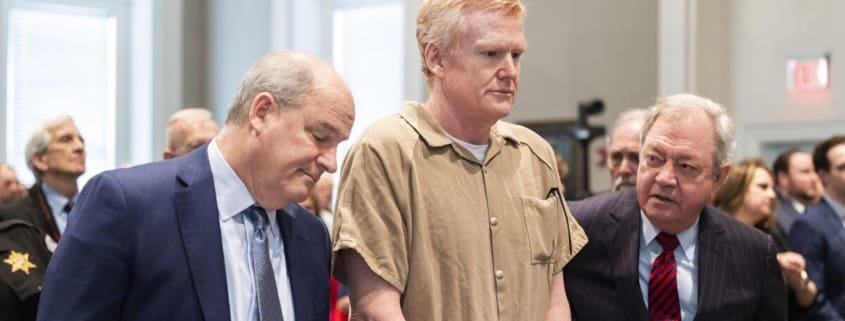
What were they thinking? Why did Alex Murdaugh’s lawyers allow the now convicted killer to testilie for hours on end?

Attorney David Betras
BKM Managing Partner David Betras

Judging by the number of people who have yelled, “Hey Betras, what the xxxx (readers are free to insert the word of their choice) is up with that Murdaugh trial?” I am not the only person who has been obsessed with the sordid saga of the once prominent South Carolina trail lawyer who was recently found guilty of murdering his wife and his son.

Okay, I wasn’t “obsessed” with it, I was consumed by it. I watched every moment of the trial, hours of analysis of each day’s proceedings offered by “expert” criminal lawyers, as well as all of the documentaries, docudramas, and special reports that streamed into my smart TV, smart phone, and laptop.

The discussion and speculation that raged during the trial continues today—much of it focused on Murdaugh’s decision to take the stand. In the immediate wake of his testimony, in which he basically admitted to being a pathological liar who couldn’t tell the truth if his life depended on it, which it did, a number of talking head criminal lawyers told the media the defense team had to allow the accused killer to look the jurors in their collective eyes and refute the charges. One of the pundits, criminal attorney and former prosecutor Mark Eiglarsh told CNN “If you’re going to have somebody testify, having a lawyer who’s smart, who’s been in the courtroom, who’s lied for 20 years … that’s the guy you want on the stand…all it takes is one juror to connect with him emotionally.” 

To be frank, Mr. Eiglarsh and anyone else who thought it was a good idea for Murdaugh to hitch up his pants, take the stand, and admit to being a drug-crazed criminal who did everything but murder his wife and son is just plain stupid—a fact underscored by the verdict.

During my career I have represented numerous clients charged with murder and I have never put one of them on the stand, including those who have literally begged me to allow them to proclaim their innocence in open court. I have adopted this strategy for a number of reasons beginning with the fact that it is not my job to prove my client is innocent, it is the prosecutor’s job to prove they are guilty, and I refuse to do anything that will make that job easier.

And permitting a client to give up their Fifth Amendment protections against self-incrimination by testifying does exactly that.

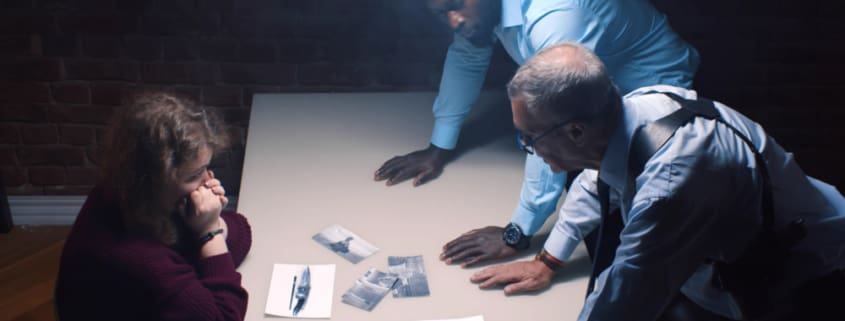
Think of it this way: the accused takes the stand, I ask them if they committed the crime, they emphatically say no. This has absolutely no impact on jurors who fully expect defendants to say they didn’t do it. I sit down, the prosecutor stands up and immediately begins tearing my client apart limb from limb. Check the video of the Murduagh cross and you’ll see how this works—or I should say how it doesn’t work for the defense.

Clients also ask to take the stand because they fear the jury will believe they are guilty if they just sit quietly as I defend them. I point out that this is, for the most part, not true and that judges are required to instruct jurors that they may not draw any inference from the fact that a defendant does or does not testify—the presumption of innocence that is the beating heart of our judicial system stands.

Whether Murdaugh would have benefited from keeping his mouth shut is a question that will be debated in legal circles for years. One thing is certain, however, testilying for hours on end didn’t help at all.

Nothing frivolous about it: Trial lawyers who hold doctors and other providers accountable when they injure or kill patients play a major role in improving America’s health care system

Attorney David Betras
BKM Managing Partner David Betras

Over the years I’ve developed a relatively thick skin—something that is basically a job requirement for criminal defense and personal injury attorneys and chairs of political parties. I’ve lost track of how many times I’ve been called an “ambulance chaser,” “shyster,” “commie,” “hack,” yelled at for getting criminals off, and been told the “What do you call 99 lawyers at the bottom of the sea?” joke, 99,000 times. (The answer: a good start.)

For the most part, this stuff just rolls off my back. But there is one two-word phrase that simply sends me over the edge: “frivolous lawsuit” as in  “If you ambulance chasers would stop filing frivolous lawsuits health care costs wouldn’t be so high. Thanks to you shysters medical malpractice insurance premiums are skyrocketing. You’re forcing doctors to practice expensive defensive medicine and driving them out of the profession.”

Aside from the fact that my firm has never filed a lawsuit that in any way comports with the definition of frivolous: i.e. not having any serious purpose or value, the medical malpractice cases trial lawyers like us bring play an important role in preventing doctors, other health care providers, and hospitals from killing and maiming patients.

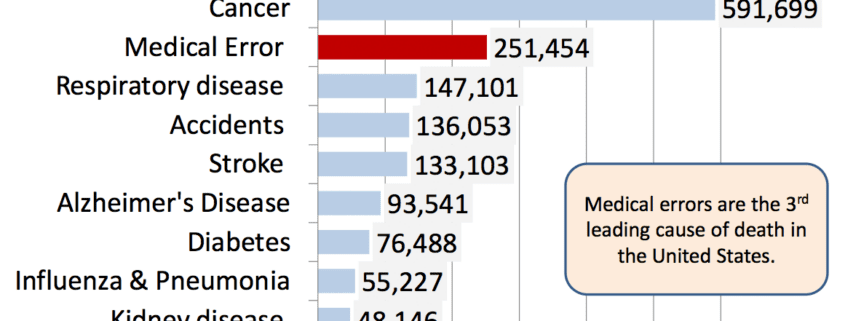
And believe me, there is nothing at all frivolous about that when you consider that a John Hopkins University School of Medicine study found that medical errors and malpractice could feasibly be the third leading cause of death in the U.S. killing between 250,000 and 440,000 Americans each year. Imagine how much higher the death toll would be if lawyers like us were not holding medical professionals accountable.

Those statistics in and of themselves are troubling, but when you put a face, a name, and an actual case to the numbers they become downright heart wrenching. For example, last year, Brian Kopp who heads BKM’s complex litigation practice group and is one of the nation’s preeminent medical malpractice and wrongful death attorneys, represented the family of Megan Clay, a perfectly healthy 20-year-old who died after having what should have been a routine tonsillectomy on March 29, 2018.

More than four years after Megan passed away, her case went to trial and a Common Pleas Court jury awarded her family significant damages. After the verdict was returned Brian offered this comment: “I am the father of seven daughters and have one granddaughter and I cannot imagine for a moment what it is like to walk in the shoes of Jay Clay and his family. Jay, his wife Christine, and Megan’s brothers and sister have suffered a devastating loss. It is always humbling to represent a family that has suffered as they have.”

Despite all the data about the number and consequences of medical errors and tragic stories Megan Clay’s, the insurance industry, doctors, and business groups continue to use frivolous lawsuits as a stalking horse for their attempts to enact tort “reform” laws that severely limit the ability of victims and families to seek justice and just compensation—even though fewer than 2% of those impacted by malpractice ever file suit.

I mention all of this because the Center for Justice and Democracy at New York Law School recently issued a comprehensive briefing book “Medical Malpractice by the Numbers” that refutes the misinformation regularly dispensed about the impact lawsuits have on the practice of medicine. Here are few relevant facts:

So-called “defensive medicine” is a myth. Researchers found that physicians order tests because they are focused on patient safety not malpractice risks, or “more focused on not harming patients than on not getting sued.”

Medical malpractice premiums are rising even though claims are dropping. More than 6 in 10 medical groups report their doctors’ malpractice premiums have increased since 2020 even though overall claims throughout the United States have dropped.

Caps on damages harm patients while doing nothing to stop insurance premium price-gouging. Researchers found that while caps drive down insurer costs, premiums do not fall and that by lowering the risk of suit for malpractice … imposing caps is associated with a 16% increase in adverse events.

The United States health care system is severely failing women. Among women of reproductive age in high-income countries, rates of death from avoidable causes, including pregnancy-related complications, are highest in the United States.

The Briefing Book is bursting with facts about they intersection of the legal and medical professions and, take if from your favorite ambulance chaser, is well worth a look.

A message from David Betras to anyone who is being questioned by the police: Shut Up!

Attorney David Betras
BKM Managing Partner David Betras

On a number of occasions, I’ve addressed what people should do if they are stopped and questioned by the police. Here’s an excerpt from an August 2021 blog post on the topic:

“First, if you are stopped by law enforcement and questioned you are under no obligation to do anything other than provide your name and ID.
Second, remember, the police will delay placing you in custody so they can use what you say to establish probable cause for arrest.
Third, your pre-arrest statements are admissible in court.
Fourth: Shut up. What you do not say cannot be used against you.”

That’s right I said just shut up.

I raise the topic today because as New York Times columnist Faraj Manjoo points out in his most recent piece, prosecutors in New Mexico plan to charge actor Alec Baldwin with involuntary manslaughter in the death of cinematographer Halyna Hutchinson. Hutchinson was working on the set of the movie rust when Baldwin pulled the trigger of a gun that was not supposed to be loaded with live ammunition. She was struck by a bullet and died shortly thereafter.

After the shooting Baldwin agreed to be interviewed by police without his attorney present, waived his Miranda rights, and did anything but shut up: “Still, for about an hour, Baldwin not only answered detectives’ many questions about the shooting but also offered his own theories about the incident and suggested the next steps the police might pursue in their investigation.”

As Manjoo notes, “The Fifth Amendment of the Constitution allows Americans to refuse to answer questions from law enforcement. Yet despite the ritualistic incantation of the Miranda warning on every TV police procedural, silence is a right that people can find hard to accept. If you’re convinced of your innocence, aren’t you obligated to help the police solve the matter under investigation? Refusing to talk to the police seems like something people do only when they’ve got something to hide.”

I’ve lost count of how many clients I’ve defended in court because they decided to abandon their Fifth Amendment rights and “help” the police who in turned helped themselves to an arrest.

In the column Manjoo praises the work of law professor and former defense attorney James Duane, one of the nation’s leading proponents of just shutting up when questioned by law enforcement. The video of his lecture “Don’t Talk to the Police,” has been viewed millions of times on YouTube, you should make it millions plus one by watching: https://youtu.be/d-7o9xYp7eE

In his lecture Duane offers this quote from former US Attorney General Robert Jackson: “Any lawyer worth his salt will tell the suspect in no uncertain terms to make no statement to the police under any circumstances.” It’s good to know that AG Jackson, one of the most respected lawyers in the history of American jurisprudence would think I am worth my salt.

“The average American — even if they’re a highly sophisticated college graduate or a law school student — really doesn’t know an awful lot about the many different ways in which even innocent people can regret for the rest of their lives the biggest mistake of their lives, the decision to waive their Fifth Amendment right and agree to talk to the police,” Duane said.

Duane argues that a key danger is that in trying to defend yourself to the police, you may unwittingly admit some wrongdoing. Navigating around such dangers is made all the more difficult because courts have given the police wide leeway to lie to people being interrogated.

“They will lie to you about what crime they are actually investigating,” Duane writes in his book, “whether they regard you as a suspect, whether they plan to prosecute you, what evidence they have against you, whether your answers may help you, whether your statements are off the record, and whether the other witnesses have agreed to talk to them — even about what those witnesses have or have not said.”

Manjoo closes his column with this passage: “The Fifth Amendment is no mere formality. It is among the best defenses against government overreach that Americans enjoy. We should guard it vigorously. Anytime you’re asked to talk to the police about an incident you are involved in, there are just four words you need to say: “I want a lawyer.”

And then please for the love of God, shut up.

The weather outside is frightful so now is the time to check out BKM’s winter driving tips…

Just in case you haven’t looked outside yet, our “Three Ps” of safe winter driving tips will be extremely relevant and useful over the next couple of days.

Please be careful on the roads, and remember, if someone who isn’t driving safely runs into you or a member of your family, contact Betras, Kopp & Markota right away to arrange a free consultation to discuss your accident. Our experienced team of investigators and attorneys will evaluate your case, provide rock-solid advice, and fight to get the money your family needs and deserves.

So, call the LOCAL law firm big enough to win millions from the insurance giants: Betras, Kopp & Markota.

SAFETY ON WINTER ROADS

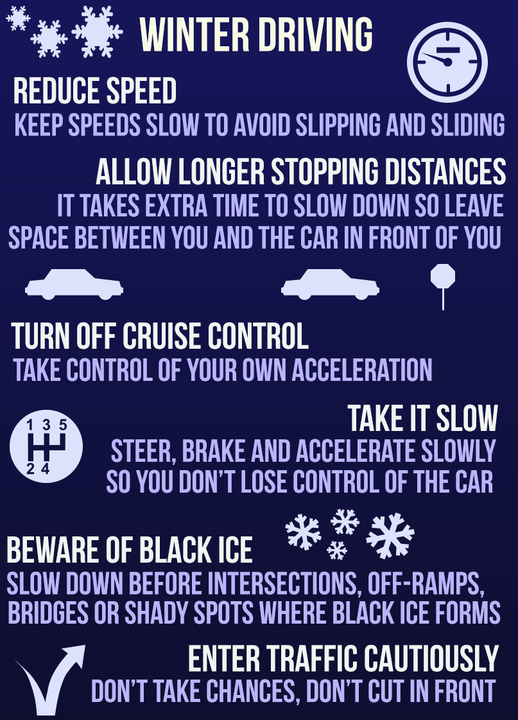
Bad roads can lead to bad wrecks. Driving on snow-covered, icy roads is tricky—even for those of us who have been doing it for decades. In order to help drivers avoid accidents, the National Highway Transportation Safety Administration and OSHA have developed the “Three Ps” of winter driving safety:

PREPARE for the trip; PROTECT yourself; and PREVENT crashes on the road.

Some of the advice is pretty obvious—like making sure all the ice and snow is scraped off all your windows before you head down the road. But even though common sense dictates that being able to see is critical to safe driving, we’ve all seen people weaving around as they peer out of the very small space they’ve cleared on their windshield that looks like a porthole on a tank’s gun turret. There’s only one difference: a car isn’t a tank rolling through woods, it’s a car lurching down a road crowded with other vehicles that can be hit because the driver can’t see them, lane lines, traffic signals or stop signs. So let’s start with the obvious, clear off all your windows, it’s great way to prevent collisions. We’re talking to guys in particular, because as the graphic shows, men are a lot more likely to drive in cars with ice-covered windows then women…

Here’s rest of NHTSA’s “Three Ps:

PREPARE

Maintain Your Car: Check battery, tire tread, and windshield wipers, keep your windows clear, put no-freeze fluid in the washer reservoir, and check your antifreeze.

Have On Hand: flashlight, jumper cables, abrasive material (sand, kitty litter, even floor mats), shovel, snow brush and ice scraper, warning devices (like flares) and blankets. For long trips, add food and water, medication and cell phone.

Plan Your route: Allow plenty of time (check the weather and leave early if necessary), be familiar with the maps/ directions, and let others know your route and arrival time.

Practice cold weather driving when your area gets snow — but not on a main road. Until you’ve sharpened your winter weather driving skills and know how your vehicle handles in snowy conditions, it’s best to practice in an empty parking lot in full daylight. Note our emphasis on the word “empty.”

Know what your brakes will do: stomp on antilock brakes, pump on non-antilock brakes.

Stopping distances are longer on water-covered ice and ice.

Don’t idle for a long time with the windows up or in an enclosed space.

PROTECT YOURSELF

Buckle up and use child safety seats properly.

Never place a rear-facing infant seat in front of an air bag.

Children 12 and under are much safer in the back seat.

Stopped or Stalled? Stay in your car, don’t overexert, put bright markers on antenna or windows and shine dome light, and, if you run your car, clear exhaust pipe and run it just enough to stay warm.

Don’t idle for a long time with the windows up or in an enclosed space.

PREVENT CRASHES

Drive slowly. It’s harder to control or stop your vehicle on a slick or snow-covered surface. On the road, increase your following distance enough so that you’ll have plenty of time to stop for vehicles ahead of you.

A word of caution about braking: Know what kind of brakes your vehicle has and how to use them properly. In general, if you have antilock brakes, apply firm, continuous pressure. If you don’t have antilock brakes, pump the brakes gently.

Stay calm and ease your foot off the gas while carefully steering in the direction you want the front of your vehicle to go if you find yourself in a skid. Stay off the pedals (gas and brake) until you are able to maintain control of your vehicle. This procedure, known as “steering into the skid,” will bring the back end of your car in line with the front.

Drugs and alcohol never mix with driving.

Texting while behind the wheel is especially dangerous in winter conditions. Put your phone down.

You can check out NHTSA’s interactive winter driving safety website by clicking here.

Here’s one more tip: even though you do everything right, someone who does just one thing wrong in icy conditions can cause an accident in the blink of an eye. If you’re involved in a wreck caused by a careless or distracted driver, contact Betras, Kopp & Markota BEFORE you talk to an insurance agent or adjuster. We’ll arrange a free consultation that will give us the opportunity to evaluate your case and provide you with sound advice that will protect your rights and your ability to secure justice and the financial settlement you and your family needs and deserves.

Now is the time to pass tougher distracted driving law, here’s how you can help

Now that our completely fraud free election is over, the members of the Ohio General Assembly have left the campaign trail and are now in Columbus conducting a “lame duck” session.  I do not want to be an alarmist, but if past performance is any indicator of future results, we should all be very, very afraid.

Why?

Because for the next two months Capital Square in Columbus will be a nesting ground for lame duck legislators who were defeated at the polls, are being forced out of office by term limits, have switched to the House from the Senate and vice versa, or have just been reelected and will not face the voters for two years. That means there are now 132 people running around the Statehouse who are totally unaccountable for whatever it is they decide to do.

Attorney David Betras
BKM Managing Partner
David Betras

As you might imagine, the opportunity to engage in mischief and mayhem is nearly unlimited. And, as history clearly demonstrates, it is an opportunity our representatives often seize by ramming unpopular or controversial laws through the legislative sausage making machine at a dizzying pace.

To absolutely no one’s surprise, the GOP majority’s lame duck agenda which consists of bills that would never have seen the light of day before Ohioans went to the polls, is truly frightening and disturbing. Rest assured; I will have more to say about that in the weeks ahead. But today, I want to shine a spotlight on a positive development that occurred during the first week of lame duck: the overwhelming passage of HB 283 which prohibits, in most circumstances, a person from using, holding, or physically supporting with any part of the person’s body any electronic wireless communications device (EWCD—what used to be commonly referred to as cell phones).

Along with stiffening penalties for distracted driving, HB 283 makes violating the law a primary offense, which means law enforcement may now stop and ticket distracted drivers before they cross over three lanes of traffic and hit a telephone pole, blow through a red light and cause a multi-car collision, or run down pedestrians or cyclists on the side of the road. That is why we and other warriors in the battle to end distracted driving enthusiastically supported the legislation when it was introduced in February of 2021.

Since then, Allstate, Nationwide, the American Property and Casualty Insurance Association, the Ohio Chamber of Commerce, the Ohio Highway Patrol, General Motors, the National Transportation Safety Board, the AAA, the Ohio Trucking Association, and more than 20 other groups and individuals including Douglas and Cathy Richeson, Sharon Montgomery, and Dom Tiberi all of whom lost loved ones in distracted driving crashes, have testified in favor of the bill.

Yet, despite broad-based support from the business community and the compelling testimony of grieving families HB 283 languished in the House Criminal Justice Committee for more than a year because Bill Seitz of Cincinnati, one of the most powerful Republicans in the House, was opposed to it. As a result, hundreds of Ohioans continued to be involved, hurt, and/or killed in accidents that never should have happened.

This week Seitz finally agreed to free the bill from committee after adding amendments proponents would only have accepted during lame duck. Seitz effectively blackmailed them into capitulating because he knew backers of the bill did not want to begin the fight anew when the next session of the General Assembly convenes in 2023.

Although Seitz succeeded in weaking the legislation, it will make Ohio the 31st state in the nation to ban the use of EWCDs while driving and make violations a primary offense. The law represents an important first step toward making Ohio a safer place to drive, walk, and bike.

But it is a step we will take only if HB 283 passes the Senate.

And that’s a bid if. Senate President Matt Huffman who is arguably the most powerful Republican in Ohio, opposes the legislation on “civil liberty” grounds. I guess he believes distracted drivers should continue to have the civil liberty to drive around killing and maiming their fellow Ohioans.

Huffman did say, however, that he will allow the legislation to come to a floor vote if there is a “groundswell of support for it” among the members of his caucus, two of whom Sandra O’Brien and Michael Rulli represent the Valley. So here is an assignment for all of you who would like to help the BKM legal team save some lives: Call or email them both and ask them to ask Sen. Huffman to bring HB 283 to the floor.

You may reach Sen. O’Brien by phone at (614) 466-7182 or by email at https://ohiosenate.gov/senators/obrien/contact. Call Sen. Rulli l at (614) 466-8285 or shoot him an email at  https://ohiosenate.gov/senators/rulli/contact

Thanks in advance for your help, getting this important bill passed will give us all something to be extremely grateful for this holiday season and for years to come.

Time for a Supreme Court retrospective; ‘goodbye and good riddance’

Three days after assuming the presidency in 2009, Barrack Obama looked House and Senate Republican leaders in the eye and uttered the phrase, “Elections have consequences.” The just-concluded term of the U.S. Supreme Court proves the former president was exactly right — most likely much to his chagrin. I know I have written about the court often over the past few months. Thankfully, this will be the last time I address the topic for a while because the justices are headed off to do whatever they do when they remove their robes and go on vacation. Here is a retrospective on the 2021-2022 term, which, by any measure, was one of the most consequential in history.

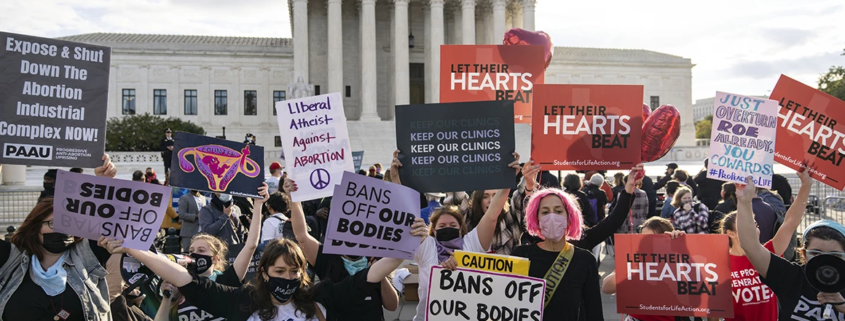
I will begin with the biggie: Dobbs v. Jackson Women’s Health Organization, the 6-3 decision that overturned Roe v. Wade and tossed nearly a half-century of legal precedent on the trash heap of history. With hours of the decision, Ohio AG David Yost successfully petitioned a federal court to lift a stay on the state’s “heartbeat bill,” which bans abortions after six weeks and does not include an exception for rape or incest. A few days later a 10-year-old girl who was six weeks and three days pregnant as result of a sexual assault was forced to travel to Indiana to receive the medical care she needed.

The 6-3 ruling in New York State Rifle & Pistol Assoc. v. Bruen eviscerated a New York state law that required residents to obtain a permit to carry a weapon and will make it extremely difficult for other states to strengthen their gun safety regulations. Keep in mind, this is the same year in which there were mass shootings in Buffalo, New York; Uvalde, Texas; and the July 4th massacre in Highland Park, Ilinois, where seven people died including the parents of a 2-year-old toddler who was left to wander down the street as her mother and father laid dead.

A number of decisions eroded the constitutional wall the Founding Fathers erected between church and state. Most notable were Carson v. Makin, which will make it easier for state governments to divert tax dollars from public education to religious schools, and Kennedy v. Bremerton School District, which cleared the way for prayer at public school football games and other events.

The conservative 6-3 majority struck a blow in West Virginia v. Environmental Protection Agency by curtailing the EPA’s ability to order existing power plants to reduce their carbon emissions. Ironically, this means that if more kids are born as a result of Dobbs it will be more difficult for them to breathe. Just saying.

Because the federal government has not broken enough promises to or heaped enough indignity upon Native Americans, the Court ruled against the Cherokee Nation in Oklahoma v. Castro-Huerta. Conservative Neil Gorsuch joined the court’s three liberals in dissent arguing that the decision reneges on the federal government’s centuries-old promise that tribes would remain forever free from interference by state authorities.

Because even a stopped clock is right twice a day, I will acknowledge that the justices ruled correctly in a few cases, including Biden v. Texas, a 5-4 ruling that permitted the current administration to reverse a Trump-era policy that requires asylum seekers to remain in Mexico while their cases are reviewed in U.S. courts. And Biden v. Missouri approved a federal vaccine mandate for health care workers employed at facilities that receive Medicare and Medicaid funding.

So, with that, I will say goodbye and good riddance to SCOTUS’s 2021-2022 term and take a three-month break from writing about the Supreme Court.

Leak of Alito’s draft Roe v Wade opinion threatens American jurisprudence

By defending people charged with crimes I protect justice for all

During my career as a criminal defense attorney, I have represented hundreds of people who have been charged with serious offenses. From time to time either the nature of a particular case and/or its outcome will attract the attention of MahoningMatters and other media outlets. I know this will come as a shock, but I […]

Using the civil justice system to hold perpetrators accountable for criminal acts

Attorney David BetrasAs many of you know, I am representing Cameron Morgan, the 23-year-old woman who was punched in the face and then dragged into the street by Andrew Walls in Akron on Feb. 26. The incident garnered nationwide media attention hours after video of the racially motivated attack went viral.

Since then, Walls has admitted to being a member of the Proud Boys, an organization identified as an extremist hate group by the Southern Poverty Law Center and as a terrorist entity by the Canadian government. In what I can only characterize as a sad commentary on the current state of our society, Cameron and her father David, who is a Youngstown native, have been attacked by the Proud Boys and their supporters.

Despite being the targets of threats, intimidation tactics and racial slurs, Cameron and David remain resolute: Walls, along with anyone and everyone who aided and abetted him, must be held accountable for their actions.  In addition to the criminal offenses, Walls already faces the possibility that he will be charged under state and/or federal hate crime statutes — as he should be. Part of that accountability will include me keeping my promise to sue everyone who is any way responsible for the assault “into oblivion.”

Fortunately, a little-known and seldom-used provision of Ohio law empowers me to do exactly that. Section 2307.60 of the Ohio Revised Code enables “Anyone injured in person or property by a criminal act… [to] recover full damages in a civil action … ” including punitive damages, exemplary damages and attorney’s fees. For those of you who did not go to law school and are wondering: Exemplary damages are awarded when a defendant’s conduct is found to be willfully malicious, violent, oppressive, wanton or grossly reckless. Anyone who has seen the disturbing video will agree that Walls’ actions certainly check all those boxes. Here is one of the best features of the law: According to the Ohio Supreme Court decision in Buddenberg v. Weisdack, a civil cause of action for injuries based on a “criminal act” may be brought under this provision, even if the offender has not been convicted criminally.

In other words, I do not have to wait for Walls’ case to move through the criminal courts. I may sue him now — and believe me, I will. The other important thing to know about the provision is that I can also use it to sue others who may have committed criminal acts and are in some way related to the incident, even if they are never charged with or convicted of a crime. All I need to do to prevail in a civil proceeding is prove that the defendant committed a criminal offense that harmed my client.

I have in the past written about the many ways trial lawyers have made our nation and world safer by filing lawsuits that forced corporations to remove dangerous cars, drugs, medical devices and other products from the marketplace. Now, thanks to a courageous young woman and her father, I will have the opportunity to use the civil justice system to punish racism, hate and violence. The prospect makes me proud to be an attorney and a citizen of the greatest country in the world.

The Cameron Morgan Attack: Hate and those who spread it, are tearing our nation apart.

During my 30-plus year career as a criminal defense and personal injury attorney I have viewed many disturbing images: autopsy photos, disfiguring injuries resulting from dog bites, surveillance cam footage of a murder, third degree burns suffered in an industrial accident. You name it, I have seen it. But few of those images have been […]