Posts

BK Managing Shareholder David Betras provides insight/info on medical malpractice, insurance companies, flooding, during Free Legal Advice Monday broadcast on WFMJ Today

OK, OK, it wasn’t exactly the first Monday of the month, but due to circumstances beyond our control BK Managing Shareholder David Betras spend the morning of April 13 answering questions from viewers on the set of WFMJ Today. You can watch the episode here.

He’ll be back on Monday, May 4, so if you have a question for David call 330-744-8821 during the show, DM us on our Facebook page, or email your question to wfmjtoday@wfmj.com David will be happy to help in any way he can.

Here are the interesting and informative queries he handled deftly during the broadcast…

Question 1: I’m wondering if there is anything I can about this. I had a breast cancer reconstruction surgery which my health insurance company refused to pay for. They said they didn’t cover it because it was coded as cosmetic surgery.

I contacted the doctor, the insurance company, and the hospital. The hospital denied that the procedure had been coded incorrectly. I appealed the Insurance company’s decision and they denied it again. As a result, I now have a $20,000 debt that’s been turned into collections.

I haven’t paid anything yet. Five years later they offered to settle for 10% There is more to the story, but any advice David can offer will be greatly appreciated.

David’s answer: I hate insurance companies. I would have fought the insurance company on her behalf. She could have filed suit against the insurance company. I’d have to see the policy, but this is ridiculous. It sounds like she had breast cancer and had a mastectomy or a partial mastectomy, and that’s part of the treatment. It’s not cosmetic. She’s not going in for a breast enlargement. She had the surgery because they removed a breast. It’s ridiculous. She still has time to hire an attorney and pursue this because the providers are continuing to attempt to collect their money.

Question 2: If I’m married and making my will but don’t want my partner to be the beneficiary of my estate, can I designate someone else to take charge of my belongings or does it have to be my spouse?

David’s answer: Unless you have a prenup, the law protects a spouse. So, if you make a will and try to cut out your spouse, she or he… can elect against the will because under Ohio law you must provide certain things for them.  So, you can’t cut them out altogether, but if you see a lawyer they will tell you what you must give them by law.

Question 3: My basement flooded due to all the rain we got recently. It has never happened before. I’m concerned it may have something to do with work the city is doing near their road. Who should I contact to look into this situation?  Should I contact an attorney or have someone do an inspection first?

David’s answer: I would get an inspection first. You have to determine where that water came from. I also suggest that they contact their council person to find out if the city or the contractor doing the work has insurance that would pay for the damage. If that doesn’t work, you could try to turn it into your homeowner’s insurance, but the insurer is going to want to know where that water came from. So, inspection first, city council person next. and your insurance company at the same time.

If you don’t get any relief it’s time to get a lawyer involved.

Question 4: I use a cell phone for work. Is it legal for a company to require me to add apps like a time clock or an app allowing them to contact you for work on your personal cell phone? Can I refuse to use my personal cell phone for work?

David’s answer: Yeah, but then they can fire you.  You have a fair point. If you don’t want them doing that, then just say you’re not going to do that, and then they can fire you, and there’s nothing you can do about it because Ohio is a will to work state.

That’s the way the cookie…

I hate these apps because I have so many passwords. A lot of times, you don’t go in and use the app, and then when you have to, if it didn’t recognize your face or something, I’m like, oh, God, what was the password on this? I can’t remember all these passwords. You’re going to reset it and say, oh, you can’t use a previous password. Yeah. Ah! We feel your pain. Honestly, these passwords are driving me nuts. Driving us all nuts.

Question 5: I bought cars for two of my family members. Both times, I have paid cash for the car. One time, it involved a trade-in. My question is, why do I have to pay a $300 to $400 documentation fee?

David’s answer: I don’t know why you’re paying a $300 to$400 documentation fee. Did you ask the dealership?

Caller: Well, no, unfortunately, I did not.

David: Well, I don’t think every dealership charges a documentation fee. There’s licensing fees and titles, but they’re not $300. I just bought a car. I didn’t pay any documentation fee. I always buy extra insurance on my wheels because I always hit my wheel rims. As it relates to this situation, I would go to the dealership and ask them what that documentation fee is’ what they charged you $300 for, okay?

Caller: Do I have any legal recourse?

David: I won’t know that until they’ll tell you what the documentation fee is for. And then if it sounds bogus, you can take them to small claims court for it.

Question 6: Can a landlord charge a pet deposit for an emotional support dog?

David’s answer: No. I don’t think so under the Americans with Disability Act. The dog is not a pet. It’s a service animal. So, I would contact the Ohio Attorney General and see if they can help you.

Question 7: Can you claim your children on taxes even if your kids are being taken care of by grandparents?

David’s answer: That’s better for an accountant, but if you have dependents and probably,unless the grandparents are taking the deduction, if they didn’t do anything formal through the courts they probably could still take the children as dependents.

Question 8: A person says their and their neighbor’s basements have flooded with sewage several times over the last 20 years. The city’s come out to take a look at the drains a few times, hired someone to inspect them who said the answer was inconclusive. They city keeps saying they’re going to fix the problem, but so far hasn’t. The person’s gone to city council meetings to complain. They were flooded again two weeks ago with heavy rain and more sewage water, which ruined more belongings.

So is the question: is there any way they can sue the city or take some sort of legal action to make tcity officials take the problem more seriously?

David’s answer: First, I would get an independent inspection to determine why this is happening.  If it is the city’s fault you may have recourse because they’ve been on notice about the problem.

You’ll want to turn this into your homeowner’s insurance, of course. But you want to make sure you get the problem fixed. So start by having an independent party diagnose the problem.

Question 9:  This person says a friend of hers lost her baby after a C-section when medical professionals neglected a fetal monitor that showed the baby’s heart had stopped. Twelve minutes went by before anyone did anything. In addition, sponges were then left inside of her, she got an infection she had to go back in and have them surgically removed. Does she have a medical malpractice case?

David’s answer: Absolutely she has a case. There’s definitely something wrong if the situation is as described. Please have your friend contact us at 330-746-8484 so we can talk to her and evaluate what happened. There’s no charge for initial consultations.

Tune in on  May 4 for the next episode of Free  Legal Advice Monday on WFMJ Today…

FTC strikes blow for economic freedom by banning non-compete clauses

Attorney David Betras

BKM Managing Partner David Betras

Nearly every Thursday evening for more than 30 years I’ve hosted “Legally Speaking” on WKBN 570. During the program, which is now also aired live on our Facebook page, YouTube channel, and Instagram, I and attorneys from my firm answer listener questions, dispense sage, insightful, and free legal advice, and engage in entertaining and informative banter about various aspects of the law.

Over the course of the approximately 1,500 episodes that have been broadcast some issues have been raised so many times they’ve made it onto the Legally Speaking “greatest hits” list. They include disputes among neighbors related to property damage caused by trees and tree branches that crash to earth, domestic relations disputes, disputes among heirs, whether local governments can be forced to pay for flat tires and ruined wheels caused by potholes, and the enforceability of employment non-compete agreements.

That non-competes are a frequent topic of discussion on the show may come as a surprise to some. It shouldn’t. According to the Federal Trade Commission (FTC), 30 million people or one in five American workers are bound by restrictive agreements that trap them in jobs they no longer want or prevent them from accepting new positions that offer better pay and working conditions.

And, as this compelling video and the desperate people who call Legally Speaking make clear, the agreements rob everyone from CEOs, to tech workers, to salespeople, to hair stylists of their freedom to choose where and by whom they are employed. Originally intended to prevent CEOs and other executives from stealing trade secrets, studies show that millions of low paid workers like janitors, cooks, and waiters, are subject to the agreements even though they have no access to trade secrets or confidential corporate information.

We’re often asked if Ohioans can be forced to sign non-competes as a condition of employment and once signed if they can be enforced. The answer to the former question is yes, people may be forced to sign the agreements as a condition of employment. The response to the latter is more complicated. Non-competes are enforceable if a judge finds they are “reasonable” under this three-part test that was developed by the Ohio Supreme Court. To pass the test, agreements must not:


  • Be greater than necessary to protect the employer’s legitimate business interests
  • Impose undue hardship on the employee
  • Be injurious to the public

But, as we tell those who call us to seek advice, challenging a non-compete can be a costly and time-consuming endeavor that most workers who find themselves chained to a job are unable to afford, a fact that adds to the fundamental unfairness of a situation that robs Americans of their basic economic rights.

Fortunately, and in an action that proves government can actually solve problems, the FTC enacted a nationwide ban on new non-competes by a 3-2 vote on April 23. The action came two years after President Biden urged Commission members to “curtail the unfair use of the agreements.” More than 26,000 people submitted public comments about the proposed rule during the time it was under consideration.

“Noncompete clauses keep wages low, suppress new ideas, and rob the American economy of dynamism, including from the more than 8,500 new startups that would be created a year once noncompetes are banned,” FTC Chair Lina M. Khan said in a statement issued following the vote. “The FTC’s final rule…will ensure Americans have the freedom to pursue a new job, start a new business, or bring a new idea to market.”

Predictably, the U.S. Chamber of Commerce which had vehemently opposed the ban, decried the vote and said it would sue to block imposition of the rule because it would “undermine American businesses’ ability to remain competitive.”

I’m not quite sure how empowering a hair stylist in Toledo to work in a salon where she can make more money or enabling an auto mechanic to accept a better paying job will undermine the American economy, but in my opinion freeing millions of Americans to pursue their careers and their dreams is worth the risk.

A cautionary tale for gun owners and anyone who has been adjudicated as a juvenile delinquent

Attorney David Betras
BKM Managing Partner David Betras

One of the fascinating things about trying criminal cases—and one of the things that will keep me at it until I fall over at my desk—is that you never know where the law and the facts will take you. I was reminded of that reality during a just-concluded high-profile murder trial in which the provisions of Ohio’s “Constitutional Carry” firearms statute and my client’s failure to have his juvenile record sealed and expunged converged to forge the plea deal I negotiated on his behalf.

That said, this week’s column should serve as a cautionary tale for gun owners, any who has been adjudicated as a juvenile delinquent, and parents.

Chapter One: Where you can’t carry a firearm in Ohio.

While Ohio’s recently enacted Constitutional Carry law has relaxed or removed many of the statutes related to carrying a concealed weapon, including the need to apply for a permit and undergo training, it has not turned the entire state into Dodge City. There are still places the Wyatt Earps and Doc Holidays among us may not enter if they are packing. They include:  

  • Police stations, sheriff’s offices, highway patrol posts
  • Correctional institutions or other detention facilities
  • Airport terminals or airplanes
  • Courthouses
  • Universities, unless expressly permitted
  • Places of worship, unless the place of worship permits otherwise
  • School safety zones: schools, school buildings, school premises, school activities, and school buses
  • Private businesses, including bars, restaurants, and other places that serve alcohol may prohibit the carrying of concealed weapons but must post a notice of the prohibition in a conspicuous place.

That last proved problematic for my client because he did carry a concealed weapon into a bar/restaurant that expressly prohibits doing so which is a third degree felony punishable by up to three years in prison and a fine of up to $10,000.

He shouldn’t have done that—and neither should you. Take my advice, nothing good comes of carrying a concealed weapon into a place where people are consuming alcohol—especially if one of the people is you. BKM’s rule pertaining to driving while under the influence–Don’t Do It—also applies to doing shooters and carrying a shooting iron.

Chapter Two: Carrying a weapon under disability.

And, no I’m not talking about workers’ comp or SSDI. I’m referring to the Ohio law that makes it a crime to knowingly acquire, carry, or use any firearm or dangerous weapon if you:

  • Are a fugitive from justice;
  • Are under indictment for or have been convicted of any felony offense of violence;
  • Are under indictment for or has been convicted of any felony offense involving the illegal possession, use, sale, administration, distribution, or trafficking in any drug of abuse;
  • Are drug dependent, in danger of drug dependence, or a chronic alcoholic;
  • Are under adjudication of mental incompetence, have been adjudicated as a mental defective, or have been committed to a mental institution;
  • Have been adjudicated a delinquent child for the commission of an offense that, if committed by an adult, would have been a felony offense of violence;
  • Have been adjudicated a delinquent child for the commission of an offense that, if committed by an adult, would have been a felony offense involving the illegal possession, use, sale, administration, distribution, or trafficking in any drug of abuse.

If you guessed that my client ran afoul of the juvenile adjudication thing, give yourself a gold star. Like carrying a concealed weapon into a prohibited place, possessing a firearm under disability is a third degree felony punishable by up to five years in prison and a $10,000 fine.

Again, take my advice, this is something you really should not do.

Chapter 3: Failing to seal and expunge juvenile records can haunt you well into adulthood

Because the state of Ohio believes juvenile offenses should not impact a person’s life until they day they die, the General Assembly created a process for sealing and expunging juvenile court records. If you or someone you know has been adjudicated as a juvenile delinquent, I implore you to take advantage of the opportunity to obtain the fresh start the state is offering.

The client in the case I’m discussing today did not, and, as I noted above, that left him open to the charge of possessing a firearm under disability. While not as serious, failure to seal and expunge a juvenile record can make it difficult to get a job, be admitted to college, or obtain a credit.

Here is a brief overview of what is a complicated process:

First, let’s define our terms.

Sealing a record means it still exists but is hidden from public view. A sealed record can still be seen in limited circumstances by the Courts, law enforcement, or the defendant.

Expunging a record means all physical and electronic versions of the record are destroyed. The record then no longer exists, and for all intents and purposes, it never existed. Once the record is expunged you can truthfully say that you do not have a juvenile record.

Before records can be expunged, they must be sealed. All offenses, except for aggravated murder, murder, and rape may be sealed and expunged.

Contrary to what many people believe, with few exceptions, juvenile records are not automatically sealed and expunged by the courts. You must apply. I am sure that most readers will not be surprised to learn that as this guide clearly shows, the process is complicated and laborious. The law does not require applicants to be represented by an attorney, but if you take a look at the publication referenced above, you may decide to contact a lawyer.

Chapter 4: Conclusions

What have we learned from the cautionary tale?  Don’t carry a firearm into someplace you shouldn’t, don’t carry a weapon under disability, and do take advantage of the law that allows you to seal and expunge your juvenile record.

The End.

Don’t let the clock run out: if you’ve been injured allowing the statute of limitations to expire could stop you from receiving the justice and just compensation you deserve

Attorney David Betras
BKM Managing Partner David Betras

Statutes of limitations (SOL), laws that establish the maximum amount of time that parties involved in civil or criminal matter have to initiate a legal action, have been with us since the days of the Greek Republic and the Roman empire, which means they have been vexing and frustrating attorneys and citizens for thousands of years. And believe me, there are very few things as frustrating as having to tell someone who has been injured or wronged in some way that I can’t help them because the SOL that applies to their situation has run out.

In the vast majority of cases, it is not the potential client’s fault—aside from those of us who practice law most people have no idea that SOLs even exist or what the time limits are. To address that dilemma and reduce the chance that one of my loyal readers will be denied justice because the jurisprudential clock has run out, this week’s column will serve as a primer on this ancient, complicated, and confusing area of the law.

One caveat—how’s that for throwing a little Latin lawyerly lingo into mix—because SOLs are complicated and critical to the pursuit and disposition of cases, the information I’m providing should not be construed as legal advice. If you have been injured or harmed in some way and believe you have a cause of action, please, please, please consult the attorney of your choice immediately. Waiting too long or failing to do so could result in the courthouse door being needlessly slammed in your face—you should not allow that to happen.

Now, onto the topic of the day. Let’s begin with a look at the SOL that applies to personal injury cases like vehicle accidents, dog bites, product liability, premises liability which in common parlance is referred to as “slip and fall” and harm caused by other types of negligence. Under Ohio law the injured party has two years from the date the incident occurred to file suit. In addition, if a loved one is killed as a result of another party’s negligence families have two years from the date of death to file a wrongful death claim.  

Here’s a tip: don’t wait 23 months and 29 days to seek legal advice. It’s far better to explore whether you have a valid claim than to let the clock run out.

You probably noticed that medical malpractice was not listed above. That’s because med mal claims must be filed within one year of the date the injury was or should have been discovered or when the doctor/patient relationship ended, whichever occurs later. This more flexible time frame exists because it may not be immediately apparent that an injury has occurred.

In the interest of fairness, I feel compelled to note that the statute of limitations for legal malpractice mirrors the med mal SOL. Clients have one year from the date they discover or should have discovered that malpractice occurred or when the attorney-client relationship ends, whichever is later.

There is, however, a complicating factor when it comes to malpractice: something known as a statute of repose which sets a virtually non-flexible time limit for bringing actions against practitioners in Ohio. That means claims against attorneys, doctors, dentists, optometrists, and chiropractors must be brought no later than four years after the alleged malpractice took place.

There are exceptions—of course there are…Anyway, if a client exercising reasonable care and diligence, could not have discovered the legal malpractice within three years after the occurrence of the act or omission, but discovers it before the expiration of the four-year period they have a year after the discovery to bring an action.

A similar exemption exists for med mal and there’s a bonus exception: the statute of repose does not apply to situations in which a foreign object is left in a patient’s body during a procedure. If a scalpel turns up in an x-ray ten years after you had surgery, you’re free to file suit.

Here’s the bottom line: SOLs and statutes of repose were created to protect defendants, particularly those who are rich and powerful. Are they fair to injury victims and other plaintiffs? Probably not, but they won’t be disappearing in our lifetime, if ever, so it’s up to every citizen to avail themselves of the civil justice system when the need arises. 

BKM Managing Partner David Betras admitted to Florida Bar and is now officially licensed to practice in law in Florida

Betras, Kopp & Markota (BKM) one of the region’s leading personal injury and complex litigation law firms, is pleased and proud to announce that Managing Partner David Betras is now officially licensed to practice law in the state of Florida. While Atty. Betras will continue to spend most of his time at the firm’s headquarters in Canfield, he will travel to BKM’s Tampa office to consult on cases and represent clients when the need arises.

Attorney David Betras
BKM Managing Partner David Betras

The BKM co-founder’s admission to the Florida Bar is the final step in what he describes as a long and arduous journey that began during the COVID-19 pandemic. “Brian Kopp has been urging me get my Florida license for years, but I simply didn’t have the hundreds of hours I knew it would take to study for and pass the bar exam,” Betras said. “Then the COVID lockdowns hit and suddenly I had plenty of time, so I began studying longer and harder than I had at any time since I graduated from law school 37 years ago.”

Hitting the books, or in this case, his laptop, paid off. Betras was notified in the summer of 2021 that he had passed the exam. That good news was tempered by the knowledge that he had to study for and pass a test on legal ethics, complete and submit a monstrous 600-page application, , and answer questions about his career and tenure as a member of the Mahoning County Board of Elections at an in-person hearing. He cleared every hurdle and was granted his Florida license on (insert date).

Betras said he has been energized by the process and the prospect of collaborating with BKM’s outstanding Tampa team which along with Brian Kopp includes attorneys Christopher Knopik and Douglas Titus. “I’m eager to put my experience, expertise, knowledge and insight to work for our existing Florida clients,” he said. “And now that I’m licensed and can raise my profile I’m sure we’ll be able to attract new clients from among the thousands of Valley natives who now live or winter along the Suncoast and recognize and respect our firm.”

“I want to emphasize that I will not be moving to Florida, reducing my case load, or retiring,” Betras said. “I love practicing law as much today as I did when I passed by first bar exam, I’m excited about having a new place to utilize my skills, and I thoroughly enjoy having the opportunity to work with the attorneys and staff who make BKM an exceptional firm.”

“If I have my way, I’ll still be doing what I do every day, fighting to secure justice for our clients, for at least another 20 years.”

What were they thinking? Why did Alex Murdaugh’s lawyers allow the now convicted killer to testilie for hours on end?

Attorney David Betras
BKM Managing Partner David Betras

Judging by the number of people who have yelled, “Hey Betras, what the xxxx (readers are free to insert the word of their choice) is up with that Murdaugh trial?” I am not the only person who has been obsessed with the sordid saga of the once prominent South Carolina trail lawyer who was recently found guilty of murdering his wife and his son.

Okay, I wasn’t “obsessed” with it, I was consumed by it. I watched every moment of the trial, hours of analysis of each day’s proceedings offered by “expert” criminal lawyers, as well as all of the documentaries, docudramas, and special reports that streamed into my smart TV, smart phone, and laptop.

The discussion and speculation that raged during the trial continues today—much of it focused on Murdaugh’s decision to take the stand. In the immediate wake of his testimony, in which he basically admitted to being a pathological liar who couldn’t tell the truth if his life depended on it, which it did, a number of talking head criminal lawyers told the media the defense team had to allow the accused killer to look the jurors in their collective eyes and refute the charges. One of the pundits, criminal attorney and former prosecutor Mark Eiglarsh told CNN “If you’re going to have somebody testify, having a lawyer who’s smart, who’s been in the courtroom, who’s lied for 20 years … that’s the guy you want on the stand…all it takes is one juror to connect with him emotionally.” 

To be frank, Mr. Eiglarsh and anyone else who thought it was a good idea for Murdaugh to hitch up his pants, take the stand, and admit to being a drug-crazed criminal who did everything but murder his wife and son is just plain stupid—a fact underscored by the verdict.

During my career I have represented numerous clients charged with murder and I have never put one of them on the stand, including those who have literally begged me to allow them to proclaim their innocence in open court. I have adopted this strategy for a number of reasons beginning with the fact that it is not my job to prove my client is innocent, it is the prosecutor’s job to prove they are guilty, and I refuse to do anything that will make that job easier.

And permitting a client to give up their Fifth Amendment protections against self-incrimination by testifying does exactly that.

Think of it this way: the accused takes the stand, I ask them if they committed the crime, they emphatically say no. This has absolutely no impact on jurors who fully expect defendants to say they didn’t do it. I sit down, the prosecutor stands up and immediately begins tearing my client apart limb from limb. Check the video of the Murduagh cross and you’ll see how this works—or I should say how it doesn’t work for the defense.

Clients also ask to take the stand because they fear the jury will believe they are guilty if they just sit quietly as I defend them. I point out that this is, for the most part, not true and that judges are required to instruct jurors that they may not draw any inference from the fact that a defendant does or does not testify—the presumption of innocence that is the beating heart of our judicial system stands.

Whether Murdaugh would have benefited from keeping his mouth shut is a question that will be debated in legal circles for years. One thing is certain, however, testilying for hours on end didn’t help at all.

Nothing frivolous about it: Trial lawyers who hold doctors and other providers accountable when they injure or kill patients play a major role in improving America’s health care system

Attorney David Betras
BKM Managing Partner David Betras

Over the years I’ve developed a relatively thick skin—something that is basically a job requirement for criminal defense and personal injury attorneys and chairs of political parties. I’ve lost track of how many times I’ve been called an “ambulance chaser,” “shyster,” “commie,” “hack,” yelled at for getting criminals off, and been told the “What do you call 99 lawyers at the bottom of the sea?” joke, 99,000 times. (The answer: a good start.)

For the most part, this stuff just rolls off my back. But there is one two-word phrase that simply sends me over the edge: “frivolous lawsuit” as in  “If you ambulance chasers would stop filing frivolous lawsuits health care costs wouldn’t be so high. Thanks to you shysters medical malpractice insurance premiums are skyrocketing. You’re forcing doctors to practice expensive defensive medicine and driving them out of the profession.”

Aside from the fact that my firm has never filed a lawsuit that in any way comports with the definition of frivolous: i.e. not having any serious purpose or value, the medical malpractice cases trial lawyers like us bring play an important role in preventing doctors, other health care providers, and hospitals from killing and maiming patients.

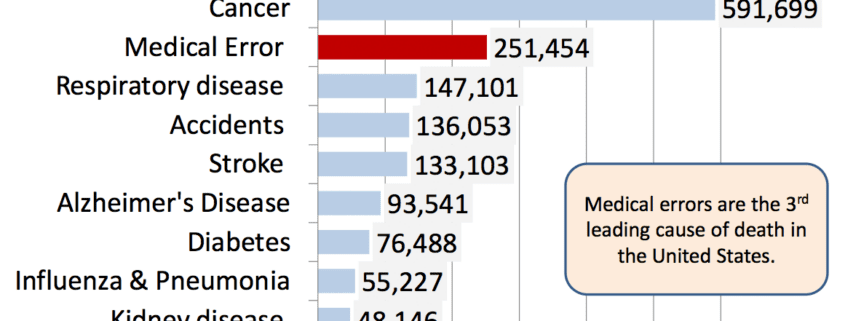
And believe me, there is nothing at all frivolous about that when you consider that a John Hopkins University School of Medicine study found that medical errors and malpractice could feasibly be the third leading cause of death in the U.S. killing between 250,000 and 440,000 Americans each year. Imagine how much higher the death toll would be if lawyers like us were not holding medical professionals accountable.

Those statistics in and of themselves are troubling, but when you put a face, a name, and an actual case to the numbers they become downright heart wrenching. For example, last year, Brian Kopp who heads BKM’s complex litigation practice group and is one of the nation’s preeminent medical malpractice and wrongful death attorneys, represented the family of Megan Clay, a perfectly healthy 20-year-old who died after having what should have been a routine tonsillectomy on March 29, 2018.

More than four years after Megan passed away, her case went to trial and a Common Pleas Court jury awarded her family significant damages. After the verdict was returned Brian offered this comment: “I am the father of seven daughters and have one granddaughter and I cannot imagine for a moment what it is like to walk in the shoes of Jay Clay and his family. Jay, his wife Christine, and Megan’s brothers and sister have suffered a devastating loss. It is always humbling to represent a family that has suffered as they have.”

Despite all the data about the number and consequences of medical errors and tragic stories Megan Clay’s, the insurance industry, doctors, and business groups continue to use frivolous lawsuits as a stalking horse for their attempts to enact tort “reform” laws that severely limit the ability of victims and families to seek justice and just compensation—even though fewer than 2% of those impacted by malpractice ever file suit.

I mention all of this because the Center for Justice and Democracy at New York Law School recently issued a comprehensive briefing book “Medical Malpractice by the Numbers” that refutes the misinformation regularly dispensed about the impact lawsuits have on the practice of medicine. Here are few relevant facts:

So-called “defensive medicine” is a myth. Researchers found that physicians order tests because they are focused on patient safety not malpractice risks, or “more focused on not harming patients than on not getting sued.”

Medical malpractice premiums are rising even though claims are dropping. More than 6 in 10 medical groups report their doctors’ malpractice premiums have increased since 2020 even though overall claims throughout the United States have dropped.

Caps on damages harm patients while doing nothing to stop insurance premium price-gouging. Researchers found that while caps drive down insurer costs, premiums do not fall and that by lowering the risk of suit for malpractice … imposing caps is associated with a 16% increase in adverse events.

The United States health care system is severely failing women. Among women of reproductive age in high-income countries, rates of death from avoidable causes, including pregnancy-related complications, are highest in the United States.

The Briefing Book is bursting with facts about they intersection of the legal and medical professions and, take if from your favorite ambulance chaser, is well worth a look.

A message from David Betras to anyone who is being questioned by the police: Shut Up!

Attorney David Betras
BKM Managing Partner David Betras

On a number of occasions, I’ve addressed what people should do if they are stopped and questioned by the police. Here’s an excerpt from an August 2021 blog post on the topic:

“First, if you are stopped by law enforcement and questioned you are under no obligation to do anything other than provide your name and ID.
Second, remember, the police will delay placing you in custody so they can use what you say to establish probable cause for arrest.
Third, your pre-arrest statements are admissible in court.
Fourth: Shut up. What you do not say cannot be used against you.”

That’s right I said just shut up.

I raise the topic today because as New York Times columnist Faraj Manjoo points out in his most recent piece, prosecutors in New Mexico plan to charge actor Alec Baldwin with involuntary manslaughter in the death of cinematographer Halyna Hutchinson. Hutchinson was working on the set of the movie rust when Baldwin pulled the trigger of a gun that was not supposed to be loaded with live ammunition. She was struck by a bullet and died shortly thereafter.

After the shooting Baldwin agreed to be interviewed by police without his attorney present, waived his Miranda rights, and did anything but shut up: “Still, for about an hour, Baldwin not only answered detectives’ many questions about the shooting but also offered his own theories about the incident and suggested the next steps the police might pursue in their investigation.”

As Manjoo notes, “The Fifth Amendment of the Constitution allows Americans to refuse to answer questions from law enforcement. Yet despite the ritualistic incantation of the Miranda warning on every TV police procedural, silence is a right that people can find hard to accept. If you’re convinced of your innocence, aren’t you obligated to help the police solve the matter under investigation? Refusing to talk to the police seems like something people do only when they’ve got something to hide.”

I’ve lost count of how many clients I’ve defended in court because they decided to abandon their Fifth Amendment rights and “help” the police who in turned helped themselves to an arrest.

In the column Manjoo praises the work of law professor and former defense attorney James Duane, one of the nation’s leading proponents of just shutting up when questioned by law enforcement. The video of his lecture “Don’t Talk to the Police,” has been viewed millions of times on YouTube, you should make it millions plus one by watching: https://youtu.be/d-7o9xYp7eE

In his lecture Duane offers this quote from former US Attorney General Robert Jackson: “Any lawyer worth his salt will tell the suspect in no uncertain terms to make no statement to the police under any circumstances.” It’s good to know that AG Jackson, one of the most respected lawyers in the history of American jurisprudence would think I am worth my salt.

“The average American — even if they’re a highly sophisticated college graduate or a law school student — really doesn’t know an awful lot about the many different ways in which even innocent people can regret for the rest of their lives the biggest mistake of their lives, the decision to waive their Fifth Amendment right and agree to talk to the police,” Duane said.

Duane argues that a key danger is that in trying to defend yourself to the police, you may unwittingly admit some wrongdoing. Navigating around such dangers is made all the more difficult because courts have given the police wide leeway to lie to people being interrogated.

“They will lie to you about what crime they are actually investigating,” Duane writes in his book, “whether they regard you as a suspect, whether they plan to prosecute you, what evidence they have against you, whether your answers may help you, whether your statements are off the record, and whether the other witnesses have agreed to talk to them — even about what those witnesses have or have not said.”

Manjoo closes his column with this passage: “The Fifth Amendment is no mere formality. It is among the best defenses against government overreach that Americans enjoy. We should guard it vigorously. Anytime you’re asked to talk to the police about an incident you are involved in, there are just four words you need to say: “I want a lawyer.”

And then please for the love of God, shut up.

The weather outside is frightful so now is the time to check out BKM’s winter driving tips…

Just in case you haven’t looked outside yet, our “Three Ps” of safe winter driving tips will be extremely relevant and useful over the next couple of days.

Please be careful on the roads, and remember, if someone who isn’t driving safely runs into you or a member of your family, contact Betras, Kopp & Markota right away to arrange a free consultation to discuss your accident. Our experienced team of investigators and attorneys will evaluate your case, provide rock-solid advice, and fight to get the money your family needs and deserves.

So, call the LOCAL law firm big enough to win millions from the insurance giants: Betras, Kopp & Markota.

SAFETY ON WINTER ROADS

Bad roads can lead to bad wrecks. Driving on snow-covered, icy roads is tricky—even for those of us who have been doing it for decades. In order to help drivers avoid accidents, the National Highway Transportation Safety Administration and OSHA have developed the “Three Ps” of winter driving safety:

PREPARE for the trip; PROTECT yourself; and PREVENT crashes on the road.

Some of the advice is pretty obvious—like making sure all the ice and snow is scraped off all your windows before you head down the road. But even though common sense dictates that being able to see is critical to safe driving, we’ve all seen people weaving around as they peer out of the very small space they’ve cleared on their windshield that looks like a porthole on a tank’s gun turret. There’s only one difference: a car isn’t a tank rolling through woods, it’s a car lurching down a road crowded with other vehicles that can be hit because the driver can’t see them, lane lines, traffic signals or stop signs. So let’s start with the obvious, clear off all your windows, it’s great way to prevent collisions. We’re talking to guys in particular, because as the graphic shows, men are a lot more likely to drive in cars with ice-covered windows then women…

Here’s rest of NHTSA’s “Three Ps:

PREPARE

Maintain Your Car: Check battery, tire tread, and windshield wipers, keep your windows clear, put no-freeze fluid in the washer reservoir, and check your antifreeze.

Have On Hand: flashlight, jumper cables, abrasive material (sand, kitty litter, even floor mats), shovel, snow brush and ice scraper, warning devices (like flares) and blankets. For long trips, add food and water, medication and cell phone.

Plan Your route: Allow plenty of time (check the weather and leave early if necessary), be familiar with the maps/ directions, and let others know your route and arrival time.

Practice cold weather driving when your area gets snow — but not on a main road. Until you’ve sharpened your winter weather driving skills and know how your vehicle handles in snowy conditions, it’s best to practice in an empty parking lot in full daylight. Note our emphasis on the word “empty.”

Know what your brakes will do: stomp on antilock brakes, pump on non-antilock brakes.

Stopping distances are longer on water-covered ice and ice.

Don’t idle for a long time with the windows up or in an enclosed space.

PROTECT YOURSELF

Buckle up and use child safety seats properly.

Never place a rear-facing infant seat in front of an air bag.

Children 12 and under are much safer in the back seat.

Stopped or Stalled? Stay in your car, don’t overexert, put bright markers on antenna or windows and shine dome light, and, if you run your car, clear exhaust pipe and run it just enough to stay warm.

Don’t idle for a long time with the windows up or in an enclosed space.

PREVENT CRASHES

Drive slowly. It’s harder to control or stop your vehicle on a slick or snow-covered surface. On the road, increase your following distance enough so that you’ll have plenty of time to stop for vehicles ahead of you.

A word of caution about braking: Know what kind of brakes your vehicle has and how to use them properly. In general, if you have antilock brakes, apply firm, continuous pressure. If you don’t have antilock brakes, pump the brakes gently.

Stay calm and ease your foot off the gas while carefully steering in the direction you want the front of your vehicle to go if you find yourself in a skid. Stay off the pedals (gas and brake) until you are able to maintain control of your vehicle. This procedure, known as “steering into the skid,” will bring the back end of your car in line with the front.

Drugs and alcohol never mix with driving.

Texting while behind the wheel is especially dangerous in winter conditions. Put your phone down.

You can check out NHTSA’s interactive winter driving safety website by clicking here.

Here’s one more tip: even though you do everything right, someone who does just one thing wrong in icy conditions can cause an accident in the blink of an eye. If you’re involved in a wreck caused by a careless or distracted driver, contact Betras, Kopp & Markota BEFORE you talk to an insurance agent or adjuster. We’ll arrange a free consultation that will give us the opportunity to evaluate your case and provide you with sound advice that will protect your rights and your ability to secure justice and the financial settlement you and your family needs and deserves.

By defending people charged with crimes I protect justice for all

During my career as a criminal defense attorney, I have represented hundreds of people who have been charged with serious offenses. From time to time either the nature of a particular case and/or its outcome will attract the attention of MahoningMatters and other media outlets. I know this will come as a shock, but I […]