Posts

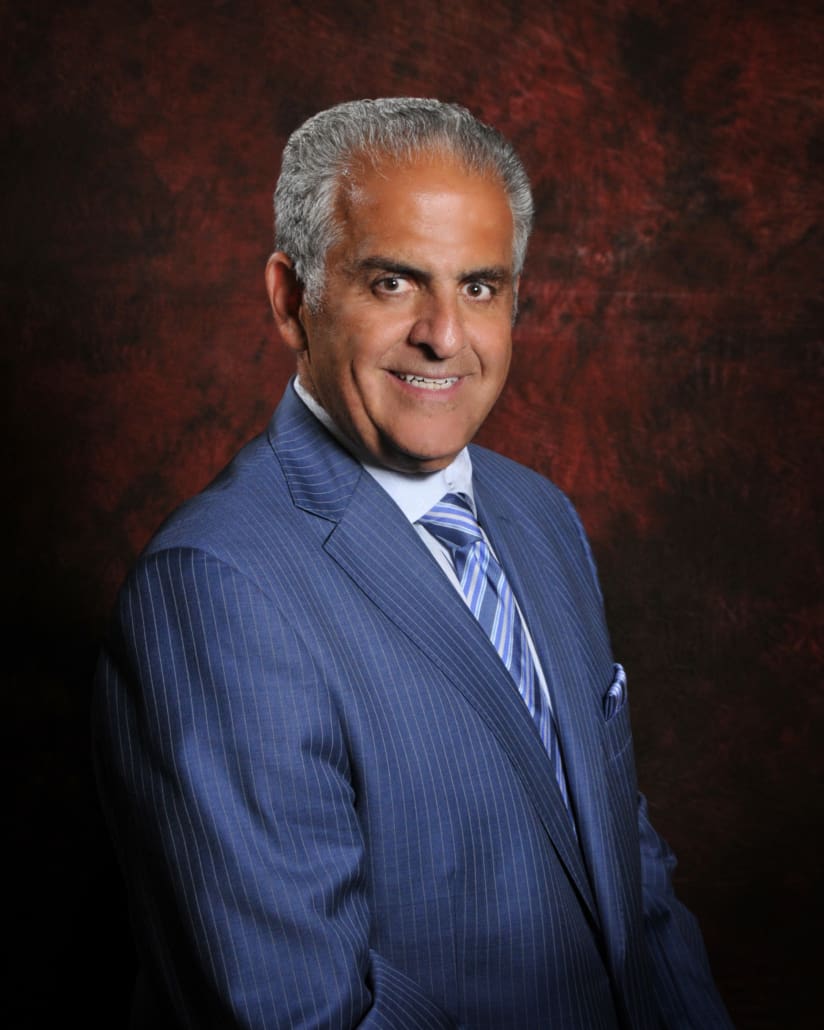
Attorney Frank Cassese, BetrasKopp legal team secure not guilty verdict for Marquaysha Driver in heart-wrenching case
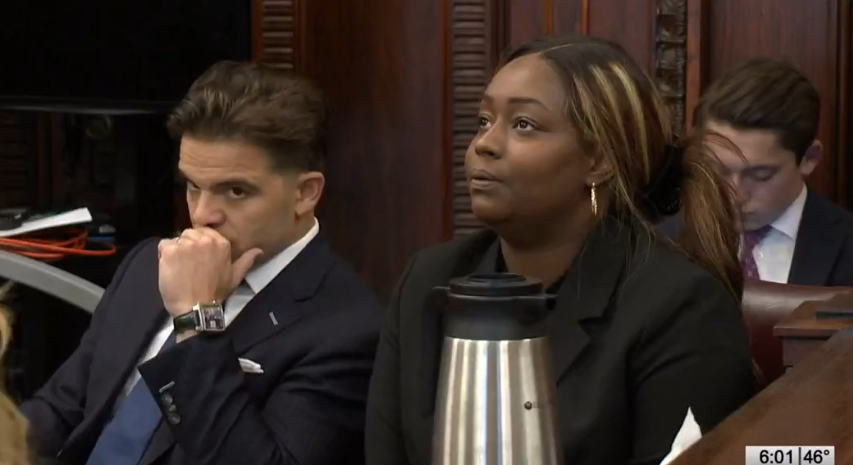
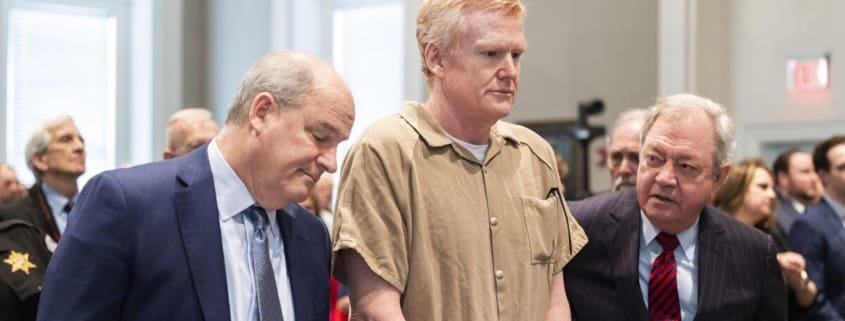
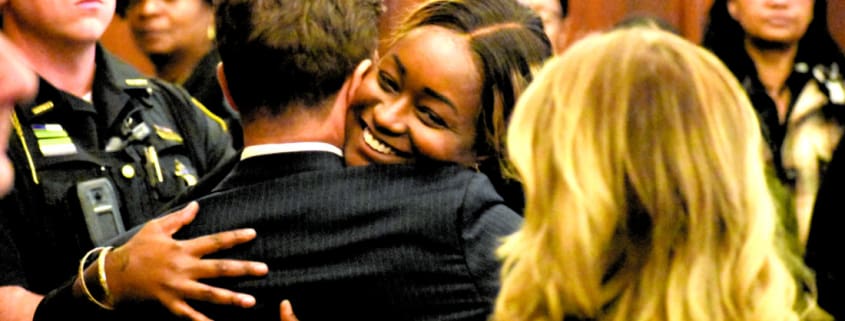
Lead Defense Attorney Frank Cassese and Marquaysha Driver await the verdict in her trial on involuntary manslaughter and child endangerment charges related to the death of the sevey-year-old son De’Vonte Housley Jr. A Mahoning County Common Pleas jury acquitted Ms. Driver on October 23, 2025.

In one of the most emotionally charged and heart-wrenching cases to be tried in the area in decades, a Mahoning County Common Pleas Court jury found Marquaysha Driver not guilty of involuntary manslaughter and child endangerment charges that were filed against her in the wake of the Oct. 22, 2023, shooting death of her 7-year-old son, De’Vonte Housley Jr.

Attorney Frank Cassese who led Ms. Driver’s defense team, said the outcome clearly demonstrates the jury system’s capacity to render justice in extremely complicated and nuanced cases. “We were able to convince the jury to look beyond the letter of the law and grasp the fact that DeVonte’s death was not a crime, but a tragic accident that will haunt his mother, his siblings, and his entire family for the rest of their lives,” Attorney Cassese said.

“I think Marquaysha’s testimony was the ultimate factor,” he continued. “I think she was very raw, very honest, very truthful. In my opinion that was something that really tipped the scales.” This was a tough case for the state of Ohio, a tough case for the defense, there’s a lot of emotion that goes into this, so it’s never easy,”

According to Attorney Cassese, Attorney Tallie Orengia, Paralegal Gena Safarek, Daniel Leslie, and Connor Hilton, played integral roles in preparing Ms.Driver’s defense and presenting it to the jury. “This was an extremely challenging case from both a legal and purely human standpoint because we were dealing with the death of a seven-year boy, it’s impact on his family, and the possibility that his mother could be incarcerated for ten years or more,” he said. “Their hard work, expertise, and commitment to the cause of justice along with the unmatched experience and knowledge the entire BetrasKopp legal team brings to every case is directly responsible for this verdict.”

Given its unique and compelling nature, Attorney Cassese and the BetrasKopp team will prepare and share an in-depth analysis of the case, including the evolution of the defense strategy and a behind-the-scenes look at the work involved in trying a serious felony case.

Local media coverage of the case may be accessed at these links:

https://www.vindy.com/news/local-news/2025/10/mother-found-not-guilty/

https://www.wfmj.com/clip/15519496/woman-found-not-guilty-of-7-year-olds-death

https://www.wkbn.com/news/local-news/youngstown-news/tried-to-do-the-right-thing-mother-charged-after-childs-shooting-death-testifies-in-her-own-defense/

We’re also pleased to reprint WKBN TV 27’s excellent report on the case:

A jury Thursday in Mahoning County Common Pleas Court found a woman whose 7-year-old son was shot and killed with a gun in her home not guilty of all charges.

After about two hours of deliberations, jurors found Marquaysha Driver, 31, not guilty of involuntary manslaughter and four counts of child endangering for the October 22, 2023, death of her son De’Vonte Housley, Jr., 7, in her East Marmion Avenue home.

De’Vonte was killed after he and his brother found a loaded gun on a mantle above a fireplace in her home.

Driver testified on her own behalf earlier Thursday about how she woke up to every parent’s worst nightmare

“I woke up to a pop,” she said as she was sobbing. “My son came running in the room. I asked, ‘What was that?’ and he was like, ‘I shot my brother.’”

Testimony began in her case Wednesday before Judge Anthony D’Apolito after a jury was seated Tuesday.

The state rested its case Wednesday, and the defense rested its case Thursday after Driver’s testimony. She was the only witness called by the defense.

Prosecutors say Driver was reckless because she knew a loaded handgun was in her home, yet did not take steps to keep it away from her children, one of whom ended up shooting another.

The gun belonged to her brother, who she accompanied two days before De’Vonte’s death to a Boardman sporting goods store, where he bought a shotgun and a 9mm pistol. Somehow, the pistol was left at her house.

Dressed in all black and talking in a slow, at times somber voice, Driver recounted the days leading up to De’Vonte’s death under direct examination from her attorney, Frank Cassese. The gallery was full of friends and relatives, who at times provided a steady backdrop of sniffles.

Driver said she is a hairdresser and she spent all of Saturday — the day before De’Vonte’s death — from 1 p.m. to 3 a.m. Sunday, doing hair in her home. She testified that the weekend was a big one, as Chaney and East high schools both had homecoming, and Sweetest Day fell on the same weekend.

She had late clients because some women were getting their hair done to go to a “bar party.” Her last client was a friend who was celebrating her birthday that Sunday.

When she was done about 3 a.m. Sunday, she began cleaning up, and as she did, she noticed the gun her brother bought on the mantle above the fireplace. She said she decided to push the gun further back on the mantle behind a 75-inch television. Demonstrating for the jury, she stood on the points of her toes and reached out an arm, saying she stuffed it so far back she could barely reach it when she was finished.

“When I couldn’t see it anymore, I thought it was OK,” she testified.

She also said she called her brother and told him to get the gun as soon as possible.

She then took a shower and fell into bed exhausted, still wrapped in a towel. She was that way when she was awakened by the gunshot that took De’Vonte’s life.

Prosecutors said in opening statements Wednesday that De’Vonte and his brother were watching television when they couldn’t change the channel, so they looked for batteries for the remote control, which were also on the mantle.

When the boys found the batteries, they also found the gun, prosecutors said, and began playing with it until it went off and De’Vonte was killed. Driver testified she put the batteries up because her youngest child liked to chew on them, so she tried to keep them out of the child’s reach.

She went downstairs, found De’Vonte and called 911.

“I just asked them how to resuscitate my son,” she said through tears.

Jurors also saw body camera video from Youngstown police Patrolman Anthony Congemi, who was called to the scene and testified Wednesday.

As members of the gallery began choking back sobs and silently crying, jurors watched through Congemi’s camera as he ran into the house, then ran back to his cruiser, grabbed a pair of gloves and went back inside.

Officer Kenneth Garling was trying to put a chest seal on the wound, and Driver, still wrapped in a towel, was in tears and screaming.

“Keep pressure on both sides,” someone can be heard saying.

“Is he breathing?” Congemi asks.

“I don’t know,” Driver answers through tears.

Congemi asks her where the gun is, and she tells him it is back on the mantle. De’Vonte is sprawled on the floor on his back, blood visible on his chest, wearing a pair of dark shorts with a white stripe down the side.

Some jurors seemed visibly shaken after the video was played. A pair of women in the jury box sat stone-faced for several minutes while an older man in the first row took off his glasses, held them and stared straight ahead.

Driver then began crying on the witness stand.

“I’m sorry,” she said. “It just hurts.”

Cassese coaxed her back to her testimony, getting her to tell of her visit the day after De’Vonte’s death to talk to detectives without a lawyer present, a visit she made on her own, she said.

Under cross-examination from Assistant Prosecutor Jennifer Paris, Driver said she did not recall telling detectives she knew the gun was loaded. She then watched video in the judge’s chambers of her interview with police, then said when testimony resumed, she did tell them she knew the gun was loaded.

When asked by Paris if she thought anyone could get the gun, Driver said no.

But, Paris said, they did.

“I don’t know how they did,” she said.

“But you agree they could have got it?” Paris asked.

“No.”

“But they did.”

“Yes,” Driver said. “But I don’t know how.”

She denied having the gun in her purse or that the gun had been in the house for a week.

“Do you acknowledge you left a loaded handgun in your house, unattended, with several small children in your house?” Paris asked.

“I tried my best to hide it,” she answered.

Paris asked her why she didn’t unload the gun, and Driver said she did not know how. Paris asked her why she didn’t call her brother. Paris also asked her why she didn’t put the gun outside or lock it in a car or in another room in the house.

“There’s nowhere to lock the gun in my house,” she said. “I just tried to do the right thing.”

After Driver’s testimony, jurors were given a break while the attorneys went over exhibits and the judge’s instructions to the jury.

Lady justice with a colorful sky behind her

Attorney Frank Cassese secures acquittal in aggravated murder case, says verdict proves the criminal justice system works

Attorney Frank Cassese

Attorney Frank Cassese, leader of Betras Kopp LLC’s (BK) Criminal Defense Practice Group, said today’s acquittal of Daundre Turner on charges of aggravated murder, murder, and robbery, demonstrates the value and effectiveness of the criminal justice system. A Mahoning County Common Pleas Court jury returned the not guilty verdicts after deliberating for six hours.

Mr. Turner was accused of the 2016 killing of Omar Croom on Youngstown’s Eastside. Youngstown Police detectives who investigated the crime at the time did not have sufficient evidence to recommend charges be brought against Mr.Turner. He was arrested, charged, and jailed in early 2023 when a different YPD officer reopened the cold case.

According to Attorney Cassese, the prosecution’s case was based on statements offered by Ranee Fitzgerald, Mr. Turner’s spouse who was charged with complicity to aggravated murder in Mr. Croom’s killing. She waived spousal privilege and testified against her husband during the trial. “The prosecution did a very professional, thorough job with the evidence they had, but at the end of the day, they simply could not convince the jury my client was guilty beyond a reasonable doubt.”

BK Managing Partner David Betras said the outcome of the case was determined by two factors: Attorney Cassese’s ability to identify and select jurors who would listen to the evidence with an open mind and his devastating cross examination of Fitzgerald. “Time after time, Frank pointed out inconsistencies and conflicts in her testimony that raised serious doubts about her veracity and credibility,” Atty. Betras noted.

“This verdict underscores the important role preparation, skill, knowledge, instinct, and sheer talent play in criminal trials,” he continued. “Frank spent hundreds of hours examining the evidence and statements the prosecution would offer at trial, preparing for jury selection, and crafting the questions he asked during cross examination—questions that determined the outcome of the case.”

“I’m extremely pleased by the verdict and gratified that Mr. Turner, who has been incarcerated in the Mahoning County jail while awaiting trial was set free today,” Atty. Cassese. “Along with our commitment to doing whatever is necessary to seek and secure justice for our clients, the entire BK team believes the cornerstone of the justice system is the American jury. Today, our faith in that system was validated.”

Outcome of jury trials dependent on defense attorney’s experience, talent, skill

Attorney David Betras
BKM Managing Partner David Betras

As I write this week’s column, I am busily preparing for a jury trial in Hancock County Common Pleas Court which is located in beautiful, downtown Findlay, Ohio. I’ve lost track of exactly how many jury trials I’ve participated in during my more than three decades as a practicing attorney, but I can say the outcomes have provided most of the highlights and lowlights of my career—and truth be told–I remember a lot more about my losses than my wins.

Why does the angst associated with guilty verdicts last longer than the euphoria that accompanies acquittals? Because the outcome of each trial is in many ways dependent on the defense attorney’s experience, talent, intelligence, rhetorical skill, knowledge, and yes—acting ability. We select the jury, we carefully study and prepare to nullify the evidence and undermine—if not destroy—the credibility of the witnesses presented by the prosecution, we build our defense and craft a compelling narrative that will convince the jurors that our client is not guilty beyond a reasonable doubt, and then we write and deliver a captivating closing argument that will enthrall the jury and win the case.

What could possibly go wrong?

Obviously, lots, which is I and many of my colleagues sit straight up in bed at 3:00 AM and reexamine every facet of a case that ended in a guilty verdict. Did I miss something in jury selectin? Was I slow to respond to an unexpected piece of evidence or testimony. Did my exhibits fall flat. Did I fail to connect with jurors?  I’ll often replay every minute of a trial in my head to identify what I did right and what I could have done better.

While the process is agonizing it is also extremely valuable because practical experience is an indispensable asset to a trial lawyer. That is because although they teach basic trial tactics and the rules of civil and criminal procedure in law school, there is no substitute for preparing and trying cases on behalf of clients who place their freedom, their future, and in some instances their very lives in your hands. Take it from me, courtrooms, not classrooms, are the only places attorneys like me learn to ply our trade.

Yet, despite all the preparation and trepidation involved, I love jury trials and the jury system. And I’m not alone. Throughout history the jury system has been a foundational pillar of civilized societies. Nearly 3,000 years ago bodies known as dikastai composed of as many 1,501 citizens rendered verdicts by majority rule in cases ranging from mundane matters to those involving death, exile, and seizure of property.

The Roman Empire also featured a precursor of modern juries in which capital trials were conducted before thousands of citizens. Interestingly, high government officials and their relatives, people who had been convicted of felonies, gladiators for hire, and men younger than 30 or older than 60 were barred from jury service.  

The system continued to evolve though the centuries and began to resemble the process and configuration that exists today in the late 900s when King Etheired the Unready of England instituted the Wantage Code which required the 12 leading minor nobles in small districts to investigate crimes. These juries differed from modern ones because there were no trials—the jurors were responsible for investigating cases and rendering verdicts on their own.

Juries took a major leap forward during the Reign of King Henry II in the mid 1100s. He established both a process in which a jury of 12 free men arbitrated property disputes and formed grand juries whose members were to report any crimes they knew of to a judge who would then conduct a trial by ordeal. As you might imagine, the guilt or innocence of the defendant was determined by subjecting them to one or more painful experiences. This system was based on the premise that God would help the innocent by performing a miracle on their behalf. Trial by ordeal fell out of favor when Pope Innocent III prohibited priests from participating in trials by fire and water. I can say this, if they were still around, I would have found a different occupation.

The right to trial by jury, along with the entirety of British Common Law, continued to advance and served as both one of reasons for the American Revolution and the basis for the judicial system America’s Founding Fathers enshrined in the Fifth, Sixth, and Seventh Amendments to our Constitution. Thomas Jefferson specifically cited King George’s decision to deprive colonists of trial by jury as a grievance in the Declaration of Independence and John Adams wrote that “…representative government and trial by jury are the heart and lungs of liberty.  Without them we have no fortification against being ridden like horses, fleeced like sheep, worked like cattle, and fed and clothed like swine and hogs.”

I am 100 percent in agreement with Adams, which explains why I believe we all have a civic duty to vote and serve as jurors—and why I refuse to help anyone skirt jury duty. Under Ohio there are very few reasons people may be exempt from service and even those who qualify must be excused by a judge. In the interest of full disclosure, I’ve received a jury summons and duly reported for duty. Unfortunately, I was excused and denied the opportunity to get a very close look at the dynamic that takes place during deliberations. That is an experience I would have relished and used for the remainder of my career.

What were they thinking? Why did Alex Murdaugh’s lawyers allow the now convicted killer to testilie for hours on end?

Attorney David Betras
BKM Managing Partner David Betras

Judging by the number of people who have yelled, “Hey Betras, what the xxxx (readers are free to insert the word of their choice) is up with that Murdaugh trial?” I am not the only person who has been obsessed with the sordid saga of the once prominent South Carolina trail lawyer who was recently found guilty of murdering his wife and his son.

Okay, I wasn’t “obsessed” with it, I was consumed by it. I watched every moment of the trial, hours of analysis of each day’s proceedings offered by “expert” criminal lawyers, as well as all of the documentaries, docudramas, and special reports that streamed into my smart TV, smart phone, and laptop.

The discussion and speculation that raged during the trial continues today—much of it focused on Murdaugh’s decision to take the stand. In the immediate wake of his testimony, in which he basically admitted to being a pathological liar who couldn’t tell the truth if his life depended on it, which it did, a number of talking head criminal lawyers told the media the defense team had to allow the accused killer to look the jurors in their collective eyes and refute the charges. One of the pundits, criminal attorney and former prosecutor Mark Eiglarsh told CNN “If you’re going to have somebody testify, having a lawyer who’s smart, who’s been in the courtroom, who’s lied for 20 years … that’s the guy you want on the stand…all it takes is one juror to connect with him emotionally.” 

To be frank, Mr. Eiglarsh and anyone else who thought it was a good idea for Murdaugh to hitch up his pants, take the stand, and admit to being a drug-crazed criminal who did everything but murder his wife and son is just plain stupid—a fact underscored by the verdict.

During my career I have represented numerous clients charged with murder and I have never put one of them on the stand, including those who have literally begged me to allow them to proclaim their innocence in open court. I have adopted this strategy for a number of reasons beginning with the fact that it is not my job to prove my client is innocent, it is the prosecutor’s job to prove they are guilty, and I refuse to do anything that will make that job easier.

And permitting a client to give up their Fifth Amendment protections against self-incrimination by testifying does exactly that.

Think of it this way: the accused takes the stand, I ask them if they committed the crime, they emphatically say no. This has absolutely no impact on jurors who fully expect defendants to say they didn’t do it. I sit down, the prosecutor stands up and immediately begins tearing my client apart limb from limb. Check the video of the Murduagh cross and you’ll see how this works—or I should say how it doesn’t work for the defense.

Clients also ask to take the stand because they fear the jury will believe they are guilty if they just sit quietly as I defend them. I point out that this is, for the most part, not true and that judges are required to instruct jurors that they may not draw any inference from the fact that a defendant does or does not testify—the presumption of innocence that is the beating heart of our judicial system stands.

Whether Murdaugh would have benefited from keeping his mouth shut is a question that will be debated in legal circles for years. One thing is certain, however, testilying for hours on end didn’t help at all.

A message from David Betras to anyone who is being questioned by the police: Shut Up!

Attorney David Betras
BKM Managing Partner David Betras

On a number of occasions, I’ve addressed what people should do if they are stopped and questioned by the police. Here’s an excerpt from an August 2021 blog post on the topic:

“First, if you are stopped by law enforcement and questioned you are under no obligation to do anything other than provide your name and ID.
Second, remember, the police will delay placing you in custody so they can use what you say to establish probable cause for arrest.
Third, your pre-arrest statements are admissible in court.
Fourth: Shut up. What you do not say cannot be used against you.”

That’s right I said just shut up.

I raise the topic today because as New York Times columnist Faraj Manjoo points out in his most recent piece, prosecutors in New Mexico plan to charge actor Alec Baldwin with involuntary manslaughter in the death of cinematographer Halyna Hutchinson. Hutchinson was working on the set of the movie rust when Baldwin pulled the trigger of a gun that was not supposed to be loaded with live ammunition. She was struck by a bullet and died shortly thereafter.

After the shooting Baldwin agreed to be interviewed by police without his attorney present, waived his Miranda rights, and did anything but shut up: “Still, for about an hour, Baldwin not only answered detectives’ many questions about the shooting but also offered his own theories about the incident and suggested the next steps the police might pursue in their investigation.”

As Manjoo notes, “The Fifth Amendment of the Constitution allows Americans to refuse to answer questions from law enforcement. Yet despite the ritualistic incantation of the Miranda warning on every TV police procedural, silence is a right that people can find hard to accept. If you’re convinced of your innocence, aren’t you obligated to help the police solve the matter under investigation? Refusing to talk to the police seems like something people do only when they’ve got something to hide.”

I’ve lost count of how many clients I’ve defended in court because they decided to abandon their Fifth Amendment rights and “help” the police who in turned helped themselves to an arrest.

In the column Manjoo praises the work of law professor and former defense attorney James Duane, one of the nation’s leading proponents of just shutting up when questioned by law enforcement. The video of his lecture “Don’t Talk to the Police,” has been viewed millions of times on YouTube, you should make it millions plus one by watching: https://youtu.be/d-7o9xYp7eE

In his lecture Duane offers this quote from former US Attorney General Robert Jackson: “Any lawyer worth his salt will tell the suspect in no uncertain terms to make no statement to the police under any circumstances.” It’s good to know that AG Jackson, one of the most respected lawyers in the history of American jurisprudence would think I am worth my salt.

“The average American — even if they’re a highly sophisticated college graduate or a law school student — really doesn’t know an awful lot about the many different ways in which even innocent people can regret for the rest of their lives the biggest mistake of their lives, the decision to waive their Fifth Amendment right and agree to talk to the police,” Duane said.

Duane argues that a key danger is that in trying to defend yourself to the police, you may unwittingly admit some wrongdoing. Navigating around such dangers is made all the more difficult because courts have given the police wide leeway to lie to people being interrogated.

“They will lie to you about what crime they are actually investigating,” Duane writes in his book, “whether they regard you as a suspect, whether they plan to prosecute you, what evidence they have against you, whether your answers may help you, whether your statements are off the record, and whether the other witnesses have agreed to talk to them — even about what those witnesses have or have not said.”

Manjoo closes his column with this passage: “The Fifth Amendment is no mere formality. It is among the best defenses against government overreach that Americans enjoy. We should guard it vigorously. Anytime you’re asked to talk to the police about an incident you are involved in, there are just four words you need to say: “I want a lawyer.”

And then please for the love of God, shut up.

By defending people charged with crimes I protect justice for all

During my career as a criminal defense attorney, I have represented hundreds of people who have been charged with serious offenses. From time to time either the nature of a particular case and/or its outcome will attract the attention of MahoningMatters and other media outlets. I know this will come as a shock, but I […]

You have the right to remain silent…Use it because what you don’t say can’t be used against you in a court of law.

Attorney David BetrasIf you have viewed Law and Order, Law and Order SVU, Law and Order Organized Crime, Law and Order LA, Law and Order Def Comedy Jam or one of the dozen or so other iterations of the franchise, you have undoubtedly heard a cop recite the following to a suspect as they slap on the cuffs:

You have the right to remain silent.

Anything you say can and will be used against you in a court of law

You have the right to talk to a lawyer and have him or her present while you are being questioned.

If you cannot afford an attorney, one will be appointed to represent you before any questioning if you wish.

You can decide at any time to exercise these rights and not answer any questions or make any statements.

Do you understand each of these rights I have explained to you? Having these rights in mind, do you wish to talk to us now?

Just a hint: the answer to the last question is always “no.” I will expand on this point shortly.

After watching Lenny Briscoe “Mirandize” a couple thousand criminals, people think they understand what the warning means. Believe me, they do not because this area of the law, like most, is extremely complicated. And that explains why 90% of criminal cases are solved when people who think they know their rights tell on themselves.

Man in handcuffsFor starters, according to the Supreme Court’s 1966 ruling in Miranda v. Arizona, law enforcement officers do not have to issue a Miranda warning unless they are conducting a custodial interrogation. In plain English, that means suspects do not have to be advised of their right to keep their yap shut unless and until they have been deprived of their freedom of action in a significant way.

In light of this fact, police officers often delay placing a suspect in custody and tell them they are free to go. They then begin asking questions that can lead to an arrest. For example, a police officer stops a driver who is swerving and asks, “Have you had anything to drink tonight?” More often than I care to remember, the driver, who I am almost invariably standing next to in front of a judge, will answer, “Well, I’ve had a couple of beers,” as if the officer will be satisfied by the qualifier “couple of beers” and happily send the driver on his or her way with a friendly wave.

Uhm, not so much. At that point, the officer, who was not required to issue a Miranda warning when he posed what amounts to the $10,000 dollar or so question, will ask the driver to exit the car, submit to a field sobriety test, and then a breathalyzer exam. At the end of the process, the driver will be arrested and Mirandized—which does not mean much at that point.

So, here are the takeaways from this week’s column:

First,  if you are stopped by law enforcement and questioned you are under no obligation to do anything other than provide your name and ID.

Second, remember, the police will delay placing you in custody so they can use what you say to establish probable cause for arrest.

Third, your pre-arrest statements are admissible in court.

Fourth: Shut up. What you do not say cannot be used against you.

Society wins not only when the guilty are convicted, but when criminal trials are fair

Attorney David BetrasIn his most recent MahoningMatters column, BKH managing partner David Betras, one of the area’s leading criminal defense attorneys, discusses prosecutorial misconduct and the threat overzealous prosecutors pose to every American’s freedom…

Prosecutors in the United States wield awesome power and have access to immense resources that dwarf what is available to criminal defendants and defense counsel. The lawyers who represent the people of the United States or the people of Ohio have near-total discretion to decide who is charged and with what—the old saying that a prosecutor can convince a grand jury to indict a ham sandwich is basically true, they are funded by taxpayer dollars, work hand-in-hand with the law enforcement officers who investigate crimes and have unlimited access to state-of-the-art forensic science.

To balance the legal playing field and protect society, the rules of criminal procedure, the law, and codes of conduct administered by the courts and bar associations have established strict guidelines and boundaries designed to prevent prosecutors from abusing their authority. Chief among them is the admonition that a prosecutor’s job is to secure justice, not convictions.  This principle is embodied in Ohio’s Code of Professional Conduct which states:

“A prosecutor has the responsibility of a minister of justice and not simply that of an advocate.”

It is also included in the American Bar Association’s (ABA) Criminal Justice Standards (CJS):

“The primary duty of the prosecutor is to seek justice within the bounds of the law, not merely to convict… The prosecutor should seek to protect the innocent and convict the guilty, consider the interests of victims and witnesses, and respect the constitutional and legal rights of all persons, including suspects and defendants.”

Man in handcuffsAlong with defining prosecutors’ role, the rules, laws, and Supreme Court decisions also set forth their responsibilities, which, according to the ABA’s CJS include the duty to “…make timely disclosure to the defense of all evidence or information known to the prosecutor that tends to negate the guilt of the accused or mitigates the offense…”

This standard encapsulates the Supreme Court’s 1963 decision in Brady v Maryland, In that case, a 7-2 majority held that “…the suppression by the prosecution of evidence favorable to an accused upon request violates due process where the evidence is material either to guilt or to punishment… Society wins not only when the guilty are convicted, but when criminal trials are fair.” The Court has revisited Brady numerous times over the years, including in 1985 when the justices ruled in United States v. Bagley  that a prosecutor’s duty to disclose material favorable evidence exists regardless of whether the defendant makes a specific request.

Despite the guardrails that have been erected, some prosecutors misuse their power and abuse their discretion. They place more value in securing convictions than preserving justice. They commit what are known as “Brady Violations” by refusing to turn over or concealing exculpatory evidence to the defense and violate defendants’ due process rights in other disturbing ways.

This matters for two reasons. First, because when prosecutors violate the rules, innocent people go to jail for decades or are executed. Some of the wrongful conviction cases have penetrated the national consciousness: the Central Park 5, Walter McMillan, the Brown brothers, and Anthony Ray Hinton. Thousands of others, however, suffer in silence outside the spotlight, hoping that justice will be done.

Second, each case of prosecutorial misconduct, each Brady violation, each wrongful conviction weakens the criminal justice system and puts every American’s freedom at risk.

The George Floyd murder trial: the justice system worked–this time…

Attorney David BetrasAs a criminal defense attorney, I watched with great interest the trial of the former Minneapolis police officer convicted of murdering George Floyd.

Here are my thoughts on the case that has mesmerized the nation and the world since May 25, 2020.

The visual evidence secured the conviction. Creating reasonable doubt in the mind of at least one juror is a defense attorney’s No. 1 task. In this case, the astounding amount of video and audio evidence available to the prosecution made that task extremely difficult if not virtually impossible.

The cellphone video of Mr. Floyd’s killing captured by Darnella Frazier combined with newly released police body camera footage painted a stark and irrefutable picture of the incident. The defense attorney would have lost all credibility with the jury if he had asked them to disbelieve what they were seeing with their own eyes and hearing with their own ears: the defendant’s knee squarely planted on Mr. Floyd’s neck, the look of utter disdain on the officer’s face, Mr. Floyd’s pleas for his life and the defendant’s derisive and snide replies.

The defense attorney could not afford to lose all credibility with the jurors because he needed at least one of them to buy into the arguments he made on his client’s behalf.

First, he claimed that Mr. Floyd died because of the drugs in his system and because of his diseased heart — rather than the knee on his neck. In the practice of  law, this is known as the principle of causation and it was a dead-end for the defense because the prosecution had effectively proven that “but for” the actions of the officer Mr. Floyd would still be alive.

Next, he contended that the members of the crowd who were begging for Mr. Floyd’s life were at fault because the defendant felt threatened and turned his attention away from the person he was obviously killing — even though he could clearly be heard talking to Mr. Floyd while he had him pinned to the ground.

Finally, he said the defendant’s use of force was justified because he could not control Mr. Floyd, a statement directly contradicted by both the video evidence and the numerous law enforcement officials and experts who testified the officer’s actions were excessive and unjustified.

The jury did its job. In an earlier column, I said I was confident extensive voir dire had yielded an impartial jury capable of reviewing the evidence and rendering a just verdict. I believe the diverse group of 12 men and women who sat in judgment of what is undoubtedly the case of the 21st century did exactly that.

The system worked — this time.

That outcome would have been tragic for Mr. Floyd’s family and our nation.

Ohio inmates serving time in state prisons ravaged by COVID-19 may file for judicial release

Ohio’s state correctional facilities are COVID-19 hotspots. If you have a relative or friend incarcerated at one of these dangerous facilities Betras, Kopp & Harshman may be able to help by securing their judicial release from prison.

Call us today at 330-746-848 or 800-457-2889 to learn more!

Under Ohio law, qualifying inmates may ask their trial court judge to grant early “judicial release” from prison. The procedure is complicated and requires the preparation and filing of motions and court hearings, but it does offer a ray of hope for people trapped in the state’s COVID-19 ravaged correctional facilities.

An inmate is eligible if the following apply:

☑️He or she was sentenced in Ohio state court for Ohio state offenses.
☑️The sentence includes a “non-mandatory” prison term.
☑️The offender is not imprisoned for a felony related to and committed while he or she held public office in Ohio.

Eligible inmates may be granted judicial release according to this time-served schedule:

☑️Sentence of two years or less: eligible for immediate release.
☑️More than two years but less than five: must serve six months.
☑️Five years: must serve four years.
☑️More than five years but less than ten: must serve five years.
☑️More than ten years: the greater of half the time sentenced or five years.

Don’t delay, contact us today to learn more about the judicial release process. If your relative or friend is eligible Betras, Kopp & Harshman’s experienced criminal defense team will go to work immediately to secure their release from Ohio’s COVID-19 ravaged prisons.

Don’t delay. Contact us TODAY!