Students’ right to privacy is limited in public schools, random searches of lockers/contents permissible under the 14th Amendment…

Attorney David Betras
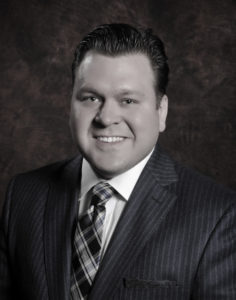
BKM Managing Partner David Betras

To the relief of parents and the chagrin of students, summer is over and a new school year has begun. That makes this an opportune time to convene another session of Professor Dave’s Shade Tree Legal Academy. During today’s lecture I will discuss whether the law allows public school teachers and administrators to search students and their property. It’s a fascinating topic that involves the Fourth Amendment, a landmark Supreme Court decision, and state statutes.

Class is about to begin so please no gum chewing, turn off your cell phones and handheld devices, and, as usual, there will not be quiz or test on this material because Professor Dave doesn’t have time to grade them.

Let’s begin our exploration of the topic with a look at the Fourth Amendment which states in part: “The right of the people to be secure in their persons, houses, papers, and effects, against unreasonable searches and seizures, shall not be violated…” For years various state and federal courts reached various conclusions regarding the applicability of the Amendment to public schools. The issue finally was resolved in 1985 when the U.S. Supreme Court handed down its landmark ruling in New Jersey v. T. L. O.

The case revolved around TLO, a 14-year-old New Jersey high school student who was caught smoking in a school bathroom by a teacher. The teacher escorted TLO to the school office where she was questioned by assistant vice principal Theodore Choplick. During the questioning, the student denied that she had been smoking and said she “did not smoke at  all.” At that point, Mr. Choplick demanded to see her purse, opened it and found a pack of cigarettes and rolling papers. He continued to search the purse and found a small amount of marijuana and a list of students to whom she had sold pot. The police were called and TLO was eventually found to be delinquent by a juvenile court judge and placed on probation for one year.

During the juvenile court proceeding TLO filed a motion to suppress the evidence found in her purse because the search had violated the Fourth Amendment. The juvenile court judge denied the motion because Choplick “had reasonable cause to believe that smoking, a violation of school policy, had occurred” TLO’s appeal of the juvenile judge’s ruling was rejected by the New Jersey Superior Court. The New Jersey Supreme Court then ruled that Choplick’s search of TLO’s purse had violated the prohibition against unreasonable search and seizure and reversed the decision. The state then appealed the case to the U.S. Supreme Court.

In a 6-3 decision authored by Justice Byron “Whizzer” White, the Court ruled that students were protected by the Fourth Amendment. Unfortunately for TLO, the justices also held that in the interest of maintaining order and discipline, officials could search students in a public school environment without a warrant or meeting the probable cause standard that applies to adults as long as they had a “reasonable suspicion” to believe a rule or law had been violated. Because she had been caught smoking in the bathroom and taken directly to the office, the justices found it was reasonable to assume she had cigarettes in her purse which, in turn, gave the vice-principal reasonable cause to search the purse.

Voila, a new precedent—and the basis for laws and regulations that govern searches in public schools was born.

What does that mean for Ohio students? It means that under ORC 3313.20  a principal may search any pupil’s locker and its contents if they reasonably suspect that “…the locker or its contents contains evidence of a pupil’s violation of a criminal statute or of a school rule;”

In addition, the statute permits the random search of all lockers and contents at any time provided the school has posted signs in conspicuous places that notify students that all lockers are the property of the board of education. In this situation neither the Fourth Amendment nor the “reasonable suspicion” standard apply. Bottom line: if that notice is posted in your school don’t put anything in your locker you don’t want a teacher or principal to find.

The reasonable suspicion standard also applies to searches of desks, backpacks, and cars parked on school property. One exception: the Ohio Supreme Court has ruled that the standard does not apply to searches of unattended backpacks.

The standard does not apply when students do not have a reasonable expectation of privacy, i.e. items that are in plain view, school property such as computers, including laptops owned by the school that students are permitted to take home. Student activity on school internet networks and the browsing/download histories are also subject to search and review.

While the rules that apply to public schools may seem to invite invasion of students’ privacy, the rules that apply to private schools are even more draconian because, for all intents and purposes, privacy protections exist do not exist.

So there you have it class—understanding your rights, or lack thereof, will help you avoid trouble. And, oh, by the way, you don’t have to worry about Professor Dave searching your locker or electronic devices, I respect the Fourth Amendment and anyway, I just don’t have the time.

What you need to know about Ohio’s new consumer fireworks law–aside from the fact that it actually makes sense…

If there is one thing I’ve learned during my three decades as an attorney, it’s that laws don’t always make sense. As an example, I offer into evidence, the Ohio statute that governed the purchase and use of consumer-grade fireworks by private citizens from 2008 until 2022. During that time, you or I could walk into a licensed fireworks dealer on July 4, buy a carload of what are known as 1.4G fireworks, and then swear we were going to transport our arsenal out of state within 48 hours because it was illegal to discharge them within the state.

Attorney David Betras
BKM Managing Partner David Betras

This law was ridiculous for two reasons: first, it forced Ohioans who wanted to celebrate Independence Day by firing off some fireworks in their backyard to lie and commit a crime which was more than a little ironic and absolutely un-American, and, second, it was, for all intents and purposes, unenforceable, a fact underscored by the billions of dollars in consumer pyrotechnics that lit up Ohio’s night skies and scared Ohio’s dogs each and every Fourth—prohibition or no prohibition.

After numerous attempts to erase the law and government-mandated ruse from the books, the fine folks who inhabit the Ohio House and Senate passed HB 172 by overwhelming margins on November 4, 2021. One provision of the bill which became effective on July 1, 2022 eliminated the requirement that Ohioans hightail it out of the state to demonstrate their patriotism. As a result, we are now free to shoot off roman candles, skyrockets, sparking wheels, seven-shot Beastlys, and 10-ten shot Cherry Bombers from the comfort of our homes.

In addition to permitting the use of consumer fireworks within Ohio’s borders, HB 172 also established regulations for doing so—you know rules we didn’t need when we were buying 36-shot China Dragons here and shooting them off in, I guess Pennsylvania or West Virginia. Because the law is relatively new, and the Fourth of July is rapidly approaching I thought it would be beneficial to review the rules:

Let’s start with when we can fire away:

From 4 PM to 11 PM on:

  • From 4 PM to 11 PM on July 3, 4, and 5, and the Friday, Saturday and Sunday immediately before and after the 4th.
  • From 4 PM to 11 PM on Memorial and Labor Day weekends
  • From 4 PM to 11:59 PM on New Year’s Eve and 12 AM to 1:00 AM and 4 PM to 11 PM New Year’s Day
  • From 4 PM to 11 PM on Chinese New Year
  • From 4 PM to 11 PM on Cinco de Mayo
  • From 4 PM to 11 PM on Diwali, the Hindu Festival of Lights which falls on November 12 this year.
  • From 4 PM to 11 PM on Juneteenth.

Next let’s talk about where.  You can light up the night from your own property or another person’s if the owner has given you express permission. Oh, and you can’t fire them off indoors, so no shooting Roman Candles at your siblings or friends if you’re in the kitchen or living room. You also may not discharge fireworks within 150 feet of property housing livestock unless the owner of the property is given five days’ notice. I guess that will give the livestock owner time to sedate the animals. 

Who is important. No one under the age of 18 and no person under the influence of any intoxicating liquor, beer, or controlled substance may discharge fireworks.

Finally, let’s not forget that fireworks can be dangerous if they are mishandled or used carelessly. According to a report issued by the Consumer Product Safety Commission 11,500 fireworks-related injuries were treated in U.S. hospitals in 2021. Not surprisingly, the vast majority of the injuries occurred between June 18 and July 18. To make sure your holiday isn’t marred by an accident, please follow these safety tips as you celebrate America’s 257th birthday:

  • Never allow young children to handle fireworks.
  • Anyone using fireworks or standing nearby should wear protective eyewear.
  • Never hold lit fireworks in your hands.
  • Only use fireworks away from people, houses, and flammable material.
  • Do not try to re-light or handle malfunctioning fireworks.
  • Soak both spent and unused fireworks in water for a few hours before discarding.
  • Keep water or a fire extinguisher nearby to fully douse fireworks that don’t discharge or in case of fire.

Thanks for taking the time to check out this week’s blog and Happy Fourth to you all.

BKM Managing Partner David Betras admitted to Florida Bar and is now officially licensed to practice in law in Florida

Betras, Kopp & Markota (BKM) one of the region’s leading personal injury and complex litigation law firms, is pleased and proud to announce that Managing Partner David Betras is now officially licensed to practice law in the state of Florida. While Atty. Betras will continue to spend most of his time at the firm’s headquarters in Canfield, he will travel to BKM’s Tampa office to consult on cases and represent clients when the need arises.

Attorney David Betras
BKM Managing Partner David Betras

The BKM co-founder’s admission to the Florida Bar is the final step in what he describes as a long and arduous journey that began during the COVID-19 pandemic. “Brian Kopp has been urging me get my Florida license for years, but I simply didn’t have the hundreds of hours I knew it would take to study for and pass the bar exam,” Betras said. “Then the COVID lockdowns hit and suddenly I had plenty of time, so I began studying longer and harder than I had at any time since I graduated from law school 37 years ago.”

Hitting the books, or in this case, his laptop, paid off. Betras was notified in the summer of 2021 that he had passed the exam. That good news was tempered by the knowledge that he had to study for and pass a test on legal ethics, complete and submit a monstrous 600-page application, , and answer questions about his career and tenure as a member of the Mahoning County Board of Elections at an in-person hearing. He cleared every hurdle and was granted his Florida license on (insert date).

Betras said he has been energized by the process and the prospect of collaborating with BKM’s outstanding Tampa team which along with Brian Kopp includes attorneys Christopher Knopik and Douglas Titus. “I’m eager to put my experience, expertise, knowledge and insight to work for our existing Florida clients,” he said. “And now that I’m licensed and can raise my profile I’m sure we’ll be able to attract new clients from among the thousands of Valley natives who now live or winter along the Suncoast and recognize and respect our firm.”

“I want to emphasize that I will not be moving to Florida, reducing my case load, or retiring,” Betras said. “I love practicing law as much today as I did when I passed by first bar exam, I’m excited about having a new place to utilize my skills, and I thoroughly enjoy having the opportunity to work with the attorneys and staff who make BKM an exceptional firm.”

“If I have my way, I’ll still be doing what I do every day, fighting to secure justice for our clients, for at least another 20 years.”

BKM’s Number One Rule About DUI: Don’t Do It.

It’s the hap-happiest season of all

With those holiday greetings and gay happy meetings
When friends come to call
It’s the hap-happiest season of all

Attorney David Betras
BKM Managing Partner David Betras

Andy Williams is right. This is the hap-happiest season of all unless one of the friends who comes to call drinks too much, gets in their car, and drives away. That is when the most wonderful time of the year can become the most dreadful and tragic time of your life.

During my legal career I have represented hundreds of clients who have been charged with Operating a Motor Vehicle while Impaired. While every case is different, I have formulated one hard and fast rule about drinking and driving based on my experience:

Do not do it. You could kill yourself. You could kill someone else. You could go to jail. You will spend lots and lots of money trying to stay out of jail.

I could and probably should stop right there, but I will continue because I know a lot of people will violate the Betras Rule between now and New Year’s Day. With that fact in mind, here are the steps you should take when blue and red lights are flashing in your rearview mirror because you did not listen to your old buddy Dave.

First things first: within moments of pulling you over the police officer will approach your car, stick his or head through your window, shine a flashlight in your eyes, ask for your license and registration, and then pose some variation of the $64,000 question: “Have you been drinking?”

Now, pay attention, this is very important: you do not have to answer that or any other question. Tell the officer you are asserting your Constitutional right to remain silent. In short, shut up.

Unfortunately, most people do not exercise this fundamental right. Instead, they say “Well, officer, I only had a couple of beers.” I have no idea why folks believe those are magic words that will make the cop disappear when the phrase is actually an incantation that makes driver’s licenses and thousands of dollars disappear. Uttering those words gives the officer probable cause to proceed so please do not say them or anything else.

While you are not required to answer questions, you must exit your vehicle if directed to do so. If you refuse, the officer has the right to exit you, forcibly if need be, thanks to the Supreme Court’s decision in Mimms v Pennsylvania. This is not a point to be argued, especially on the side of the road. If the officer asks/orders you to get out of your vehicle, do it.

You may also be asked to submit to a field sobriety test. You can and should refuse because you are not obligated to incriminate yourself. You may also be asked to blow into a breathalyzer in the field or at a police station. This is where things get complicated. You have the right to refuse to take the test, but doing so triggers an automatic one-year license suspension. On the other hand, if you take the test and your blood alcohol content (BAC) is .08 or higher you stand a very good chance of being convicted of OVI.

Which means there is only one answer to the “blow or no blow” question: Abide by the Betras Rule and do not drink and drive. Sleep it off. Call an Uber. Call a friend. Call your dad even if it means you will get yelled at. Believe me, I am a dad, I would rather drive to a party to pick up my inebriated kid than drive to the morgue to identify his body.

Think about that the next time you think about getting behind the wheel after you have had a few because a few is always too many.

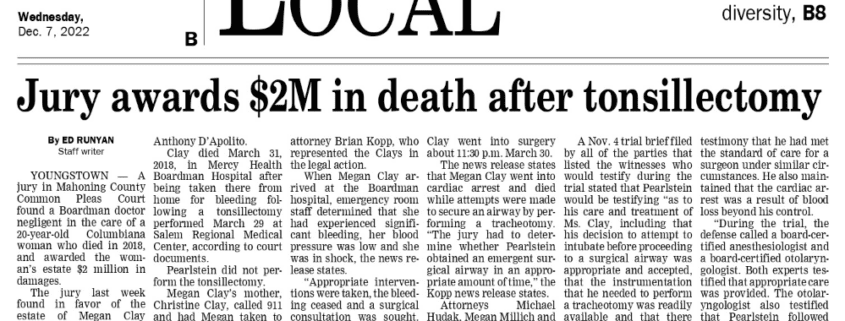
Jury finds that 20-year-old died as a result of medical negligence. Betras, Kopp & Markota secures $2,000,000 wrongful death award for family of Megan Clay

Attorney David Betras files civil suit against Cameron Morgan’s attacker, vows to hold white supremacists accountable for racially motivated assault

Cameron Morgan, the 23-year-old woman who was brutally assaulted by David Walls in Akron, Ohio on Feb. 28, 2022, is suing her attacker. The incident garnered nationwide media attention after video of the racially motivated assault went viral. Attorney David Betras, who represents Ms. Morgan and her father David, filed the lawsuit in Summit County […]

Betras, Kopp & Harshman founders say addition of new equity partner Justin Markota demonstrates prominent law firm’s continued commitment to the Valley

Attorney Justin MarkotaSixteen years after founding what has become one of the region’s most respected and successful multi-disciplinary, multi-state law firms Attorneys David Betras, Brian Kopp, and Mike Harshman announced today that Attorney Justin Markota will become an equity partner in the firm which will now operate as Betras, Kopp, and Markota (BK&M). Atty. Harshman will continue to serve as a senior advisor to BK&M.

“Since joining us in 2015, Justin has become an integral and essential member of our legal team,” BK&M Managing Partner David Betras said. “His outstanding performance in multiple areas of the law impressed us, the legal community, and most importantly his clients. His partnership is hard-earned, well-deserved and signals our ongoing commitment to the Valley.”

Atty. Markota, a Girard, Ohio native who graduated from Ursuline High School, Youngstown State University, and Capital Law School in Columbus said he is both pleased and proud to be a part of the firm Attorneys Betras and Kopp worked tirelessly to build and expand.

“In 2015, two of the area’s most prominent lawyers took a chance on local kid who had just passed the bar exam,” Atty. Markota said. “They gave me a desk, a chair, a computer, some business cards and immediately began teaching me what you can’t learn from a textbook or by sitting in a lecture hall: how to practice law in the real world.”

“David and Brian mentored me, generously shared their experience, insight, and knowledge, and allowed me to work alongside them on high-stakes criminal and complex personal injury and business litigation cases,” he continued. “The extraordinary amount of time they devoted to my continuing legal education helped me become the attorney I am today and prepared me to be their partner. I am grateful for the trust and confidence they placed in me over the past seven years and I look forward to practicing alongside them for many, many more.”

“It did not take David and I long to recognize Justin’s intellect, talent and potential,” Atty. Kopp said. “He was eager to learn, more than willing to put in hundreds of hours doing research and preparing exhibits, and he actively sought to be involved in and take responsibility for the toughest, most complicated criminal and personal injury cases being handled in the office.”

As a result of his work on those cases, which included gaining an acquittal in federal court for a client charged with a serious firearms-related offense and securing millions of dollars in settlements and jury awards for accident and injury victims, he was named to BK&M’s Complex Litigation Practice Group in 2020 and offered a partnership this year.

“Justin has repeatedly proved that he can take on and defeat the white shoe law firms, giant insurance companies, and prosecutors we regularly face in court and at the negotiating table,” Kopp said. “He can’t be intimidated or deterred from zealously pursuing justice for our clients. And that makes him both an incredibly effective attorney and valuable member of our team.”

David Betras noted that Justin’s partnership will extend a family tradition that began in 1929. “For nearly a century residents of the Valley have relied on us to meet their legal needs,” he said. “It started in 1929 when my Uncle Pete opened a small law office in downtown Youngstown. When my dad, Joe, returned from serving in World War II, he used the GI Bill to go to law school and joined him. After being immersed in the law our entire lives my cousin Brian and I launched our first firm in 1999, and now, two decades and thousands of satisfied clients later, Brian, I and our cousin Justin are ready to write a new chapter in our family’s legal legacy.”

Both Betras and Kopp said that Mike Harshman’s decision to step away from day-to-day involvement in the firm, while understandable, is bittersweet. “In 2005 Mike, David, and I began building a dynamic firm that has made a real difference in thousands of people’s lives,” Kopp said. “We will always be grateful for the advice and counsel he provided along the way, and we are pleased that he will continue to serve in an advisory role as we move forward.”

Atty. Markota’s biography may be viewed here: https://betraskopp.com/team-members/justin-markota/. He may be reached by phone at 33-746-8484.

BKH Welcomes Attorney Arturo T. Uzdavinis , Tampa Native, Jesuit High Graduate Is Newest Member Of Firm’s Impressive Legal Team

Attorney Arturo UzdavinisAttorney Arturo Uzdavinis is the newest addition to Betras, Kopp & Harshman’s impressive, multi-talented legal team. A native of Tampa, Florida, Attorney Uzdavinis graduated from Tampa Jesuit High School before attending Tulane University where he earned his Bachelor of Science in Management Degree. He received his Juris Doctorate from Barry University’s Dwayne O. Andreas School of Law, graduating Cum Laude in December 2020.

A standout football player at Tulane where he appeared in 48 games and was named to the schools 3.0 Club and the 2014-15 American Athletic Conference All-Academic Team, Arturo was signed as a free agent by the NFL’s Houston Texans in 2016. He spent time with five other NFL squads over the next two years before being encouraged by Atty. Brian Kopp to pursue a legal career. He clerked at BKH while attending law school and joined the firm after passing the Florida Bar Exam in February 2021.

Arturo brings a distinguished legal pedigree to BKH.  His great grandfather, Hector Reichard Zamora, was the oldest practicing attorney in Puerto Rico when he passed away in 2008. His grandfather, Hector Reichard de Cardona, served as Attorney General of Puerto Rico from 1981 through 1983 and is now senior partner at Reichard & Escalera, LLC, a multi-disciplinary law firm headquartered in San Juan, Puerto Rico.

“Identifying, recruiting, and mentoring young, talented attorneys who have a zeal for the law is one of BKH’s primary goals,” Atty. Brian Kopp, leader of BKH Complex Litigation Practice Group said. “In addition to those attributes, Arturo’s deep roots in, devotion to, and understanding of our community are incredibly valuable assets that will strengthen our firm and benefit our clients. Chris Knopik, Doug Titus, David Betras, and I are all pleased that he accepted a position with us and we look forward to practicing with him for many, many years.”

“I could not have found a better place to begin my career,” Arturo remarked. “Because BKH is a ‘boutique’ rather than a large, tall-building firm I will have the opportunity to observe and learn from attorneys who possess an extraordinary depth and breadth of knowledge and experience in multiple fields each and every day. Working with Chris, Doug and Brian will enable me to hone my skills and become the type of lawyer my great-grandfather and grandfather would want and expect me to be.”

Arturo is a member of the Florida Bar Association, National Football Players Association, and Knights of Colombus. He and his wife, Sydney were married in February 2020 and reside in Tampa, Florida with their six-month-old daughter, Ruth Beatriz.

M.J. Joseph Development, Corp files complaint for Declaratory Judgment against city of Youngstown, denies default and restates commitment to project

For Immediate Release
Monday, May 24, 2021
Contact: Atty. Brian Kopp, 330-502-8825

In response to public statements made by city officials regarding the M.J. Joseph Development, Corp (MJJDC) and the Chill Can project, Attorney Brian Kopp today filed a Complaint for Declaratory Judgment in the Mahoning County Court of Common Pleas on behalf of the company.

In the Complaint, MJJDC denies that it has either defaulted or abandoned the project and asks the Court to declare that the city does not have a right to recover grant funds for the alleged default, has no right to title and possession of the company’s property, and does not possess a right to monetary damages under the Enterprise Agreement contract.

“Representatives of the city have repeatedly claimed Youngstown has powers and avenues of recourse that are not explicitly spelled out in the contracts,” Atty. Kopp said. “To counter those statements, we are asking the Court to clarify the rights and obligations of both parties so MJJDC can move forward.”

“Unfortunately, the city’s rhetoric makes it extremely difficult for MJJDC to achieve its stated goal: completing the facility, hiring local residents, starting production, and making Youngstown and the Mahoning Valley a center of the company’s operations,” Atty. Kopp said.

“The future is bright for our company and we are excited about the opportunities that will accompany the end of pandemic-related restrictions,” MJJDC President Mitchell Joseph said.  “We have committed millions of our own dollars to this project and we want and need it to become an integral part of our operations. We acknowledge that there have been delays, but our global business partners continue to work with us, and we hope the city will do the same.”

It was necessary to file the lawsuit to secure my client’s investment and to ensure that this project will pay dividends to the city and MJJDC for years to come,” Atty Kopp concluded. The Complaint for Declaratory Judgment may be viewed here: Joseph Complaint File 5-24-21

For more information, please contact Atty. Brian Kopp at 330-502-8825.

Can employers ‘out’ unvaccinated employees?

Attorney David BetrasRecently one of our Facebook followers messaged us this important and interesting question:

“Can an employer ask workers if they have been vaccinated for COVID-19 and are they allowed to ‘out’ those who have and have not?”

Like most employment issues related to the pandemic, the answer to that straightforward question is complicated, multi-faceted, and evolving. But I am certainly willing to take a shot at responding.

I want to preface the discussion by reminding everyone of two critically important facts: First, employers are generally permitted to require all workers to be vaccinated. Second, workers who refuse may be disciplined and/or fired unless they are protected by a union contract, have a disability or object to getting a shot due to sincerely held religious beliefs.

Employers must offer people who fall into the latter two categories “reasonable accommodations” that will enable them to continue to work.

Now let us consider whether the Americans with Disabilities Act (ADA) permits employers to ask workers if they have been vaccinated. According to guidance issued late last year by the Centers for Disease Control and Prevention as well as the Equal Employment Opportunity Commission, the answer is yes as long as inquiry does not elicit information about a disability that would trigger the ADA’s requirement that all inquiries be “job-related and consistent with business necessity.”

Tip for employers: You do not want to do that.

To avoid running afoul of the ADA, employers should do the following when requesting vaccination information:

• Design the request so it is not likely to elicit information about a disability;
• Do not ask why a worker was not vaccinated;
• Warn employees not to provide any medical information when providing proof of vaccination.

Employers also have the right to ask for any number of reasons: to verify compliance with a vaccine mandate; prove that an employee has qualified for a vaccination incentive; to determine if an employee can return to work on-site; to comply with a customer’s demands that a vendor’s workforce has been vaccinated; or to inform the public that workers at a restaurant, store or other type of business that involves interaction with patrons have received their shots.

In fact, I can envision “Guaranteed COVID-19 Free” becoming a popular advertising slogan in the months ahead.

Now that we have a basic understanding of what employers may do, it is time to address what they may not do: They cannot “out” or identify workers who have or have not been vaccinated.

While it is generally legal to ask the question, it may be considered a medical inquiry which would make each employee’s response confidential medical information protected under statutory and common law. The law also obliges employers to protect workers’ personal and health information including their vaccination status.

I urge employers to take all steps necessary to meet that obligation.

As I mentioned at the beginning of the column, COVID-19 employment law is evolving rapidly so businesses and workers should protect themselves by keeping up to date with their rights and obligations.

While the pandemic is, hopefully, coming to an end, it may take years to resolve the legal issues and lawsuits it has spawned. I will do my best to keep my readers informed.