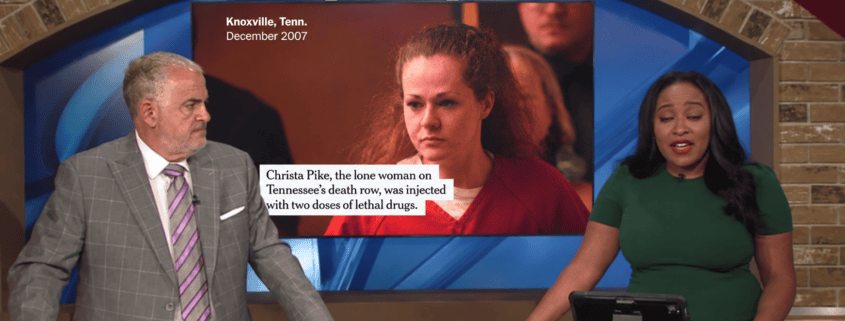
BK Managing Shareholder David Betras provides insight/info on medical malpractice, insurance companies, flooding, during Free Legal Advice Monday broadcast on WFMJ Today

OK, OK, it wasn’t exactly the first Monday of the month, but due to circumstances beyond our control BK Managing Shareholder David Betras spend the morning of April 13 answering questions from viewers on the set of WFMJ Today. You can watch the episode here.

He’ll be back on Monday, May 4, so if you have a question for David call 330-744-8821 during the show, DM us on our Facebook page, or email your question to wfmjtoday@wfmj.com David will be happy to help in any way he can.

Here are the interesting and informative queries he handled deftly during the broadcast…

Question 1: I’m wondering if there is anything I can about this. I had a breast cancer reconstruction surgery which my health insurance company refused to pay for. They said they didn’t cover it because it was coded as cosmetic surgery.

I contacted the doctor, the insurance company, and the hospital. The hospital denied that the procedure had been coded incorrectly. I appealed the Insurance company’s decision and they denied it again. As a result, I now have a $20,000 debt that’s been turned into collections.

I haven’t paid anything yet. Five years later they offered to settle for 10% There is more to the story, but any advice David can offer will be greatly appreciated.

David’s answer: I hate insurance companies. I would have fought the insurance company on her behalf. She could have filed suit against the insurance company. I’d have to see the policy, but this is ridiculous. It sounds like she had breast cancer and had a mastectomy or a partial mastectomy, and that’s part of the treatment. It’s not cosmetic. She’s not going in for a breast enlargement. She had the surgery because they removed a breast. It’s ridiculous. She still has time to hire an attorney and pursue this because the providers are continuing to attempt to collect their money.

Question 2: If I’m married and making my will but don’t want my partner to be the beneficiary of my estate, can I designate someone else to take charge of my belongings or does it have to be my spouse?

David’s answer: Unless you have a prenup, the law protects a spouse. So, if you make a will and try to cut out your spouse, she or he… can elect against the will because under Ohio law you must provide certain things for them.  So, you can’t cut them out altogether, but if you see a lawyer they will tell you what you must give them by law.

Question 3: My basement flooded due to all the rain we got recently. It has never happened before. I’m concerned it may have something to do with work the city is doing near their road. Who should I contact to look into this situation?  Should I contact an attorney or have someone do an inspection first?

David’s answer: I would get an inspection first. You have to determine where that water came from. I also suggest that they contact their council person to find out if the city or the contractor doing the work has insurance that would pay for the damage. If that doesn’t work, you could try to turn it into your homeowner’s insurance, but the insurer is going to want to know where that water came from. So, inspection first, city council person next. and your insurance company at the same time.

If you don’t get any relief it’s time to get a lawyer involved.

Question 4: I use a cell phone for work. Is it legal for a company to require me to add apps like a time clock or an app allowing them to contact you for work on your personal cell phone? Can I refuse to use my personal cell phone for work?

David’s answer: Yeah, but then they can fire you.  You have a fair point. If you don’t want them doing that, then just say you’re not going to do that, and then they can fire you, and there’s nothing you can do about it because Ohio is a will to work state.

That’s the way the cookie…

I hate these apps because I have so many passwords. A lot of times, you don’t go in and use the app, and then when you have to, if it didn’t recognize your face or something, I’m like, oh, God, what was the password on this? I can’t remember all these passwords. You’re going to reset it and say, oh, you can’t use a previous password. Yeah. Ah! We feel your pain. Honestly, these passwords are driving me nuts. Driving us all nuts.

Question 5: I bought cars for two of my family members. Both times, I have paid cash for the car. One time, it involved a trade-in. My question is, why do I have to pay a $300 to $400 documentation fee?

David’s answer: I don’t know why you’re paying a $300 to$400 documentation fee. Did you ask the dealership?

Caller: Well, no, unfortunately, I did not.

David: Well, I don’t think every dealership charges a documentation fee. There’s licensing fees and titles, but they’re not $300. I just bought a car. I didn’t pay any documentation fee. I always buy extra insurance on my wheels because I always hit my wheel rims. As it relates to this situation, I would go to the dealership and ask them what that documentation fee is’ what they charged you $300 for, okay?

Caller: Do I have any legal recourse?

David: I won’t know that until they’ll tell you what the documentation fee is for. And then if it sounds bogus, you can take them to small claims court for it.

Question 6: Can a landlord charge a pet deposit for an emotional support dog?

David’s answer: No. I don’t think so under the Americans with Disability Act. The dog is not a pet. It’s a service animal. So, I would contact the Ohio Attorney General and see if they can help you.

Question 7: Can you claim your children on taxes even if your kids are being taken care of by grandparents?

David’s answer: That’s better for an accountant, but if you have dependents and probably,unless the grandparents are taking the deduction, if they didn’t do anything formal through the courts they probably could still take the children as dependents.

Question 8: A person says their and their neighbor’s basements have flooded with sewage several times over the last 20 years. The city’s come out to take a look at the drains a few times, hired someone to inspect them who said the answer was inconclusive. They city keeps saying they’re going to fix the problem, but so far hasn’t. The person’s gone to city council meetings to complain. They were flooded again two weeks ago with heavy rain and more sewage water, which ruined more belongings.

So is the question: is there any way they can sue the city or take some sort of legal action to make tcity officials take the problem more seriously?

David’s answer: First, I would get an independent inspection to determine why this is happening.  If it is the city’s fault you may have recourse because they’ve been on notice about the problem.

You’ll want to turn this into your homeowner’s insurance, of course. But you want to make sure you get the problem fixed. So start by having an independent party diagnose the problem.

Question 9:  This person says a friend of hers lost her baby after a C-section when medical professionals neglected a fetal monitor that showed the baby’s heart had stopped. Twelve minutes went by before anyone did anything. In addition, sponges were then left inside of her, she got an infection she had to go back in and have them surgically removed. Does she have a medical malpractice case?

David’s answer: Absolutely she has a case. There’s definitely something wrong if the situation is as described. Please have your friend contact us at 330-746-8484 so we can talk to her and evaluate what happened. There’s no charge for initial consultations.

Tune in on  May 4 for the next episode of Free  Legal Advice Monday on WFMJ Today…

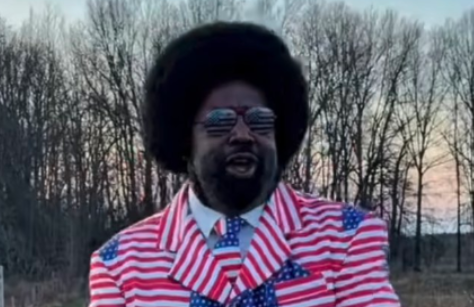
David Betras lauds Afroman as a hero of the First Amendment, explains why defamation suit filed against rapper was doomed

In this episode of Legally Speaking on WFMJ Today, BK Managing Shareholder David Betras lends his unique perspective to the captivating case of Afroman, the rapper whose house was raided by the Adams County Sheriff’s Office.

Unfortunately for the deputies—and much to amusement of millions of people around the world—the entire incident, which included a rotund deputy longingly eyeing a piece of lemon pound cake on Afroman’s kitchen counter, was preserved for all time on the rapper’s extensive surveillance camera system. The raid produced no evidence of wrongdoing on Afroman’s part, who immediately did what he does best with the footage: use it as inspiration for a number of rap songs that were, shall we say, less than flattering to the deputies. The rapper’s creations went viral moments after he posted them on social media, eliciting worldwide scorn and derision for the deputies .

Unamused and totally lacking senses of humor—just as they had lacked evidence the Afroman was engaged in criminal acts—the deputies filed defamation suits against him in Adams County Common Pleas Court claiming they had been damaged by the videos. Among the damage: the deputy who eyed up the lemon pound cake received hundreds of them In the mail…

As David notes, the suit should have been summarily dismissed by they judge assigned to hear it. He didn’t and the case went to trial. After some testimony from the plaintiffs that was absolutely hilarious, the jury in the small rural county ruled in Afroman’s favor, proving, David observed that the Constitution is the Constitution and juror’s knew and obviously appreciated well-done satire when they saw it. And that, David said, was the key to the verdict in the case because satire is protected by the First Amendment. “I love this case because even in the smallest county in Ohio the jurors saw saw that this was really a ridiculous lawsuit.

David explained that the outcome of the case hinged on whether Afroman had libeled or slandered the deputies. A defendant is guilty of liable or slander if they knowingly made false accusations or statements about a person or persons and those parties suffered damages. Clearly, Afroman didn’t make any false accusations, everything the deputies did was caught on tape.

In addition, in 1988 the United States Supreme Court ruled unanimously in Hustler v. Falwell that ruled that the First Amendment prohibits public figures from recovering damages for emotional distress caused by parody or satire, even if it is “outrageous.” The deuputies were clearly public figures and Afroman’s work was indisputably satire. That’s why the judge should have tossed the case out of court immediately.

Fortunately, the jury corrected his error. So, to sum up, at the end of the day justice was done, the deputies who participated in the raid were justifiably embarrassed, and Afroman became an international superstar. And people ask me why I love the law…

David Betras: more traffic stops, arrest are behind push for tougher seat belt law

Why did Governor Mike DeWine ask the members of the Ohio General Assembly to make driving without a seatbelt a primary rather an a secondary offense?

BK Managing Shareholder David Betras answered that question and provided important information about what drivers should and shouldn’t do during a traffic stop in this edition of Legally Speaking on WFMJ Today. Watch the sement here.

At the outset, David reminded because driving without a seat belt is currently a secondary offense you can only be ticketed for it if you are stopped for another reason, i.e. speeding, running a red light, driving erratically, etc.

Before I offer my opinion on why the Governor wants to change the law, I want to remind everyone that as a general rule, the Fourth Amendment to the United States Constitution, requires law enforcement to obtain a  warrant before they can search persons, places, personal belongings –just about anything.

But the U.S. Supreme Court has carved out exceptions to the protections afforded citizens by the Fourth Amendment.

For example, we have less constitutional protection in our cars than we do in our homes.  So, in most cases, if the police want to search your home, they’re going to need a warrant because your home is your castle.

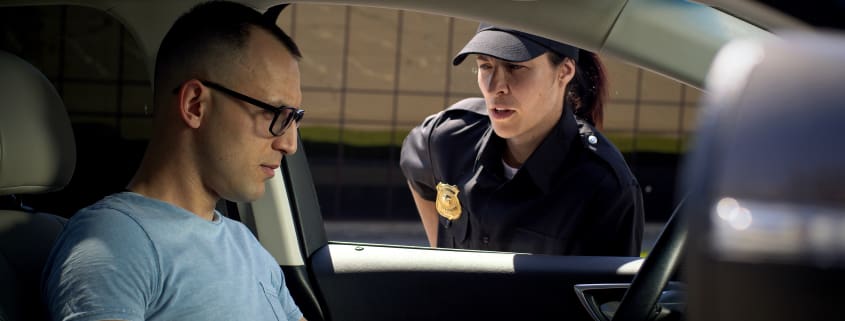
If, however, you’re driving down the street and you commit a traffic violation, cross the line, blow a red light, speed, that gives police the reasonable, articulable suspicion they need to pull you over.

What should you do when that happens?

First, pull over right away.

Second, keep your hands on the wheel at ten and two. Keeping your hands visible is critically important because this is the most dangerous time in a traffic stop from the officer’s perspective. They don’t know if someone just hijacked the car or if it’s actually Steve Vesey behind the wheel. When they arrive at the driver’s side window, they’re going to ask for three things:   your driver’s license, vehicle registration, and proof of insurance.

Take my advice here, because I get pulled over for speeding a lot and I know how to smooth out the process for all involved. I keep my registration and my insurance card in my visor. And then when the officer says, can I see your driver’s license? I always say to him, officer, I’m going to reach into my pocket and get it. Is that okay?

They always say yes.

If the officer asks you to get out of the caryou have to get out of the car. If you don’t get out of the car, they’re going to drag you out. People think, oh, I’m going to exercise my constitutional rights and refuse.

I tell people this all the time: the side of the road is not the place to engage a police officer in a debate about the Fourth, Fifth, or Fourteenth Amendments. Bu getting out of your car is the last thing you can be compelled to do during a traffic stop.

That means you do not have to answer questions you may be asked:

Where are you going? Officer, I choose to remain silent. Where are you coming from? Officer, I choose to remain silent. Were you drinking tonight? Officer, I choose to remain silent. Do you know why I pulled you over? No, officer, I don’t. The fact is you may incriminate yourself by answering any one or a combination of those questions.

So, be courteous, be nice, and just shup up.

Here’s another vital tip: don’t get out of your car before they ask you to do so. Exiting your vehicle before they instruct you to makes them very nervous.

Whether you remain in your car or leave it, if the police ask your permission to search your care never, never, never, say yes. If they had probable cause to search your car, they wouldn’t have to ask. But if they ask and you say yes and they find an old joint or discover something else that indicates you’re breaking the law you’re punched your own ticket to an arrest.

Finally, now that Ohio is a so-called Constitutional carry state you are allowed to carry a handgun your car, if a police officer asks if you have a gun in the car you are not allowed to lie. But I suggest that you tell an officer there is a gun in the car and where it is located.

All that said, I’ll now tell you why I believe the governor wants to move not wearing a seat belt from a secondary to a primary offense. It’s not to improve safety or reduce injuries caused by car wrecks.

It’s because, and call me cynical if you wish, doing so give cops another reason to make traffic stops which creates the opportunity for them to determine if the motorist in question is committing other crimes for which they can be arrested.

It’s as simple as that: more stops equals more arrests. So, in addition to making sure that your head doesn’t go through the windshield if you are in a crash, if Governor DeWine gets his way, buckling up will help keep you out of the big house.

As always, thanks for watching Legally Speaking on WFMJ Today. If you enjoy this program and wide variety of content we create, do us a sold by mashing the “Like,” “Subscribe,” and “Share” buttons. We deeply appreciate your support.

Legally Speaking on WFMJ Today: Fans suing NFL over blown calls

In this episode of Legally Speaking on WFMJ Today, Managing Partner David Betras discusses the lawsuits filed against the NFL by fans distressed over the blown pass interference call that marred the 2018 NFC Championship game between the L.A. Rams and the New Orleans Saints.

You may view the segment on our YouTube channel or on the Betras, Kopp & Harshman Facebook page.

Federal suits have been dismissed, but a state court judge in Louisiana has allowed a suit filed in that state to move forward. David outlines whether or not the plaintiffs have a valid case.

One outgrowth of the bad call: pass interference can now be reviewed. According to a new rule implemented by NFL owners, offensive and defensive pass interference, including non-calls, will now subject to review. Coaches can challenge those calls in the first 28 minutes of each half.

Don’t forget, David and other members of the BKH team discuss the hottest legal topics on  WFMJ Today every Friday at 6:40 A.M. Don’t miss the interesting and informative segments.