

Students’ right to privacy is limited in public schools, random searches of lockers/contents permissible under the 14th Amendment…

To the relief of parents and the chagrin of students, summer is over and a new school year has begun. That makes this an opportune time to convene another session of Professor Dave’s Shade Tree Legal Academy. During today’s lecture I will discuss whether the law allows public school teachers and administrators to search students and their property. It’s a fascinating topic that involves the Fourth Amendment, a landmark Supreme Court decision, and state statutes.
Class is about to begin so please no gum chewing, turn off your cell phones and handheld devices, and, as usual, there will not be quiz or test on this material because Professor Dave doesn’t have time to grade them.
Let’s begin our exploration of the topic with a look at the Fourth Amendment which states in part: “The right of the people to be secure in their persons, houses, papers, and effects, against unreasonable searches and seizures, shall not be violated…” For years various state and federal courts reached various conclusions regarding the applicability of the Amendment to public schools. The issue finally was resolved in 1985 when the U.S. Supreme Court handed down its landmark ruling in New Jersey v. T. L. O.
The case revolved around TLO, a 14-year-old New Jersey high school student who was caught smoking in a school bathroom by a teacher. The teacher escorted TLO to the school office where she was questioned by assistant vice principal Theodore Choplick. During the questioning, the student denied that she had been smoking and said she “did not smoke at all.” At that point, Mr. Choplick demanded to see her purse, opened it and found a pack of cigarettes and rolling papers. He continued to search the purse and found a small amount of marijuana and a list of students to whom she had sold pot. The police were called and TLO was eventually found to be delinquent by a juvenile court judge and placed on probation for one year.
During the juvenile court proceeding TLO filed a motion to suppress the evidence found in her purse because the search had violated the Fourth Amendment. The juvenile court judge denied the motion because Choplick “had reasonable cause to believe that smoking, a violation of school policy, had occurred” TLO’s appeal of the juvenile judge’s ruling was rejected by the New Jersey Superior Court. The New Jersey Supreme Court then ruled that Choplick’s search of TLO’s purse had violated the prohibition against unreasonable search and seizure and reversed the decision. The state then appealed the case to the U.S. Supreme Court.
In a 6-3 decision authored by Justice Byron “Whizzer” White, the Court ruled that students were protected by the Fourth Amendment. Unfortunately for TLO, the justices also held that in the interest of maintaining order and discipline, officials could search students in a public school environment without a warrant or meeting the probable cause standard that applies to adults as long as they had a “reasonable suspicion” to believe a rule or law had been violated. Because she had been caught smoking in the bathroom and taken directly to the office, the justices found it was reasonable to assume she had cigarettes in her purse which, in turn, gave the vice-principal reasonable cause to search the purse.

Voila, a new precedent—and the basis for laws and regulations that govern searches in public schools was born.
What does that mean for Ohio students? It means that under ORC 3313.20 a principal may search any pupil’s locker and its contents if they reasonably suspect that “…the locker or its contents contains evidence of a pupil’s violation of a criminal statute or of a school rule;”
In addition, the statute permits the random search of all lockers and contents at any time provided the school has posted signs in conspicuous places that notify students that all lockers are the property of the board of education. In this situation neither the Fourth Amendment nor the “reasonable suspicion” standard apply. Bottom line: if that notice is posted in your school don’t put anything in your locker you don’t want a teacher or principal to find.
The reasonable suspicion standard also applies to searches of desks, backpacks, and cars parked on school property. One exception: the Ohio Supreme Court has ruled that the standard does not apply to searches of unattended backpacks.
The standard does not apply when students do not have a reasonable expectation of privacy, i.e. items that are in plain view, school property such as computers, including laptops owned by the school that students are permitted to take home. Student activity on school internet networks and the browsing/download histories are also subject to search and review.
While the rules that apply to public schools may seem to invite invasion of students’ privacy, the rules that apply to private schools are even more draconian because, for all intents and purposes, privacy protections exist do not exist.
So there you have it class—understanding your rights, or lack thereof, will help you avoid trouble. And, oh, by the way, you don’t have to worry about Professor Dave searching your locker or electronic devices, I respect the Fourth Amendment and anyway, I just don’t have the time.

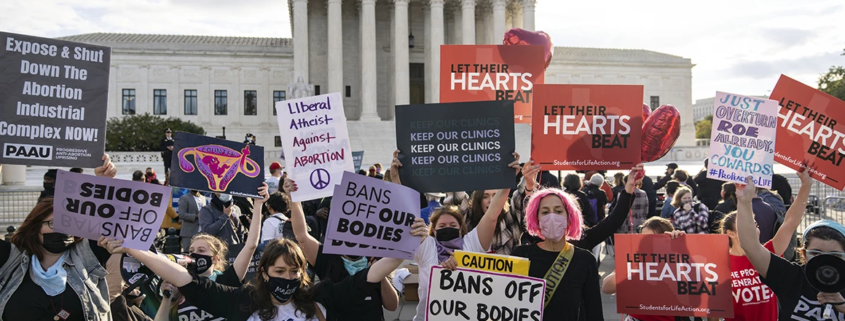 Abortion rights supporters and anti-abortion demonstrators rally outside the U.S. Supreme Court on Nov. 1, 2021. | Drew Angerer/Getty Images
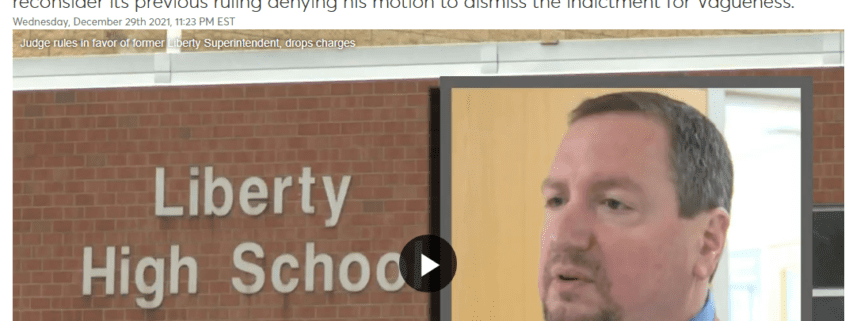
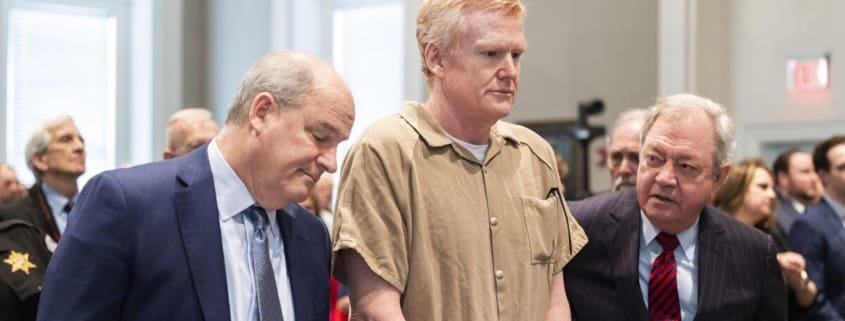
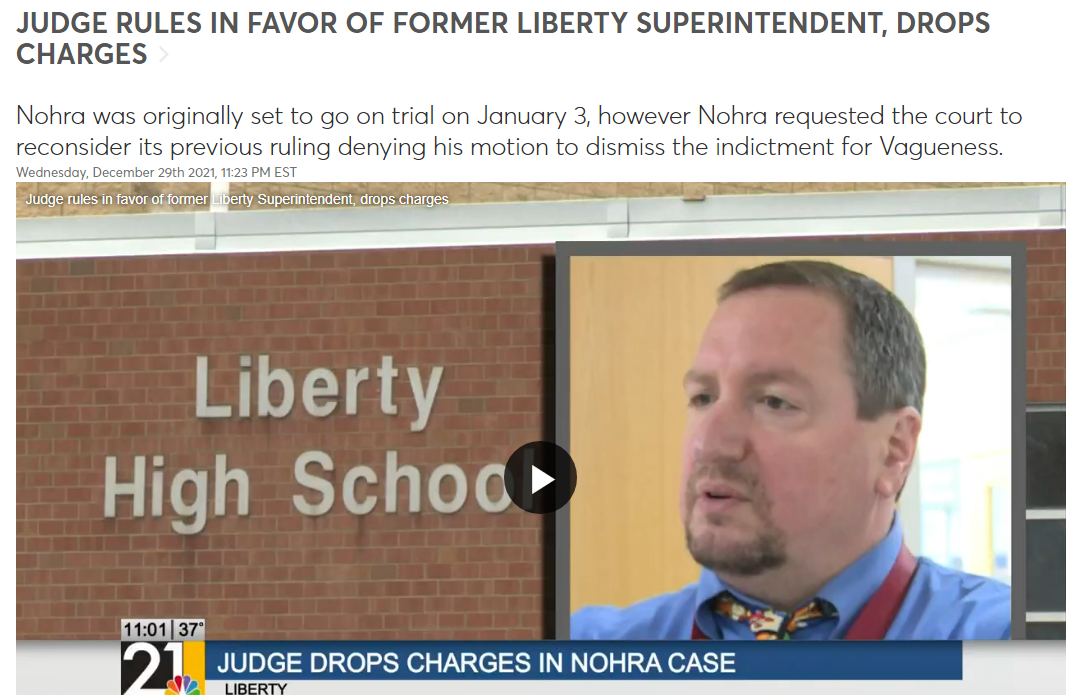 In a ruling handed down on Wednesday, December 30, 2021, Trumbull County Common Pleas Court Judge Ronald Rice dismissed six felony counts that had been lodged against former Liberty Local Schools Superintendent Joe Nohra earlier this year. The ruling came in response to a motion filed by Atty. David Betras arguing that the statutes under which Mr. Nohra had been indicted were unconstitutionally vague. In a well reasoned six-page decision Judge Rice agreed:
 As Brad Pitt and J-Lo know only too well, being a celebrity, a status I achieved thanks in no small part to this column and the quite fetching full-color headshot that runs with it, can sometimes be a pain in the gluteus maximus. That pain has become excruciating in recent weeks as a growing number of incredibly intense people have accosted me in public because I believe everyone should receive the COVID-19 vaccine and I support vaccination mandates.
 So, my tormenter is right about one thing: the federal government has extended nearly total liability immunity to manufacturers, distributors, prescribers, and dispensers of products developed to treat, diagnose, or prevent the onset of COVID-19.


